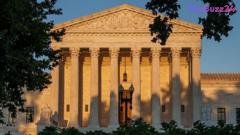
Supreme Court Lifts Restrictions on Federal Database for Voter Citizenship Checks
The United States Supreme Court has granted approval for the government to utilize a contested federal database that cross-references citizenship and sensitive personal information to identify potential non-citizen voters. The decision paves the way for authorities to deploy the Systematic Alien Verification for Entitlements (SAVE) program, originally established in 1986 to check eligibility for public benefits, in electoral oversight.
Opponents of the database have repeatedly raised concerns regarding its error rates and overall reliability, cautioning that eligible American citizens risk being erroneously purged from active voter registration lists. A lower court previously halted the system’s use, with a federal judge declaring that the expanded search capabilities violated privacy rights and threatened the fundamental right to vote. However, the high court’s conservative majority intervened, pointing to statutory provisions that mandate federal cooperation with state-level citizenship inquiries.
While the program’s adoption remains voluntary for individual states, 27 jurisdictions currently incorporate the system into their electoral verification processes. Dissenting justices warned that the potential disenfranchisement of lawful voters outweighs governmental objectives, pointing to documented past instances where domestic citizens were mistakenly flagged. The debate continues to highlight ongoing tensions surrounding electoral security and voter access nationwide.
Key Takeaways
- The US Supreme Court lifted restrictions allowing the federal government to use the SAVE database for voter citizenship checks.
- The program permits officials to cross-reference sensitive data from federal agencies and Social Security rolls.
- Critics and dissenting justices warn the system risks disenfranchising eligible voters due to potential inaccuracies.
Editor’s Analysis & Impact
The Supreme Court’s decision to permit the use of the SAVE database for voter roll verification marks a significant development in the ongoing discourse surrounding electoral integrity and voter access in the United States. As dozens of states already utilize the system, this ruling validates federal support for aggressive roll maintenance practices ahead of upcoming legislative cycles. However, the operational accuracy of such vast data systems remains a critical point of friction. Past errors—where lawful citizens were incorrectly flagged as non-citizens—underscore the delicate balance between preventing unauthorized voting and protecting eligible participants from wrongful disenfranchisement. Moving forward, the implementation of this database will likely face intense scrutiny from civil rights organizations, potentially leading to further legal battles at both state and federal levels.
Frequently Asked Questions
Q: What is the SAVE program?
A: The Systematic Alien Verification for Entitlements (SAVE) program is a Department of Homeland Security database originally created in 1986 to verify the citizenship or immigration status of individuals applying for public benefits.
Q: Why is the use of the database for voter rolls controversial?
A: Critics and civil rights advocates argue that the database is prone to errors, which could result in eligible US citizens being mistakenly identified as non-citizens and unlawfully removed from voter registration rolls.
Q: Is the use of the SAVE program mandatory for all US states?
A: No, the adoption and use of the SAVE program by individual states for voter verification purposes is entirely voluntary. Currently, 27 states utilize the system.
AI Disclosure: This article is based on verified data and official reports. Our Team and AI have cross-referenced every financial detail with primary sources to ensure total accuracy.
More from this Category