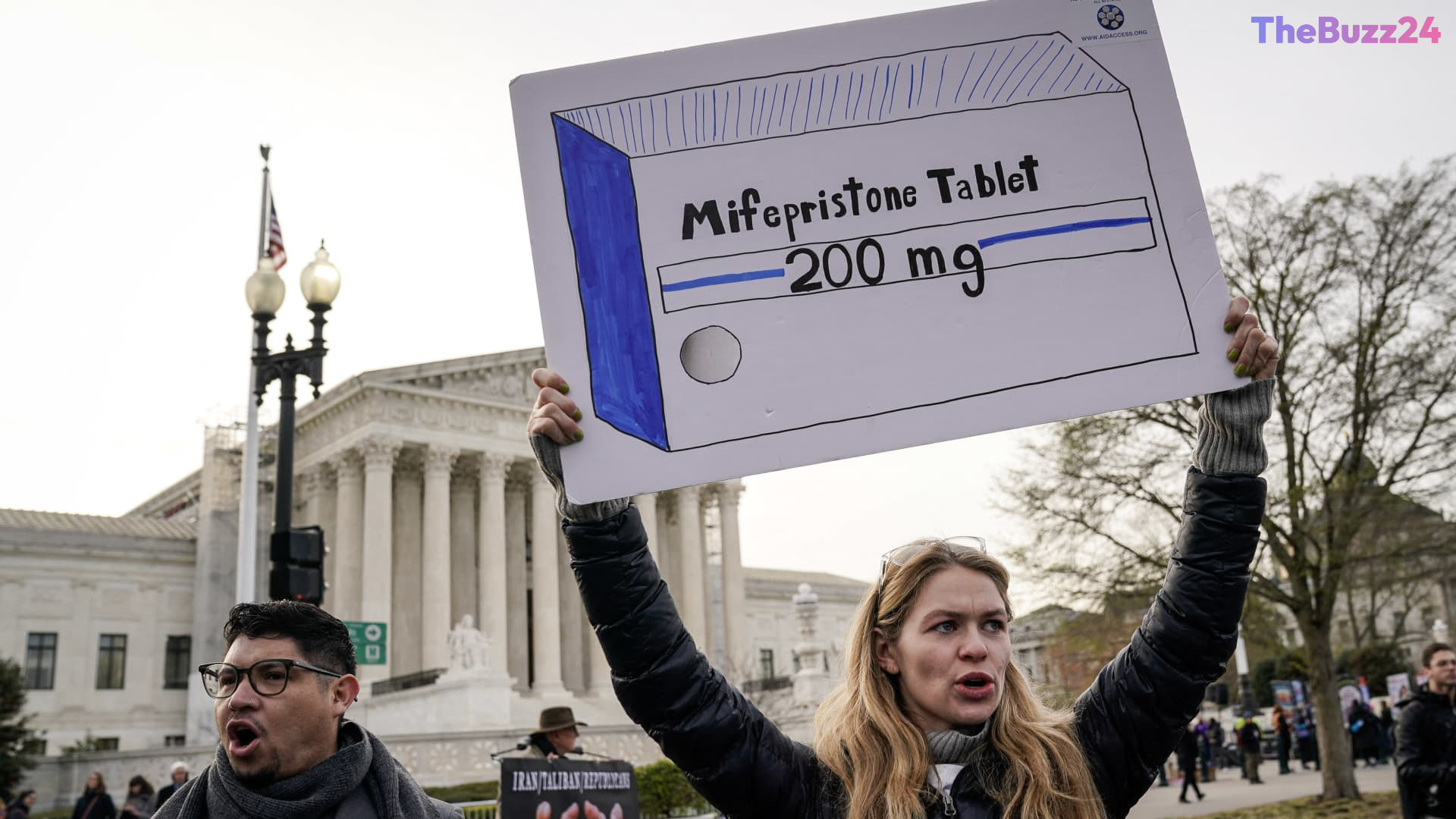
Supreme Court Preserves Mail-Order Access to Mifepristone Amid Ongoing Legal Battle
The U.S. Supreme Court has intervened to maintain the availability of the abortion medication mifepristone through mail-order services. This ruling extends a temporary stay on lower court restrictions, ensuring the drug remains accessible while a broader legal challenge against the Food and Drug Administration (FDA) proceeds. The Court’s majority did not release a detailed explanation or a specific vote tally, but the move effectively halts a nationwide ban on mailing the medication that had been previously ordered by an appellate court.
The legal conflict originated in Louisiana, where state officials sued the FDA over its 2023 decision to eliminate the requirement for in-person administration of mifepristone. This regulatory shift occurred roughly a year after the Supreme Court overturned Roe v. Wade, a landmark decision that shifted abortion regulation back to individual states. While a federal district court initially refused to block the mail-order distribution, the 5th Circuit U.S. Court of Appeals later imposed a ban, prompting pharmaceutical manufacturers Danco Laboratories and GenBioPro to seek emergency relief from the high court.
Justices Clarence Thomas and Samuel Alito were the lone public dissenters in the decision. Justice Thomas argued that the manufacturers’ concerns over lost profits did not justify a stay, further asserting that mailing the drug for abortion purposes violates the Comstock Act. Meanwhile, Justice Alito criticized the majority’s order as “remarkable,” suggesting it could potentially interfere with the precedent set by the Dobbs v. Jackson Women’s Health Organization ruling, which granted states the authority to regulate abortion within their own borders.
Key Takeaways
- The Supreme Court has allowed mifepristone to remain available via mail while legal challenges continue.
- The ruling blocks a previous 5th Circuit Court of Appeals decision that would have banned the mailing of the medication nationwide.
- Justices Thomas and Alito dissented, with Thomas citing the Comstock Act as a basis for prohibiting the shipment of abortion drugs.
Editor’s Analysis & Impact
The Supreme Court’s decision to maintain the status quo for mifepristone reflects the high stakes of the post-Roe legal landscape. By allowing mail-order access to continue, the Court is temporarily shielding the FDA’s regulatory authority from immediate judicial rollback, though the underlying merits of the case remain unresolved. This battle highlights a growing tension between federal agency expertise and state-led legal challenges. The invocation of the Comstock Act by Justice Thomas signals a potential future legal front that could target the distribution of reproductive health products nationwide, regardless of state laws. For the pharmaceutical industry, the outcome is a short-term victory for regulatory stability, but the ongoing litigation suggests that the legal framework for medication abortion will remain volatile for the foreseeable future, impacting both healthcare providers and patients across the country.
Frequently Asked Questions
Q: What is mifepristone?
A: Mifepristone is a medication used in a two-drug regimen to terminate early pregnancies and is currently the most common method of abortion in the United States.
Q: Why is the mail-order distribution of this drug being challenged?
A: Critics and several states argue that the FDA overstepped its authority by removing the requirement for the drug to be dispensed in person, claiming it bypasses state-level abortion restrictions.
Q: What happens next in the legal process?
A: The case will continue to be litigated in the lower courts on its merits, and it is highly likely to return to the Supreme Court for a final, definitive ruling in the future.
AI Disclosure: This article is based on verified data and official reports. Our Team and AI have cross-referenced every financial detail with primary sources to ensure total accuracy.
More from this Category