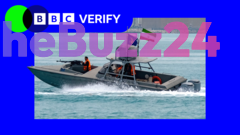
Rising Tensions in the Strait of Hormuz as Iran Asserts New Maritime Authority
Geopolitical instability in the Middle East has reached a critical juncture following Iran’s announcement of the ‘Persian Gulf Strait Authority.’ This newly formed entity claims oversight of a vast maritime zone within the Strait of Hormuz, effectively encroaching upon the territorial waters of the United Arab Emirates and Oman. Under this directive, Tehran is demanding that all commercial vessels transiting the waterway coordinate their movements and obtain explicit authorization from Iranian officials, a move that has drawn immediate and sharp condemnation from the United States and several regional allies.
Critics of the move argue that the mandate is legally baseless and represents a unilateral attempt to disrupt the established regional status quo. A major point of contention is Iran’s refusal to ratify the United Nations Convention on the Law of the Sea, which provides the standard framework for innocent passage in international waters. By bypassing these international norms, the current directive creates a significant legal vacuum that threatens the safety and predictability of one of the world’s most vital shipping lanes.
The region has already seen a surge in maritime confrontations, with the U.S. military reporting that it has redirected nearly 100 commercial vessels since mid-April to avoid potential interference. These enforcement operations are part of a broader effort to maintain the flow of global trade despite the increasing frequency of interceptions. While international mediators continue to push for diplomatic solutions, the persistent maneuvering by Iranian forces remains a primary concern for global energy security and regional stability.
Key Takeaways
- Iran has declared a new maritime authority that claims jurisdiction over waters belonging to the UAE and Oman.
- The U.S. and regional partners have rejected the mandate, citing a lack of international legal standing and the violation of established maritime norms.
- Nearly 100 commercial vessels have been redirected by U.S. forces since mid-April to navigate around escalating maritime friction.
Editor’s Analysis & Impact
The unilateral expansion of maritime control by Iran in the Strait of Hormuz represents a calculated challenge to the rules-based international order. Because this chokepoint facilitates a massive percentage of global oil transit, any disruption—or even the threat of one—creates immediate upward pressure on energy prices and shipping insurance premiums. The industry impact is twofold: it forces commercial shipping companies to incur higher operational costs due to rerouting and creates a ‘gray zone’ of instability that discourages investment in the region. Looking ahead, the situation is unlikely to resolve through quick diplomatic fixes. Instead, we expect a prolonged period of maritime posturing where the risk of miscalculation remains high. If the situation escalates, the global economy could face significant supply chain shocks, making this a critical area for ongoing monitoring by energy analysts and geopolitical observers.
Frequently Asked Questions
Q: Why is the Strait of Hormuz strategically important?
A: The Strait of Hormuz is a critical maritime chokepoint that serves as a primary transit route for a significant portion of the world's oil production, making it essential for global energy security.
Q: How does Iran's non-ratification of the UN Convention on the Law of the Sea affect this situation?
A: By not ratifying the treaty, Iran avoids the legal obligations that guarantee the right of innocent passage for international vessels, which complicates the ability of other nations to challenge these new maritime restrictions through international law.
Q: What are the potential economic consequences of increased tensions in the Strait of Hormuz?
A: Heightened tensions can lead to supply chain disruptions, increased shipping insurance premiums, and significant volatility in global oil prices, all of which can negatively impact the global economy.
AI Disclosure: This article is based on verified data and official reports. Our Team and AI have cross-referenced every financial detail with primary sources to ensure total accuracy.
More from this Category