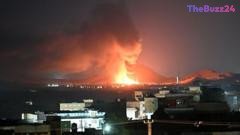
Tensions Escalate as Pakistani Air Strikes Hit Afghan Provinces, Claiming Civilian Lives
Recent aerial operations conducted by Pakistani forces within Afghan territory have resulted in the deaths of at least four civilians, marking a significant escalation in regional tensions. The strikes targeted several provinces, including Kandahar, Paktia, and Khost, causing widespread panic among local populations. While the operations were intended to neutralize security threats, eyewitness accounts and local officials report significant damage to residential areas and civilian casualties.
Pakistan has defended the strikes, characterizing them as precise and calibrated maneuvers aimed strictly at identified military objectives. The military actions follow a deadly assault on a police facility in northwestern Pakistan, an attack claimed by elements linked to the Tehreek-e-Taliban Pakistan (TTP). Islamabad maintains that these strikes are a necessary response to cross-border threats and has accused the Taliban government of providing sanctuary to militant groups.
The Taliban government has vehemently rejected these accusations, labeling the air strikes as hostile and indiscriminate. Spokespersons for the administration stated that the attacks target Afghan security forces and civilian infrastructure rather than terrorist cells. As both nations exchange warnings of further retaliation, the humanitarian impact continues to grow, with international observers noting a sharp rise in cross-border violence and civilian harm in recent months.
Key Takeaways
- Pakistani air strikes in Afghanistan have resulted in the deaths of at least four civilians across multiple provinces.
- The escalation follows a deadly attack on a Pakistani police compound, heightening the conflict between the Taliban and Islamabad.
- Pakistan claims the strikes targeted military objectives, while the Taliban accuses them of being indiscriminate attacks on civilians.
Editor’s Analysis & Impact
The resurgence of kinetic military action along the Afghanistan-Pakistan border signals a breakdown in the fragile stability that had characterized the region for several months. This escalation highlights the deep-seated security dilemma involving the Tehreek-e-Taliban Pakistan (TTP) and the differing interpretations of cross-border militancy. For Pakistan, the strikes are a matter of national sovereignty and counter-terrorism; for the Taliban, they represent an infringement on Afghan territory. The broader implication is a heightened risk of a larger-scale regional conflict that could destabilize trade and security across South Asia. As international mediation efforts struggle to find traction, the humanitarian cost—specifically civilian casualties—is likely to increase, potentially drawing further international scrutiny and complicating diplomatic relations in the region.
Frequently Asked Questions
Q: Why is Pakistan conducting air strikes in Afghanistan?
A: Pakistan states the strikes are targeted responses to militant attacks, specifically those linked to groups like the TTP, which they claim operate from Afghan soil.
Q: What has the Taliban's response been to these strikes?
A: The Taliban has condemned the strikes as hostile and reckless, denying that they harbor militants and threatening an appropriate response to the incursions.
AI Disclosure: This article is based on verified data and official reports. Our Team and AI have cross-referenced every financial detail with primary sources to ensure total accuracy.
More from this Category