Tesla Prepares to Phase Out Cybertruck to Focus on Autonomous Cybercab Fleet
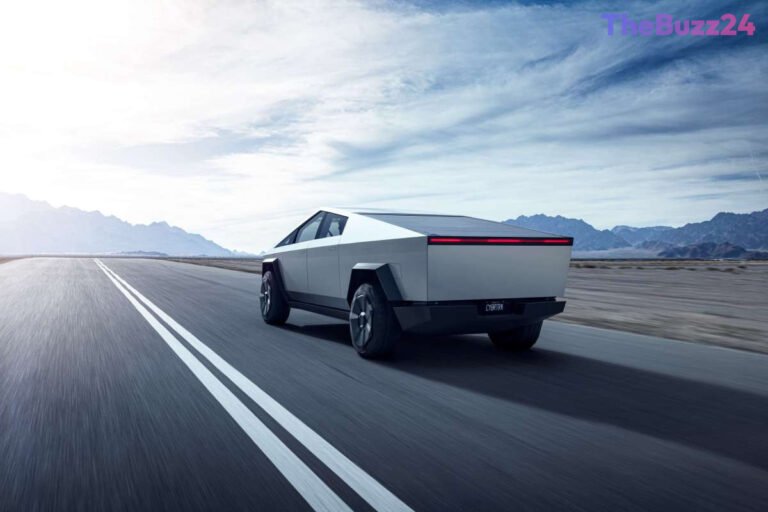
Tesla appears to be winding down production of its polarizing Cybertruck as Chief Executive Elon Musk signals a strategic pivot toward manufacturing the fully autonomous Cybercab. While details remain sparse on whether manufacturing will cease entirely or shift elsewhere, Musk confirmed that the decision was made to clear assembly line space for next-generation vehicle architectures. Cybertruck lead engineer Wes Morrill reinforced the transition, describing the futuristic pickup as a vital technology development platform whose engineering breakthroughs will live on through the Cybercab project.
First unveiled in 2019 with a distinctive stainless-steel exoskeleton and unconventional angular styling, the Cybertruck faced a tumultuous path to market. The vehicle suffered early embarrassment during its public debut when its shatterproof armor glass cracked on stage, followed by years of production delays before customer deliveries finally commenced in late 2023. Despite generating substantial pre-orders initially, the vehicle struggled to capture a lasting share of the lucrative American pickup truck market due to soaring price tags—reaching up to $102,000 for high-end models—and several high-profile safety recalls.
Commercial performance ultimately fell drastically short of internal targets. Recent industry vehicle registration figures indicate that Tesla delivered just 20,237 Cybertrucks in 2025, representing a sharp drop from nearly 39,000 units sold the previous year. The figures are a small fraction of Musk’s early ambition to achieve 250,000 annual deliveries. Nevertheless, financial markets welcomed the operational realignment, sending Tesla shares up 4.7% following the announcement.
Responding to public sentiment, Musk acknowledged the vehicle’s technical accomplishments while reassuring current owners that existing Cybertruck fleets will remain supported on public roads for years to come. The sunsetting of the line underscores a major structural evolution for Tesla, prioritizing self-driving software and scalable robotaxi deployment over low-volume niche electric truck segments.
Key Takeaways
- Tesla is reallocating production resources away from the Cybertruck to prioritize its autonomous Cybercab fleet.
- Cybertruck sales dropped sharply to 20,237 units in 2025, falling vastly short of initial annual targets of 250,000 vehicles.
- Investors responded positively to the pivot toward self-driving technology, pushing Tesla shares up 4.7%.
Editor’s Analysis & Impact
Tesla’s decision to phase out Cybertruck manufacturing represents a strategic shift from an ambitious design experiment to scalable profitability. While the Cybertruck served as a high-visibility flagship for advanced metallurgy and manufacturing techniques, its commercial viability was continually undermined by production complexities, high prices, and limited market adoption. Transitioning manufacturing capacity toward the Cybercab aligns with Tesla’s larger goal of transforming into an artificial intelligence and autonomous mobility leader. By trimming underperforming hardware projects, Tesla can streamline capital expenditure and position itself to capitalize on the higher-margin robotaxi economy.
Frequently Asked Questions
Q: Why is Tesla ending production of the Cybertruck?
A: Tesla is shifting manufacturing capacity away from the Cybertruck to make room for mass production of its autonomous Cybercab.
Q: How did Cybertruck sales perform before the announcement?
A: Sales struggled significantly, dropping to 20,237 units in 2025 from 38,965 in 2024, far short of Tesla's original projection of 250,000 annual deliveries.
Q: What will happen to existing Cybertrucks on the road?
A: Elon Musk confirmed that existing Cybertruck fleets will remain on the road and continue to be supported for a long time.
AI Disclosure: This article is based on verified data and official reports. Our Team and AI have cross-referenced every financial detail with primary sources to ensure total accuracy.
More from this Category