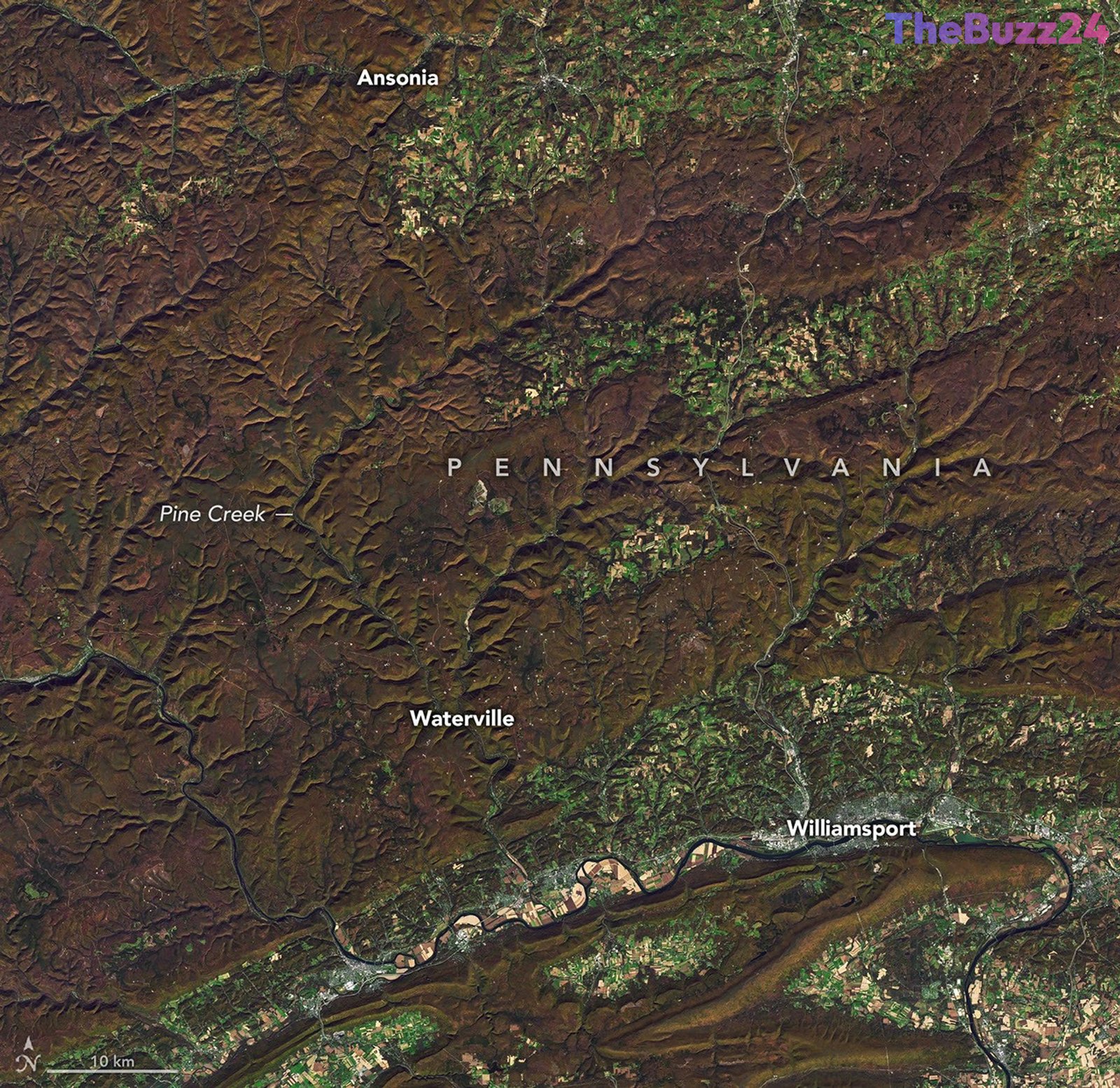
The Appalachian Wonder: Uncovering the History of Pennsylvania’s Pine Creek Gorge
Deep within the Allegheny Plateau of north-central Pennsylvania lies a geological marvel often referred to as the ‘Grand Canyon of Pennsylvania.’ Known officially as Pine Creek Gorge, this 45-mile-long expanse reaches depths of up to 1,500 feet. Unlike the arid, rock-walled canyons of the American Southwest, this gorge is defined by lush, verdant slopes that transform into a vibrant tapestry of reds and golds during the autumn months, drawing visitors from across the region.
The formation of the gorge is a testament to the transformative power of the last ice age. Geologists note that Pine Creek originally flowed northward; however, as glaciers advanced from the northeast, they dammed the river and created vast lakes. When these glacial dams eventually breached, the resulting torrent of meltwater carved a new, southward path for the creek. The debris left behind by the receding ice prevented the river from returning to its original course, permanently entrenching the deep, dramatic valley seen today.
This landscape has undergone a remarkable ecological recovery. During the 19th century, the area was heavily exploited for its timber, particularly white pine and hemlock, leading to such severe deforestation that it was once dubbed the ‘Pennsylvania Desert.’ Following decades of conservation efforts, the forests have returned, now supporting a diverse ecosystem that includes black bears, bobcats, and various bird species. In 1968, the region was officially recognized as a National Natural Landmark, preserving its beauty for future generations to explore via the Pine Creek Rail Trail and surrounding state parks.
Key Takeaways
- Pine Creek Gorge was formed by glacial activity during the last ice age, which forced a northward-flowing river to reverse course and carve a deep valley southward.
- The area experienced severe environmental degradation in the 19th century due to intensive logging, earning the nickname 'Pennsylvania Desert' before a successful ecological recovery.
- Today, the gorge serves as a protected National Natural Landmark, offering a habitat for diverse wildlife and recreational opportunities for outdoor enthusiasts.
Editor’s Analysis & Impact
The story of Pine Creek Gorge serves as a compelling case study in environmental resilience and the long-term impact of industrial activity on natural landscapes. The transition from a ‘desert’ caused by 19th-century deforestation to a thriving National Natural Landmark highlights the success of mid-20th-century conservation policies. From a market perspective, the gorge represents a significant asset for regional tourism and the outdoor recreation economy. As climate patterns shift and seasonal foliage timing becomes a point of interest for both scientists and the public, the use of satellite imagery to monitor these changes underscores the growing intersection between environmental monitoring technology and public interest in land management. The future outlook for such regions remains positive, provided that sustainable land-use practices continue to balance tourism demand with habitat preservation.
Frequently Asked Questions
Q: How did the Pine Creek Gorge form?
A: The gorge was formed during the last ice age when advancing glaciers blocked the original northward flow of Pine Creek, creating lakes that eventually overflowed and carved a new, deeper path to the south.
Q: Why was the area once called the 'Pennsylvania Desert'?
A: In the 19th century, the area was heavily logged for white pine and hemlock to support the timber industry. The resulting deforestation was so severe that the landscape was left barren, earning it the nickname 'Pennsylvania Desert' until the forest eventually regenerated.
AI Disclosure: This article is based on verified data and official reports. Our Team and AI have cross-referenced every financial detail with primary sources to ensure total accuracy.
More from this Category