The GPT-2 Era of Physical AI: Why Robot Brain Builders Are Struggling to Deliver
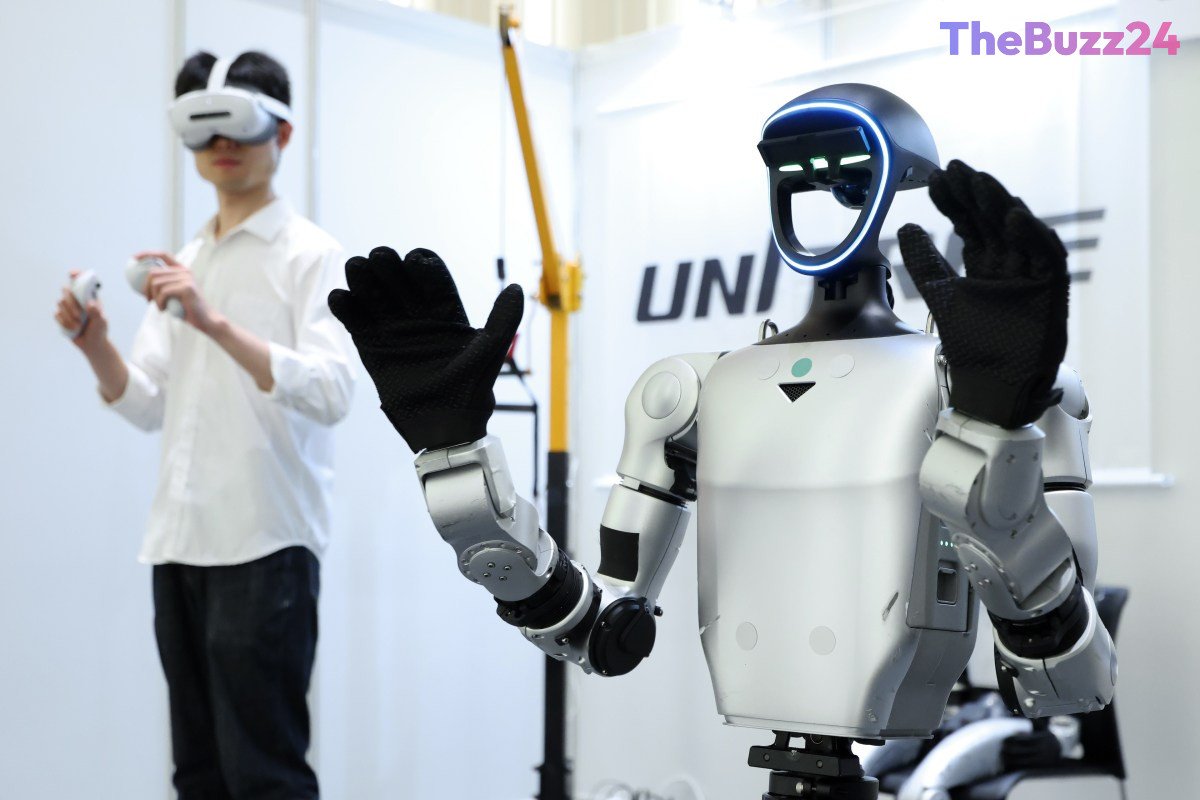
Physical artificial intelligence has rapidly emerged as one of the most heavily funded sectors in venture capital, with billions of dollars pouring into initiatives designed to apply large language model techniques to robotics. This surge in investor enthusiasm recently propelled Unitree, a prominent Chinese robotics manufacturer, to a massive public debut that valued the enterprise at $66 billion. However, market sentiment quickly shifted as the company experienced a steep valuation decline, highlighting a fundamental challenge facing the industry: while hardware and physical capabilities are advancing rapidly, robots still lack the sophisticated intelligence required to execute truly value-creating commercial work.
Industry developers gathered recently to discuss the state of AI brains for robotics, noting that the community has grown significantly over the past couple of years. Despite the palpable excitement, participants acknowledged a looming hurdle known as the robotics data crisis. Unlike text-based models that benefit from vast internet scraping, physical AI suffers from a critical shortage of diverse, high-quality training data. Achieving generalized robotic capabilities remains a distant horizon, and current end-to-end learning methods have yet to yield commercially reliable products. Experts suggest that the sector is currently navigating its ‘GPT-2 era,’ meaning it requires significantly more compute power, specialized ray-tracing GPUs for high-fidelity simulations, and improved reinforcement learning frameworks to cross the threshold into widespread utility.
Interestingly, autonomous vehicle developers are leading the charge in machine learning tooling, leveraging data collected from human-driven cars to build foundational models. Major players like Tesla are leaning into humanoid designs, while firms such as Wayve and Uber have launched dedicated robotics research divisions. A key debate within the industry centers on strategy: whether to co-design specialized hardware and software for specific commercial verticals—such as autonomous excavation, solar farm maintenance, or industrial logistics—or to focus entirely on generalized humanoid platforms. While task-specific robots achieve immediate field deployments and generate vital real-world data, they risk being superseded if foundational brain models advance too quickly.
Ultimately, defining the breakthrough milestone for physical AI remains a subject of intense discussion among tech leaders. Some industry executives believe the watershed moment will arrive when affordable, highly reliable manipulation becomes commercially viable for everyday consumers, mirroring the accessibility of personal computers or consumer appliances. Others argue that distribution in the physical world is inherently more complex than deploying software over the internet, suggesting the industry’s true turning point will be measured by practical, widespread utility in homes and workplaces rather than viral digital adoption.
Key Takeaways
- Physical AI is experiencing a 'GPT-2 era,' hampered by a severe shortage of high-quality training data and limited commercial reliability.
- Autonomous vehicle companies are increasingly leveraging their machine learning and simulation infrastructure to expand into humanoid and general robotics.
- Industry leaders are divided on whether to pursue narrow, task-specific vertical applications or hold out for generalized, hardware-agnostic AI brains.
Editor’s Analysis & Impact
The physical AI sector stands at a critical technological crossroads. While venture capital continues to heavily back humanoid and general-purpose robotics, the economic reality of deploying unproven technology into the physical world is tempering valuations. The primary bottleneck is no longer mechanical engineering, but data infrastructure and simulation fidelity. Companies that successfully bridge the gap between autonomous vehicle machine learning pipelines and robotic manipulation will likely capture dominant market share. However, the path to commercial viability will likely favor vertical integration in the near term, allowing firms to fund ongoing research through task-specific deployments while foundational world models mature.
Frequently Asked Questions
Q: What is the 'GPT-2 era' in physical AI?
A: It refers to the current developmental stage of robotics AI, which mirrors the capabilities of OpenAI's GPT-2 model before ChatGPT. It indicates that the technology has immense potential and basic competence, but still requires significantly more data, compute power, and algorithmic refinement to achieve reliable commercial performance.
Q: Why is training data such a major issue for robotics?
A: Unlike language models that can be trained on vast amounts of text available on the internet, physical AI requires dense, real-world visual, sensory, and lidar data. Collecting and simulating diverse physical interactions for robots is vastly more complex and resource-intensive.
Q: Are companies focusing on general-purpose robots or task-specific robots?
A: There is a divide in the industry. Some companies focus on specific verticals like construction, agriculture, or logistics because they provide immediate revenue and real-world deployment data. Others are building general-purpose humanoid robots, though they face higher technical hurdles and slower paths to practical field use.
AI Disclosure: This article is based on verified data and official reports. Our Team and AI have cross-referenced every financial detail with primary sources to ensure total accuracy.
More from this Category