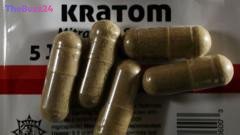
The Rise of Kratom: ‘Gas Station Heroin’ Alarms US Officials Amidst Regulatory Void
Kratom, an herbal substance originating from Southeast Asia, has surged in popularity across the United States over the past decade, often being marketed and sold as a natural remedy for pain, anxiety, and depression. Despite its widespread availability in convenience stores, gas stations, and vape shops, typically in pill or liquid form, the substance remains unregulated by the U.S. Food and Drug Administration (FDA). This lack of federal oversight is a primary concern for health officials, who warn that consumers have no way of knowing the exact composition or purity of the products they are purchasing.
Users like Jeffrey Deaver, a retired timber cutter from Washington state, have turned to kratom for relief from severe chronic pain, describing it as a “miracle” that allowed him to function when conventional medical treatments failed. However, recent events have amplified concerns. The discovery of packaged kratom in the possession of two deceased University of Mississippi students, while not directly attributed to the substance, has prompted renewed warnings from authorities about its consumption. This has reignited calls from anti-kratom advocates for stricter regulations and bans, mirroring actions taken in countries like the UK where kratom is illegal.
The effects of kratom are dose-dependent. At lower doses, it can act as a stimulant, providing an energy boost. However, at higher doses, it exhibits opioid-like properties, potentially leading to euphoria and a general high. Experts caution that these higher doses carry significant risks, including central nervous system depression, which can lead to severe health consequences such as cardiovascular collapse and respiratory failure. Addiction and withdrawal symptoms are also documented risks, with some users developing high tolerances and consuming increasingly large amounts. The unregulated nature of kratom means that products could potentially be adulterated with dangerous substances, further increasing the health risks associated with its use.
Legally, kratom exists in a complex gray area within the United States. While banned in several states, including Massachusetts, Alabama, and Arkansas, it remains legal in others. The U.S. Drug Enforcement Agency (DEA) previously attempted to classify kratom as a Schedule 1 controlled substance, but this effort was halted due to public opposition. This patchwork of state-level regulations leaves significant gaps in oversight, prompting some states, like Arizona, to pursue legal action against companies distributing kratom beverages. Meanwhile, pro-kratom groups advocate for regulations that distinguish between natural kratom and potentially dangerous synthetic versions.
Key Takeaways
- Kratom, an unregulated herbal substance, is increasingly popular in the US for pain and mood management but carries significant health risks.
- Lack of federal regulation means product composition is unknown, raising concerns about purity and potential adulteration.
- While banned in some US states and countries, kratom's legal status varies, creating a complex regulatory landscape.
Editor’s Analysis & Impact
The growing popularity of kratom, coupled with its unregulated status in the US, presents a significant public health challenge and a complex market dynamic. While proponents highlight its potential benefits for pain and addiction, the lack of FDA oversight creates a fertile ground for inconsistent product quality and potential dangers, including overdose and addiction. This situation creates opportunities for both legitimate businesses aiming for transparency and potentially unscrupulous actors exploiting the regulatory void. The ongoing debate between prohibition and regulation, alongside state-level legal battles, suggests a prolonged period of uncertainty for both consumers and the industry, with potential implications for broader discussions on natural supplements and drug policy.
Frequently Asked Questions
Q: What are the primary risks associated with kratom consumption?
A: The primary risks include central nervous system depression, leading to potential cardiovascular collapse and respiratory failure, especially at higher doses. Addiction, withdrawal symptoms, and the unknown purity of unregulated products are also significant concerns.
Q: Why is kratom not regulated by the FDA?
A: Kratom is currently classified as a dietary supplement, which means it does not undergo the same rigorous pre-market review and approval process as pharmaceuticals. This classification allows it to be sold without FDA regulation, leading to concerns about product safety and consistency.
Q: Is kratom legal everywhere in the United States?
A: No, kratom is not legal everywhere in the United States. It is banned in several states, including Alabama, Arkansas, Connecticut, Indiana, Kansas, Louisiana, Massachusetts, North Dakota, Tennessee, Vermont, and Wisconsin. However, it remains legal in many other states.
AI Disclosure: This article is based on verified data and official reports. Our Team and AI have cross-referenced every financial detail with primary sources to ensure total accuracy.
More from this Category