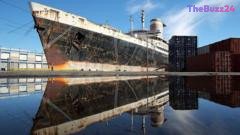
The SS United States Finds Final Resting Place as World’s Largest Artificial Reef
The SS United States, a legendary ocean liner once celebrated as the fastest ship in the world, has been intentionally scuttled off the coast of Destin, Florida. The vessel, which measures longer than the Titanic, was lowered into the ocean in a precision operation to serve as the world’s largest artificial reef. This transformation marks the end of a long, complex journey for the historic ship, which had spent nearly three decades docked in Philadelphia while various preservation efforts stalled.
During its operational heyday from 1952 to 1969, the SS United States was the premier mode of transatlantic travel for the global elite. The ship hosted a remarkable array of passengers, including former U.S. Presidents Harry Truman, Dwight Eisenhower, John F. Kennedy, and a young Bill Clinton. Its guest list also featured cultural icons such as Marlon Brando, Coco Chanel, Walt Disney, and Salvador Dali. Despite its storied past, the ship faced years of uncertainty as multiple proposals to convert it into a floating hotel or a permanent museum failed to materialize.
Following its purchase by a Florida county, the ship underwent extensive environmental remediation in Alabama to ensure it could safely support marine life. While preservationists, including the SS United States Conservancy, fought to keep the vessel intact as a historical monument, the decision to sink it provides a new purpose for the hull. Local authorities plan to complement the underwater site with a land-based museum dedicated to the ship’s legacy, ensuring that its history remains accessible to the public even as it becomes a sanctuary for marine ecosystems.
Key Takeaways
- The SS United States has been scuttled off the coast of Florida to become the world's largest artificial reef.
- The ship was a historic transatlantic liner that carried numerous U.S. presidents and global celebrities between 1952 and 1969.
- Despite efforts by the SS United States Conservancy to preserve the ship as a museum, it was ultimately repurposed to support marine biodiversity.
Editor’s Analysis & Impact
The scuttling of the SS United States represents a growing trend in maritime management where decommissioned vessels are repurposed to bolster marine biodiversity. By creating artificial reefs, coastal regions can stimulate local tourism and provide essential habitats for marine life, effectively turning historical liabilities into ecological assets. While the loss of such a significant piece of maritime history is lamented by preservationists, the move highlights the economic and logistical challenges of maintaining aging, massive steel structures. The future outlook for such projects remains positive, as they offer a sustainable alternative to scrapping, which is often environmentally hazardous. This event serves as a case study in balancing historical preservation with modern environmental needs, suggesting that the ‘second life’ of industrial icons may increasingly lie beneath the waves rather than in traditional museum settings.
Frequently Asked Questions
Q: Why was the SS United States sunk?
A: The ship was sunk to create the world's largest artificial reef, which will provide a habitat for marine life and serve as an underwater attraction for divers.
Q: What will happen to the history of the ship now that it is underwater?
A: Local authorities are planning to establish a land-based museum that will document the history of the SS United States, ensuring its legacy is preserved for future generations.
AI Disclosure: This article is based on verified data and official reports. Our Team and AI have cross-referenced every financial detail with primary sources to ensure total accuracy.
More from this Category