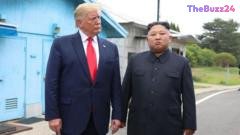
Trump Announces Reduction in US-South Korea Military Drills, Citing Costs and Diplomatic Ties
US President Donald Trump has announced plans to significantly scale back upcoming joint military exercises with South Korea. Trump pointed to the high financial burden of these operations, much of which is borne by the United States, and expressed concern that the drills send an unnecessarily hostile signal to North Korea. He emphasized his positive personal relationship with North Korean leader Kim Jong Un as a key factor in his decision-making process.
In addition to cost and diplomatic considerations with Pyongyang, Trump linked the decision to South Korea’s reluctance to support US foreign policy objectives elsewhere. Specifically, he revealed that Seoul had recently declined an invitation to assist the US in efforts aimed at the denuclearization of Iran. This refusal appears to have fueled frustration within the administration regarding the contributions of key global allies to shared security initiatives.
Despite the statements from the US President, military officials in Seoul indicated that the scheduled joint exercises, known as Ulchi Freedom Shield, would proceed as planned. The 11-day event is designed to involve approximately 18,000 South Korean service members alongside American forces. Currently, about 28,500 US military personnel are stationed in South Korea to deter potential aggression from the North, which recently conducted a series of banned ballistic missile tests.
This is not the first time Trump has altered the scale of joint military maneuvers in the region. During his first term in 2018, he suspended the exercises entirely to facilitate denuclearization talks with Kim Jong Un. The latest friction comes at a sensitive time, as South Korea’s leadership recently proposed renewed talks with North Korea to formally conclude the Korean War, which has technically remained active under an armistice since 1953.
Key Takeaways
- President Trump announced plans to significantly reduce joint military exercises with South Korea, citing high costs and a desire to maintain positive relations with North Korean leader Kim Jong Un.
- The decision was also influenced by South Korea's refusal to join US-led efforts concerning the denuclearization of Iran, highlighting growing friction between the allies.
- Despite Trump's statements, South Korean military officials stated that the scheduled 11-day Ulchi Freedom Shield exercises would proceed as planned.
Editor’s Analysis & Impact
Trump’s decision to scale back military exercises with South Korea underscores a persistent transactional approach to foreign policy and global alliances. By tying bilateral defense cooperation in East Asia to South Korea’s participation in Middle Eastern policy, the administration risks straining long-standing security partnerships. This move could create strategic uncertainty in the Indo-Pacific region, potentially emboldening North Korea and China. While Trump views the reduction of drills as a diplomatic olive branch to Kim Jong Un, defense analysts worry it may degrade joint military readiness. Moving forward, the divergence in priorities between Washington and Seoul could complicate efforts to present a unified front against Pyongyang’s accelerating missile and nuclear programs, especially as North Korea strengthens its geopolitical ties with Russia.
Frequently Asked Questions
Q: What are the Ulchi Freedom Shield exercises?
A: Ulchi Freedom Shield is an annual, large-scale joint military exercise conducted by the United States and South Korea to maintain defensive readiness and counter potential regional threats.
Q: Why is President Trump reducing these military drills?
A: Trump cited the high financial costs of the exercises to the US, their potentially hostile signal to North Korea, and South Korea's refusal to assist the US with diplomatic efforts regarding Iran.
Q: How has South Korea responded to the announcement?
A: South Korean military officials stated that the scheduled joint exercises would proceed as planned, despite the statements regarding scaling them back.
AI Disclosure: This article is based on verified data and official reports. Our Team and AI have cross-referenced every financial detail with primary sources to ensure total accuracy.
More from this Category