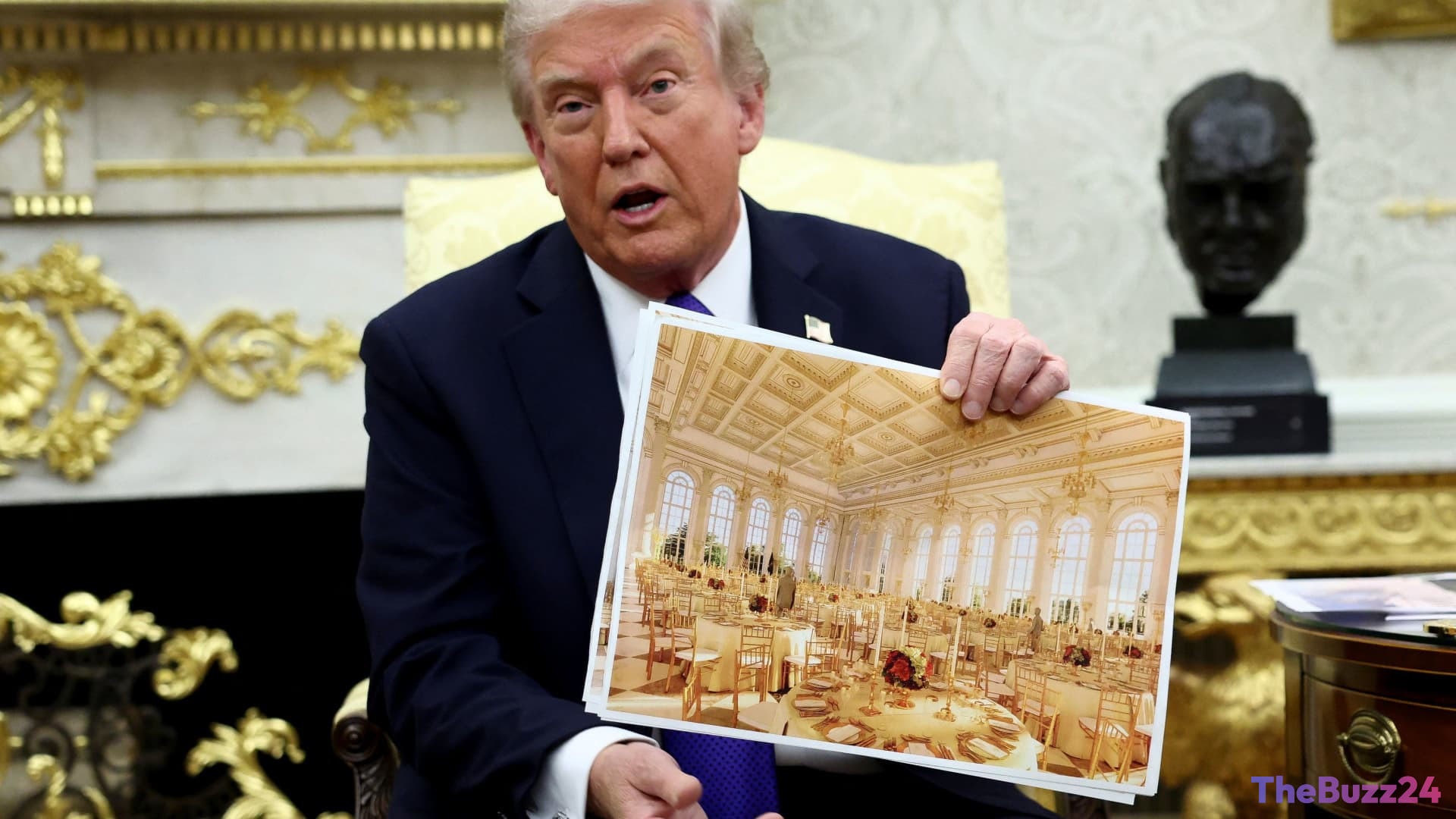
National Trust Stands Firm Against DOJ in White House Ballroom Legal Battle
The National Trust for Historic Preservation has officially rejected a request from the Department of Justice to withdraw its lawsuit challenging a proposed $400 million ballroom project on the White House grounds. The conflict centers on the legal necessity of obtaining explicit congressional authorization before commencing construction on the historic site. The government’s demand for the suit’s dismissal followed a security incident at the White House Correspondents’ Dinner, which prompted the evacuation of President Donald Trump.
In a formal response, attorney Gregory Craig, representing the National Trust, refuted the government’s assertion that the litigation compromises the President’s safety. Craig emphasized that the lawsuit is strictly a matter of constitutional and federal statutory compliance. He noted that the executive branch retains the ability to pursue the project through proper legislative channels if it chooses to seek the required congressional approval.
Proponents of the ballroom, including various Republican lawmakers, argue that the facility is essential for national security. They contend that a dedicated, secure space on the White House compound—equipped with reinforced glass and restricted access—would provide a safer alternative to hosting high-profile events at external venues. Conversely, the National Trust maintains that security concerns do not provide the executive branch with the authority to circumvent established legal protocols for federal construction projects.
This ongoing legal dispute follows a previous U.S. District Court ruling that temporarily halted the project due to the lack of congressional oversight. Although an appellate court subsequently lifted that injunction, the fundamental question regarding the extent of executive authority remains pending. The National Trust continues to assert that the project must adhere to standard legal requirements regardless of the administration’s security justifications.
Key Takeaways
- The National Trust for Historic Preservation is refusing to drop its lawsuit against a $400 million White House ballroom project.
- The core of the dispute is whether the executive branch can bypass congressional approval for construction on federal grounds.
- Proponents argue the ballroom is a security necessity, while the National Trust insists on adherence to constitutional and statutory legal processes.
Editor’s Analysis & Impact
The standoff between the National Trust and the Department of Justice highlights a significant tension between executive power and legislative oversight regarding federal property. By framing the construction as a security imperative, the administration is attempting to bypass traditional checks and balances, a move that legal experts view as a potential precedent-setting shift in how federal land is managed. If the project proceeds without congressional approval, it could weaken the influence of historic preservation laws and oversight bodies. Conversely, a victory for the National Trust would reinforce the necessity of legislative consent for major capital projects at the White House. The outcome of this litigation will likely serve as a bellwether for future disputes involving executive authority over federal infrastructure and the limits of national security justifications in administrative decision-making.
Frequently Asked Questions
Q: Why is the National Trust suing over the White House ballroom?
A: The National Trust is challenging the project because it believes the construction requires explicit congressional authorization, which has not been obtained.
Q: What is the government's justification for the ballroom?
A: Supporters argue that a dedicated, secure ballroom on the White House grounds is necessary to protect the President and guests, as it would eliminate the risks associated with hosting events at external venues.
AI Disclosure: This article is based on verified data and official reports. Our Team and AI have cross-referenced every financial detail with primary sources to ensure total accuracy.
More from this Category