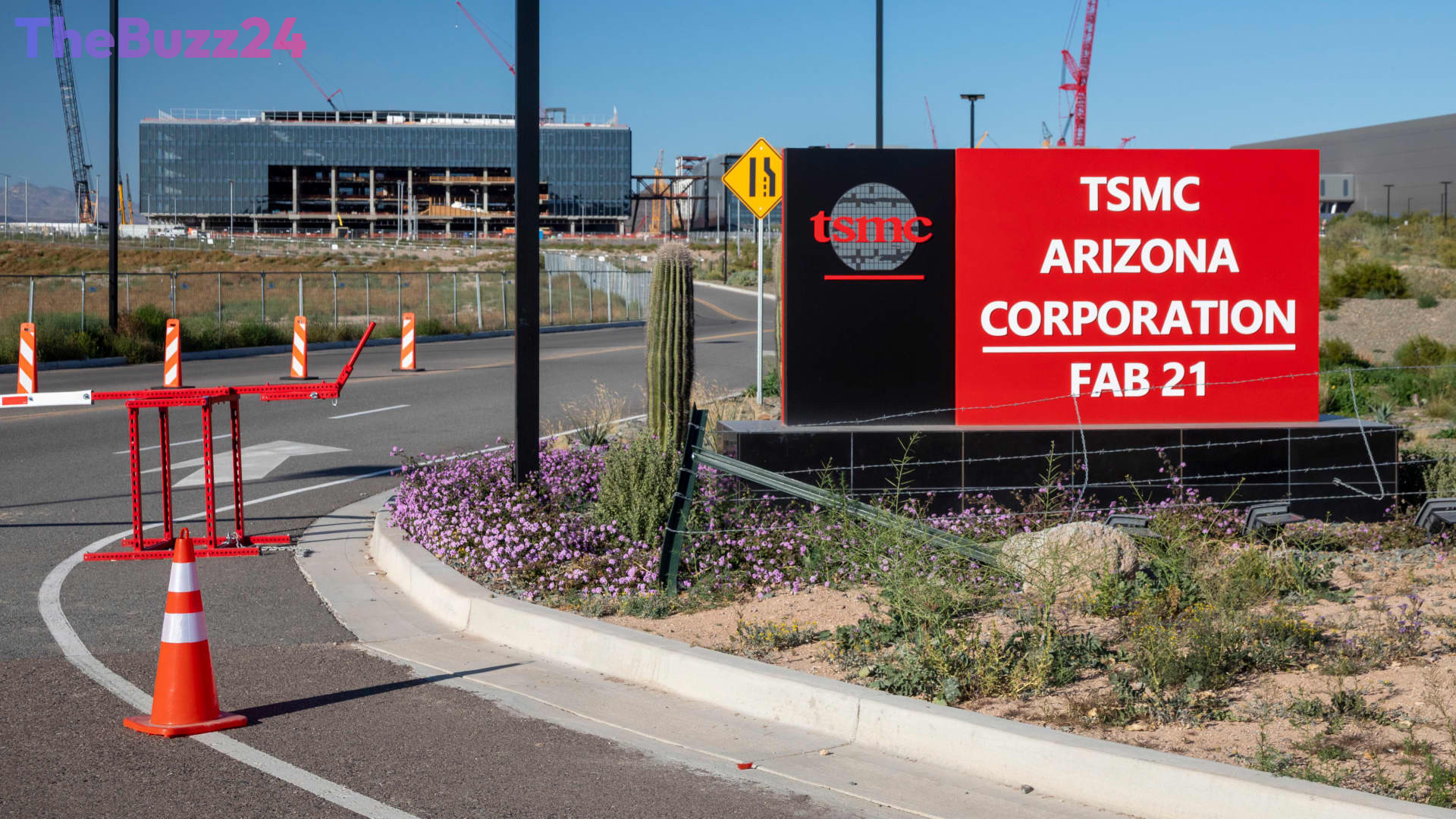
Trump’s ‘Made in America’ Push Squeezes TSMC Margins Amidst Record Profits
President Donald Trump’s sustained emphasis on bolstering domestic manufacturing is creating financial headwinds for Taiwan Semiconductor Manufacturing Company (TSMC), the world’s leading chip producer. Despite the company announcing substantial investments in U.S. facilities, the increased operational costs associated with building and running plants in America are beginning to impact its profit margins.
Since President Trump’s return to power in 2025, TSMC has committed an estimated $200 billion to U.S. manufacturing initiatives. This includes a recent pledge of $100 billion for advanced semiconductor fabrication and packaging plants within the United States. While the artificial intelligence (AI) boom has significantly boosted TSMC’s market capitalization, with a rise of over 100% in the past year, the company’s latest earnings report revealed that its blockbuster profits were partially offset by the costs of its overseas expansion.
Wendell Huang, TSMC’s Chief Financial Officer, noted during an earnings call that while gross margins exceeded expectations, this was counteracted by the dilution effect of its international facilities. He further cautioned that these margins would likely face continued pressure over the coming years as these overseas projects scale up. This expansion is partly driven by political pressure from the U.S. administration, which has advocated for and, at times, threatened tariffs on companies not producing goods domestically. The U.S. government views these investments as a direct result of its trade and economic policies, aiming to create jobs and re-establish advanced semiconductor manufacturing within the country.
Building advanced semiconductor facilities in the United States is considerably more expensive than in Taiwan. Analysts estimate that U.S.-produced chips could cost between 20% and 50% more, depending on various factors like subsidies and tax credits. Despite these increased costs, TSMC’s dominant position in the market for cutting-edge semiconductor technology means that a significant portion of these higher expenses may be passed on to its clients. Many of these clients are seeking to diversify their supply chains or are mandated by the U.S. government to source locally manufactured chips. TSMC is reportedly planning to increase prices for both advanced and mature chip production by up to 10% in 2027, a move that could help mitigate the margin dilution.
Key Takeaways
- President Trump's 'Made in America' policy is increasing operational costs for TSMC's U.S. manufacturing, impacting its profit margins.
- TSMC has committed $200 billion to U.S. semiconductor manufacturing, including a recent $100 billion investment, driven partly by political pressure and customer demand for supply chain diversification.
- Despite margin dilution from overseas expansion, TSMC's strong market position and potential price increases may help offset these costs.
Editor’s Analysis & Impact
The strategic push by the U.S. government for domestic semiconductor production, spearheaded by President Trump, presents a complex challenge for global leaders like TSMC. While the company benefits from the AI boom and customer diversification needs, the higher costs of U.S. manufacturing pose a direct threat to its historically high margins. This situation highlights a broader trend of geopolitical considerations influencing global supply chains. The long-term outlook suggests that companies will need to balance cost-efficiency with geopolitical imperatives, potentially leading to a recalibration of pricing strategies and a more regionalized approach to manufacturing.
Frequently Asked Questions
Q: Why is TSMC investing so heavily in the U.S.?
A: TSMC's significant investments in the U.S. are driven by a combination of factors, including political pressure from the U.S. administration to manufacture domestically, customer demand for supply chain diversification following global disruptions, and the growing market for advanced semiconductors, particularly for AI applications.
Q: How are U.S. manufacturing costs affecting TSMC's profits?
A: Building and operating semiconductor fabrication plants in the U.S. is considerably more expensive than in Taiwan. These higher costs lead to 'dilution' of TSMC's gross margins, meaning a smaller percentage of revenue is retained as profit, although the company's overall high margins and potential price increases can help mitigate this impact.
Q: Will customers have to pay more for chips due to TSMC's U.S. expansion?
A: Analysts suggest that TSMC's clients will likely bear a portion of the increased production costs associated with U.S.-made chips. TSMC itself is reportedly planning price hikes for its chips in 2027, which could be a strategy to offset the margin pressures from its overseas investments.
AI Disclosure: This article is based on verified data and official reports. Our Team and AI have cross-referenced every financial detail with primary sources to ensure total accuracy.
More from this Category