Unlikely Winners: How Japanese Toilet, Textile, and Food Companies Are Powering the Global AI Surge
While global investors traditionally associate artificial intelligence growth with silicon chipmakers and software giants, a group of unconventional Japanese companies is quietly capitalizing on the technology boom. Brands best known for household consumer products—such as sanitary ware manufacturer Toto, glass fiber producer Nittobo, and food seasoning maker Ajinomoto—have experienced significant stock rallies this year. By repurposing their proprietary materials and core manufacturing expertise, these legacy firms have integrated themselves directly into the critical supply chains powering advanced semiconductor production.
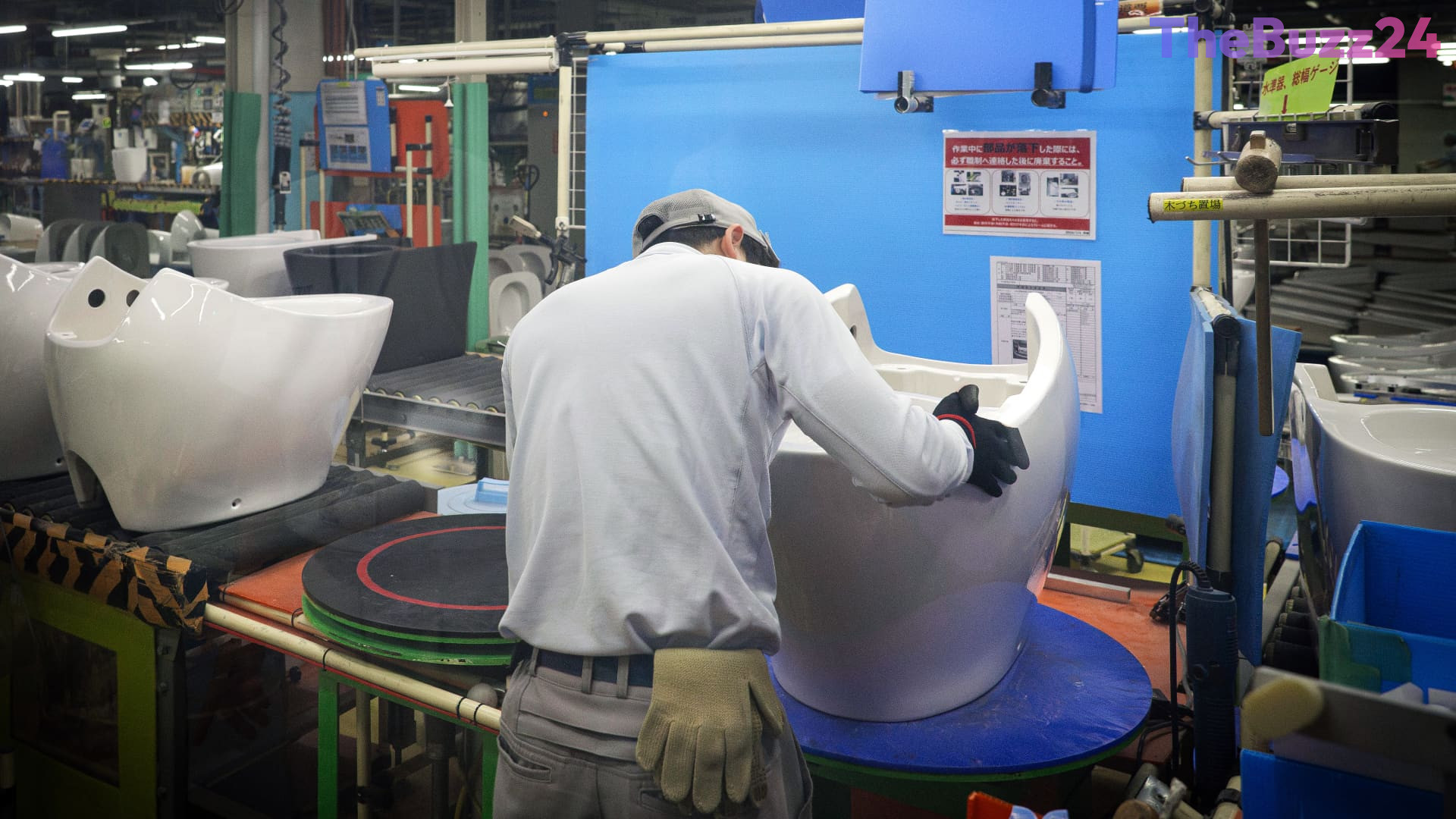
Sanitary giant Toto, famed for its luxury washlets, saw its stock jump dramatically after demand surged for its advanced ceramics division. The company produces specialized ceramic electrostatic chucks, which secure silicon wafers during the etching process in semiconductor manufacturing equipment. Although sales in Toto’s core housing fixtures segment softened, its advanced ceramics branch posted a 34% rise in annual revenue and a 42% increase in operating profit, single-handedly driving overall corporate growth. Despite the tech windfall, Toto maintains that it will keep a balanced focus on both its classic consumer housing segment and its high-growth ceramics line to hedge against tech sector volatility.
Similarly, textile specialist Nittobo has seen its shares rise 63%, driven by its electronic materials segment. The firm supplies specialized T-glass and high-grade glass fibers essential for printed circuit boards and server package substrates utilized in AI data centers. Operating profits in Nittobo’s electronic materials division surged by nearly 40%, accounting for the vast majority of the company’s annual profit growth. To support long-term demand, Nittobo is aggressively redirecting capital expenditure and research efforts toward expanding production capacity for special glass components targeted at next-generation network hardware.
Food conglomerate Ajinomoto has also leveraged its deep chemical expertise to become an indispensable player in high-tech hardware. Utilizing micro-technology derived from MSG seasoning production, the company developed Ajinomoto Build-up Film (ABF), an insulating material widely used in CPUs and graphics chips for AI servers. Strong demand for ABF helped push Ajinomoto’s specialty division profits up by over 45% year-over-year. As semiconductor packaging becomes increasingly complex, non-traditional industrial firms like Ajinomoto demonstrate how cross-industry innovation can deliver massive returns in the era of artificial intelligence.
Key Takeaways
- Non-tech Japanese firms including Toto, Nittobo, and Ajinomoto have seen stock gains exceeding 60% by supplying specialized materials for AI chip production.
- Core technological capabilities in ceramics, glass fibers, and chemical byproducts enabled these legacy brands to become vital semiconductor supply chain partners.
- Surging demand for AI data centers and server infrastructure is driving record financial growth in non-core high-tech divisions for traditional consumer companies.
Editor’s Analysis & Impact
The remarkable market performance of Toto, Nittobo, and Ajinomoto highlights the deep interdisciplinary reliance of the modern artificial intelligence ecosystem. Beyond primary chip designers and foundries, the AI hardware expansion relies heavily on specialized material science, high-performance insulation, and precision ceramic tooling. Japanese industrial manufacturers have long held quiet monopolies on niche chemical and structural components required for cutting-edge electronics. As data center buildouts accelerate worldwide, investors are increasingly looking beyond primary semiconductor designers to identify hidden beneficiaries across specialized industrial supply chains. However, these legacy firms face the strategic challenge of managing cyclical semiconductor demand while maintaining their stable, traditional consumer revenue bases.
Frequently Asked Questions
Q: How does a toilet manufacturer like Toto contribute to artificial intelligence?
A: Toto uses its advanced ceramics expertise to produce electrostatic chucks—precision components that hold silicon wafers in place during the delicate etching process required to manufacture high-performance chips.
Q: What is Ajinomoto Build-up Film (ABF), and why is it important for AI?
A: ABF is an advanced insulating film originally developed from an MSG manufacturing byproduct. It provides essential electrical insulation inside high-performance processors, including CPUs and GPUs crucial for running AI data centers.
Q: Are these companies abandoning their traditional consumer products?
A: No. These companies view their traditional consumer operations as stable financial foundations and plan to maintain a balanced business model to protect against the inherent volatility of the semiconductor industry.
AI Disclosure: This article is based on verified data and official reports. Our Team and AI have cross-referenced every financial detail with primary sources to ensure total accuracy.
More from this Category