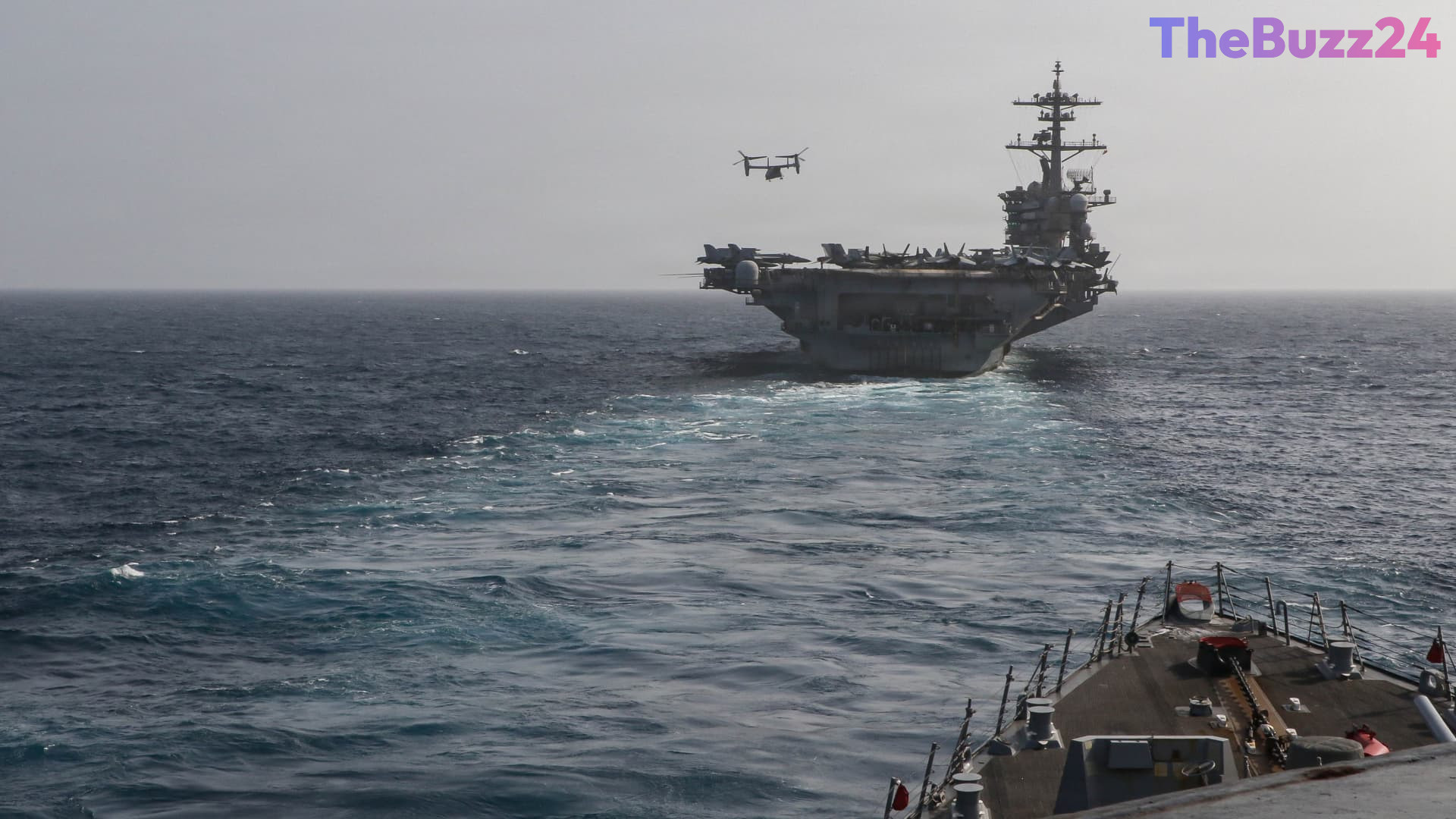
U.S. Escalates Military Response Following Iranian Attack on Commercial Vessel in Strait of Hormuz
The United States military has conducted a third round of targeted airstrikes against Iranian assets this week, marking a significant escalation in regional tensions. The military action follows an attack by the Islamic Revolutionary Guard Corps on the M/V GFS Galaxy, a Cyprus-flagged container ship. The vessel sustained severe damage to its engine room, resulting in an onboard fire and leaving one crew member missing.
In the wake of the strikes, the Iranian Revolutionary Guard declared the Strait of Hormuz closed to all maritime traffic until further notice. This move directly challenges international efforts to maintain the flow of global commerce through one of the world’s most critical energy chokepoints. The U.S. government has maintained that it will continue to degrade Iran’s capacity to threaten civilian mariners and commercial shipping, emphasizing that the strikes are a direct consequence of Tehran’s recent aggression.
The current conflict stems from a breakdown in the implementation of a June memorandum of understanding intended to secure safe passage through the strait. While the agreement aimed to prevent tolls and ensure transit, it failed to define specific navigational routes, leading to a dispute over territorial waters. As the U.S. asserts its commitment to keeping the waterway open, diplomatic efforts are underway in Oman, where international mediators are exploring potential frameworks for regulated transit fees to de-escalate the situation.
Key Takeaways
- The U.S. launched a third round of airstrikes against Iran following an attack on the M/V GFS Galaxy, which left one crew member missing.
- Iran has declared the Strait of Hormuz closed to all ship traffic, creating a major disruption to global maritime trade.
- Diplomatic negotiations are ongoing in Oman, with proposals being considered to allow non-compulsory navigational fees to resolve the transit dispute.
Editor’s Analysis & Impact
The ongoing confrontation in the Strait of Hormuz represents a critical inflection point for global energy security and maritime logistics. By targeting Iranian military infrastructure, the U.S. is signaling a shift toward a more aggressive posture to neutralize Tehran’s ability to weaponize the strait. The failure of the June memorandum of understanding highlights the fragility of diplomatic solutions when core territorial and economic interests remain undefined. Moving forward, the market should anticipate continued volatility in energy prices and shipping insurance premiums. If the closure of the strait persists, the global supply chain will face significant inflationary pressure, forcing international powers to either reach a binding regulatory agreement or risk a prolonged, high-stakes naval standoff that could destabilize the broader Middle Eastern region.
Frequently Asked Questions
Q: Why did the U.S. launch airstrikes against Iran?
A: The airstrikes were a retaliatory measure following an Iranian attack on the M/V GFS Galaxy, a commercial container ship, which caused significant damage and left a crew member missing.
Q: What is the current status of the Strait of Hormuz?
A: The Iranian Revolutionary Guard has declared the strait closed to all ship traffic until further notice, though the U.S. has vowed to ensure the continued flow of energy and commerce through the region.
AI Disclosure: This article is based on verified data and official reports. Our Team and AI have cross-referenced every financial detail with primary sources to ensure total accuracy.
More from this Category