Unconventional AI Unveils Oscillator-Based Architecture Aiming to Slash AI Energy Consumption
A startup founded by former Databricks AI chief Naveen Rao is looking to fundamentally reshape the future of artificial intelligence by addressing its most pressing bottleneck: energy consumption. Unconventional AI has introduced its first model, dubbed Un-0, which serves as a proof-of-concept for a revolutionary oscillator-based computing architecture. By moving away from traditional chip designs, the company aims to achieve inference processing that is up to 1,000 times more power-efficient than current industry standards.
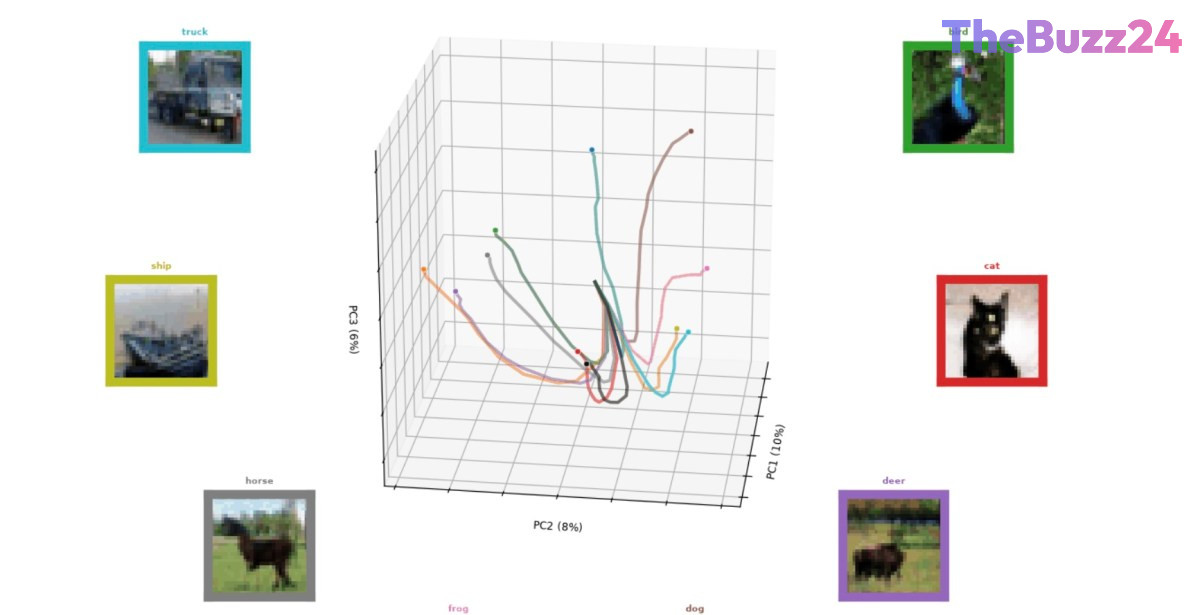
The Un-0 model, an image-generation system, demonstrates that this novel architecture can match the performance of state-of-the-art diffusion models currently dominating the market. While the current iteration relies on a software simulation, the company is preparing to release hardware schematics for its proprietary chips. The long-term vision is to establish a complete inference stack that provides compute capacity at a fraction of the energy cost required by today’s data centers.
With a team of fewer than 50 employees, Unconventional AI is positioning itself to tackle the looming energy crisis in the tech sector. As the demand for AI inference grows, power availability is increasingly viewed as the primary constraint on scaling. By rethinking the physical foundation of computing, the company hopes to bypass the energy limitations that threaten to stall the progress of large-scale AI deployment in the coming years.
Key Takeaways
- Unconventional AI has developed an oscillator-based architecture designed to reduce AI power consumption by up to 1,000 times.
- The company successfully demonstrated its technology with 'Un-0,' an image-generation model that performs on par with existing industry-leading diffusion models.
- The startup plans to move from software simulations to physical chip production, aiming to build a full-stack inference infrastructure that addresses the industry's energy-scaling limits.
Editor’s Analysis & Impact
The emergence of oscillator-based computing represents a significant departure from the von Neumann architecture that has defined modern computing for decades. As AI models grow in complexity, the ‘energy wall’ has become a critical concern for hyperscalers and hardware manufacturers alike. If Unconventional AI can successfully transition from simulation to silicon, it could disrupt the current dominance of GPU-centric inference. The broader implication is a shift toward specialized, energy-efficient hardware tailored specifically for neural network workloads. While the company faces the immense challenge of scaling manufacturing and software integration, the potential to lower operational costs by three orders of magnitude makes this a high-stakes development. Investors and industry incumbents will likely watch the transition to physical hardware closely, as it could redefine the economics of AI deployment.
Frequently Asked Questions
Q: What makes oscillator-based architecture different from traditional chips?
A: Traditional chips rely on standard digital logic gates, whereas oscillator-based computing uses the frequency and phase of oscillators to perform calculations, which can be significantly more energy-efficient for specific AI inference tasks.
Q: Is the Un-0 model currently running on physical hardware?
A: No, the current version of the Un-0 model is running on a software simulation of the company's proprietary architecture, with plans to release physical chip schematics in the near future.
AI Disclosure: This article is based on verified data and official reports. Our Team and AI have cross-referenced every financial detail with primary sources to ensure total accuracy.
More from this Category