Uniswap Pivots to Deflationary Model with New Fee-Burning Mechanism
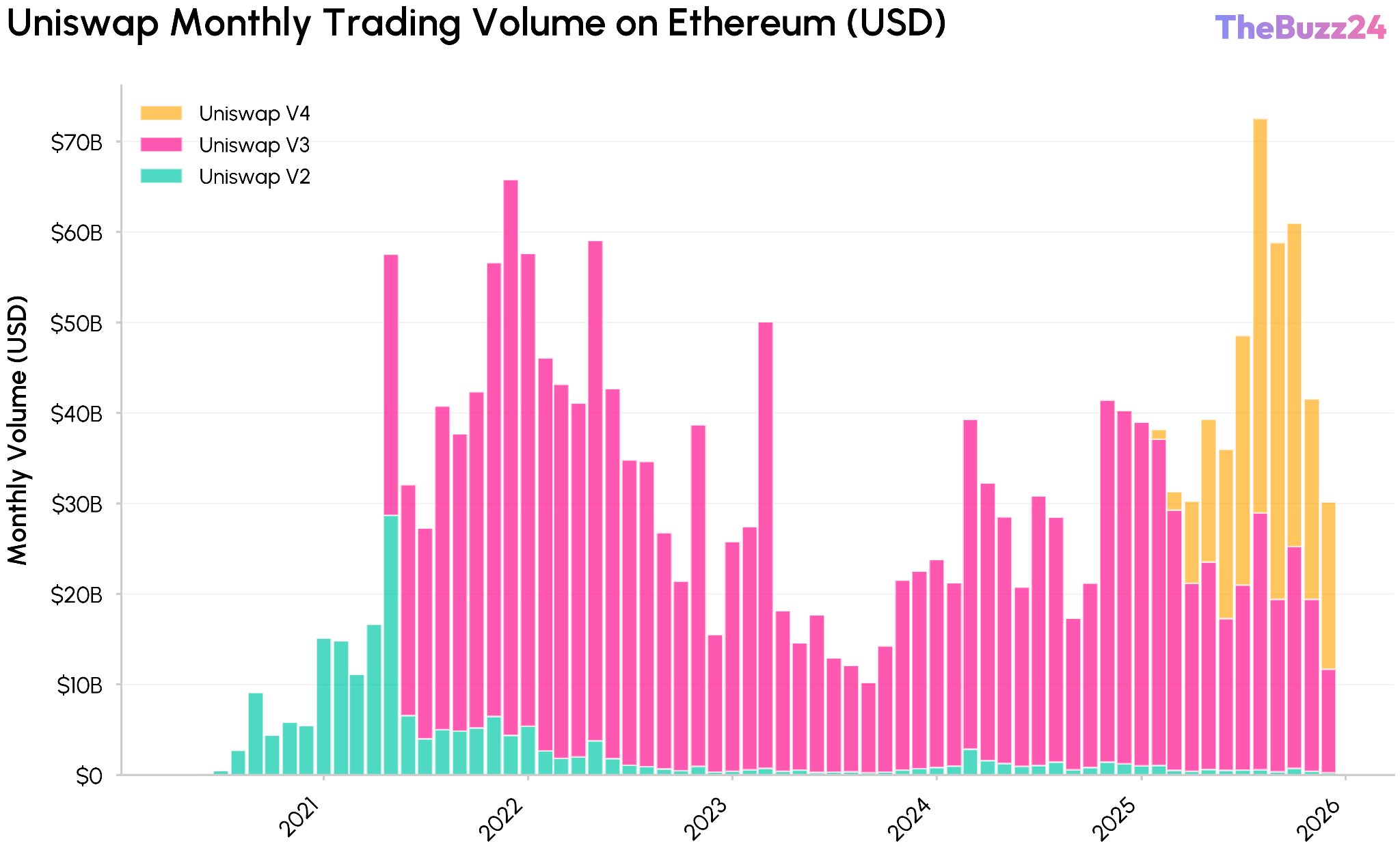
Uniswap has officially implemented a major strategic shift with the activation of a long-awaited ‘fee switch,’ fundamentally changing the economic utility of its native UNI token. Previously utilized primarily for governance, the token is now directly tied to the protocol’s financial performance. Under this new framework, revenue generated from v2 and v3 liquidity pools on the Ethereum mainnet, alongside earnings from the Unichain sequencer, are directed into a specialized vault. These funds are then deployed to systematically burn UNI, transitioning the asset into a deflationary model designed to reduce circulating supply.
This move addresses a persistent criticism within the decentralized finance (DeFi) sector regarding the lack of tangible value accrual for tokenholders despite high protocol usage. By linking token value to actual platform revenue, Uniswap is attempting to bridge the gap between governance utility and fundamental investment appeal. The protocol has already demonstrated its commitment to this model by executing a retroactive burn of 100 million UNI, reflecting historical activity and signaling a new era for the asset’s economic structure.
Early performance metrics indicate a strong start, with the protocol currently tracking an annualized revenue run-rate of approximately $26 million. While this transition enhances the fundamental investment case for UNI, it also invites increased scrutiny from market participants who are now evaluating the protocol based on sustainable fee capture rather than speculative governance narratives. As Uniswap moves forward, the industry is closely monitoring how this balance between fee collection and liquidity provider incentives will influence the broader DeFi ecosystem’s approach to value distribution.
Key Takeaways
- Uniswap has activated a fee switch that uses protocol revenue to burn UNI tokens, creating a deflationary supply mechanism.
- The protocol has already executed a one-time retroactive burn of 100 million UNI to account for historical platform activity.
- The shift moves UNI from a purely governance-based asset to one tied directly to the platform's financial performance and revenue generation.
Editor’s Analysis & Impact
The implementation of a fee-burning mechanism by Uniswap represents a maturation point for the decentralized finance sector. By transitioning from a ‘governance-only’ utility model to one that mirrors traditional equity-like value accrual, Uniswap is setting a new standard for how DeFi protocols should handle revenue. This shift is likely to force other major decentralized exchanges to reconsider their own tokenomics to remain competitive in attracting long-term investors. However, the challenge lies in maintaining the delicate balance between extracting fees and ensuring that liquidity providers remain incentivized to support the platform. If successful, this model could significantly reduce the volatility associated with governance tokens and provide a clearer framework for valuing decentralized protocols based on cash flow rather than speculative sentiment.
Frequently Asked Questions
Q: How does the new fee switch affect UNI tokenholders?
A: The fee switch creates a deflationary effect by using protocol revenue to burn UNI tokens, which reduces the total circulating supply and potentially increases the scarcity and value of remaining tokens.
Q: What sources of revenue are being used for the token burns?
A: Revenue is being collected from v2 and v3 liquidity pools on the Ethereum mainnet, as well as from the Unichain sequencer.
AI Disclosure: This article is based on verified data and official reports. Our Team and AI have cross-referenced every financial detail with primary sources to ensure total accuracy.
More from this Category