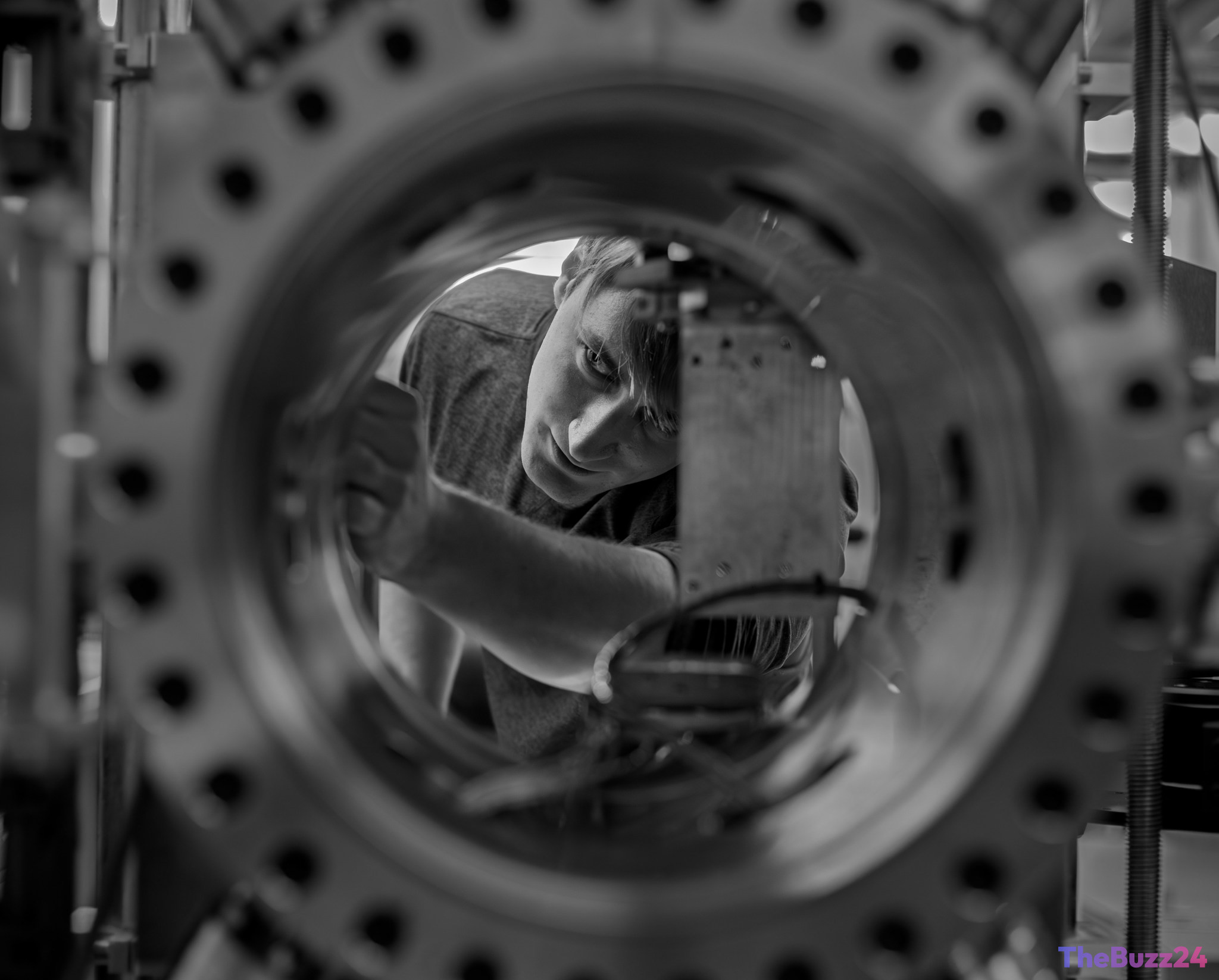
NASA Unveils ‘Dry’ Testing Facility to Revolutionize Lunar Hardware Durability
As international space agencies and private enterprises accelerate their plans for long-term lunar and Martian habitation, engineers are tackling the persistent issue of material failure in the harsh vacuum of space. Extreme thermal shifts, particularly the brutal cold of the lunar night, often cause standard components to become brittle and shatter. To combat these vulnerabilities, researchers at the Glenn Research Center have launched the Lunar Environment Structural Test Rig (LESTR), a cutting-edge facility engineered to simulate the punishing conditions of the lunar South Pole.
Historically, simulating deep-freeze environments required the use of volatile liquid cryogens like nitrogen or helium, which necessitated complex infrastructure and expensive safety protocols. The LESTR system bypasses these logistical hurdles by employing a high-powered mechanical cryocooler to extract heat. This ‘dry’ vacuum approach removes the need for liquid coolants, allowing the facility to reach temperatures as low as 40 Kelvin—approximately –388 degrees Fahrenheit—with enhanced safety and operational efficiency.
The rig is currently being utilized to stress-test next-generation materials, including advanced fabrics for future spacesuits and shape-memory alloys intended for rover tires. These alloys are engineered to withstand extreme deformation and thermal stress, ensuring that robotic explorers can navigate the rugged lunar and Martian landscapes without mechanical failure. Through partnerships with industry leaders like Fort Wayne Metals, the project is fast-tracking the development of resilient hardware vital for building permanent lunar bases.
By simplifying the testing process, the LESTR project marks a major milestone in aerospace engineering. The data gathered from these simulations will be essential for verifying the structural integrity of upcoming missions, providing engineers with critical insights into how materials behave under the most extreme cold environments in the solar system.
Key Takeaways
- The LESTR system uses a mechanical cryocooler to eliminate the need for hazardous and expensive liquid cryogens.
- The facility is currently testing advanced materials, including shape-memory alloys for rover tires and specialized spacesuit fabrics.
- This innovation reduces testing costs and complexity, enabling faster development cycles for critical lunar and Martian mission hardware.
Editor’s Analysis & Impact
The introduction of the LESTR system represents a fundamental shift in aerospace testing methodology. By moving away from liquid-based cooling, the industry can significantly lower operational costs and safety risks, thereby increasing the frequency and accessibility of material validation. This transition is a critical enabler for the burgeoning commercial space sector, allowing private firms to iterate more rapidly on lunar infrastructure designs. The ability to reliably test shape-memory alloys and advanced textiles in a controlled, dry environment will likely accelerate the timeline for sustainable lunar habitation. As the global space industry pivots toward a permanent presence on the Moon, the focus on material durability under extreme thermal cycling will become a primary differentiator for mission success, establishing this ‘dry’ testing technology as a cornerstone of future deep-space logistics.
Frequently Asked Questions
Q: Why is the LESTR system referred to as 'dry'?
A: It is called 'dry' because it utilizes a mechanical cryocooler to extract heat, removing the need for liquid cryogens like nitrogen or helium that require complex handling and storage.
Q: What specific materials are currently being tested in the LESTR?
A: The rig is testing specialized yarns for next-generation spacesuits and shape-memory alloys designed for rover tires that must endure extreme temperature fluctuations.
AI Disclosure: This article is based on verified data and official reports. Our Team and AI have cross-referenced every financial detail with primary sources to ensure total accuracy.
More from this Category