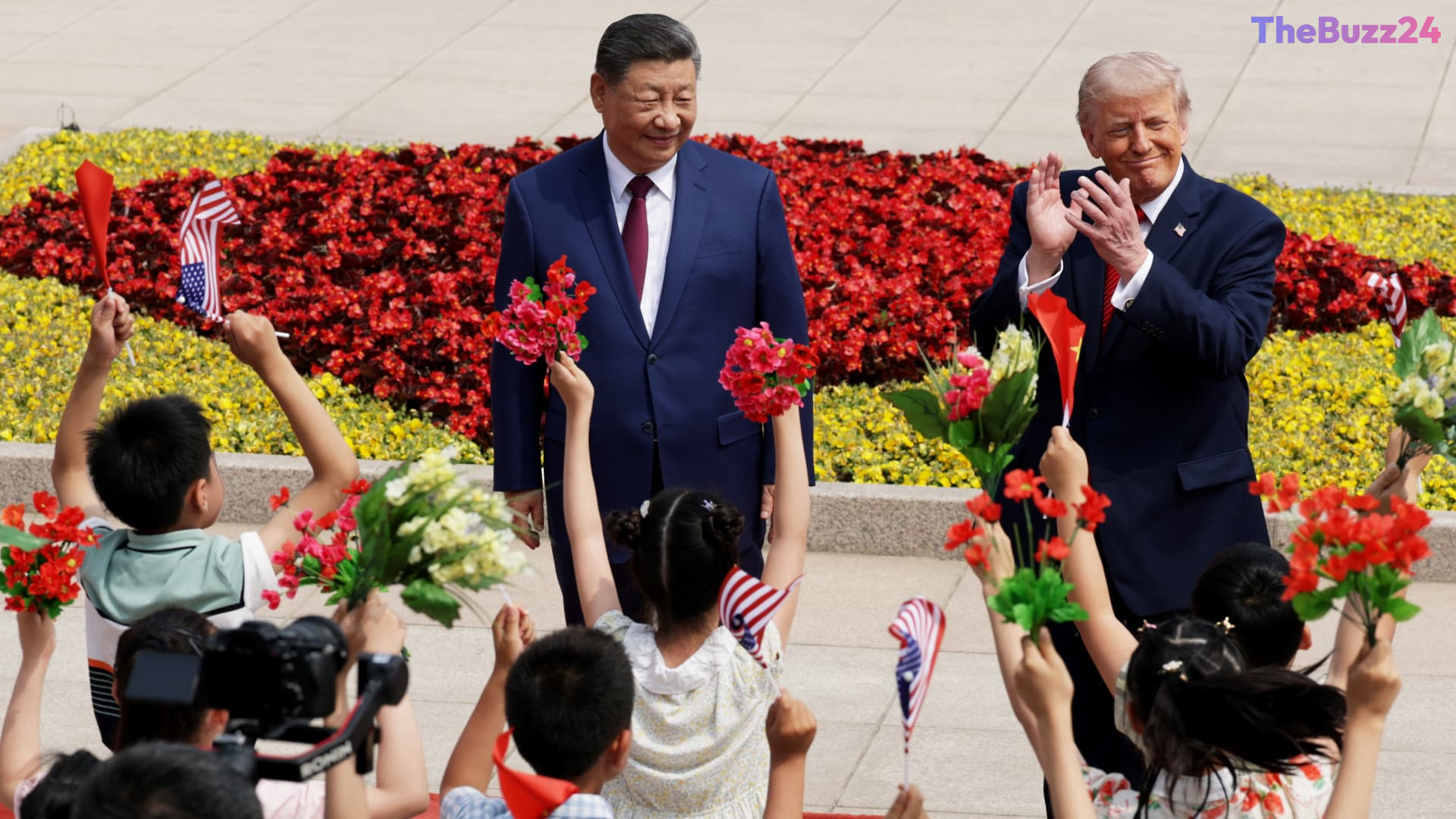
Trump and Xi Solidify Trade Truce in Beijing Summit as Tech and Aviation Deals Take Center Stage
U.S. President Donald Trump and Chinese President Xi Jinping have concluded a high-stakes, two-day summit in Beijing, reinforcing a fragile trade truce between the world’s two largest economies. The meeting, which had been delayed for over a month due to geopolitical friction surrounding the conflict in Iran, aimed to stabilize bilateral relations. While the summit concluded without major new sweeping treaties, both nations agreed to continue high-level discussions, with a follow-up summit scheduled to take place in the United States later this autumn.
Geopolitical tensions remained a central theme of the closed-door discussions. President Xi issued a firm warning regarding Taiwan, asserting that any diplomatic or military missteps by the U.S. could critically damage bilateral relations. On the economic front, President Trump indicated that Beijing had agreed to purchase American oil and assist in diplomatic negotiations regarding Iran. However, official confirmation of these oil purchases has not yet been released by Beijing, and Washington has maintained a public silence regarding the sensitive Taiwan discussions.
Despite the lack of new comprehensive trade agreements, the existing trade truce—established in October and active until October 2025—remains firmly in place. This framework continues to keep tariffs reduced and eases restrictions on critical rare earth minerals. Additionally, the leaders agreed on a “strategic stability” framework designed to guide diplomatic relations over the next three years.
The summit yielded notable wins for major American corporations. Boeing secured an order for 200 commercial jets from China, outperforming the aerospace giant’s recent expectations. Meanwhile, semiconductor leader Nvidia received regulatory approval from Washington to export its advanced H200 chips to major Chinese technology firms, sparking a rally in tech stocks. A high-profile delegation of American executives, including Apple’s Tim Cook, Tesla’s Elon Musk, Nvidia’s Jensen Huang, and Boeing’s Kelly Ortberg, also met with Chinese Premier Li Qiang, who reiterated China’s commitment to expanding market access for foreign enterprises.
Key Takeaways
- The U.S.-China trade truce remains intact through October 2025, with plans for a follow-up summit in the U.S. this fall.
- Major business agreements were highlighted, including Boeing securing an order for 200 jets and Nvidia gaining approval to sell H200 chips to Chinese firms.
- Geopolitical tensions persist, particularly regarding Taiwan and oil trade, though both nations agreed to a three-year 'strategic stability' framework.
Editor’s Analysis & Impact
The Beijing summit underscores a pragmatic shift in U.S.-China relations, prioritizing economic stability over escalating geopolitical rivalries. By maintaining the existing trade truce until late 2025, both nations have provided global markets with a much-needed sense of predictability. The regulatory greenlight for Nvidia’s H200 chips and Boeing’s massive jet order demonstrate that commercial interests remain a powerful bridge between Washington and Beijing, even amid intense tech competition. However, the underlying friction points—specifically Taiwan’s sovereignty and energy security—remain unresolved and highly volatile. Investors should view this summit as a temporary stabilization rather than a permanent resolution. The upcoming autumn meeting in the U.S. will be the true test of whether this ‘strategic stability’ framework can withstand deep-seated geopolitical pressures.
Frequently Asked Questions
Q: What is the current status of the U.S.-China trade truce?
A: The trade truce, originally established in October, remains active and is set to expire in October 2025. It continues to keep tariffs reduced and eases trade restrictions on rare earth minerals.
Q: Which major U.S. companies secured deals during the summit?
A: Boeing secured an order for 200 jets from China, and Nvidia received U.S. government approval to supply its high-tech H200 chips to prominent Chinese companies.
Q: What geopolitical issues were discussed by Trump and Xi?
A: The leaders discussed sensitive issues including Taiwan's status, potential Chinese purchases of American oil, and diplomatic cooperation regarding negotiations over the conflict in Iran.
AI Disclosure: This article is based on verified data and official reports. Our Team and AI have cross-referenced every financial detail with primary sources to ensure total accuracy.
More from this Category