Bipartisan Pushback Grows Against Chinese Automotive Market Expansion in the U.S.
A bipartisan coalition of U.S. lawmakers is intensifying pressure on the administration to maintain strict barriers against Chinese automakers, citing profound concerns over national security and the preservation of domestic manufacturing jobs. As trade discussions continue, legislators are warning that allowing Chinese firms greater access to the American market could undermine the stability of the U.S. automotive sector, particularly in critical Rust Belt manufacturing hubs. The debate has been fueled by recent political discourse regarding the potential for Chinese companies to establish local production facilities, a prospect that has drawn sharp criticism from those who fear it could lead to long-term economic vulnerability.
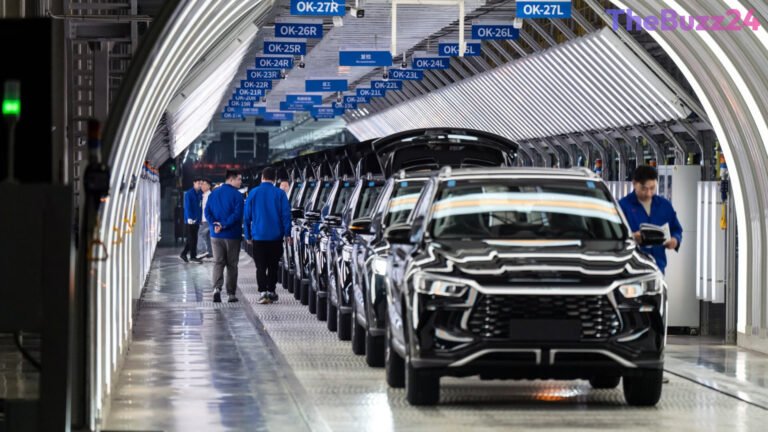
While major Chinese manufacturers like BYD, SAIC Motor, and Zhejiang Geely Holding Group currently lack a direct retail presence in the U.S. due to existing tariffs, their influence is already deeply woven into the American supply chain. Data indicates that Chinese entities own or hold significant stakes in dozens of U.S.-based suppliers, providing essential components ranging from steering systems to airbags. Consequently, many popular vehicles from brands such as Ford, General Motors, and Toyota already incorporate Chinese-manufactured parts, highlighting the complexity of decoupling the two nations’ automotive industries.
Legislative efforts are now gaining momentum in both the House and Senate to address these vulnerabilities. New proposals aim to restrict the use of Chinese-made software and hardware in connected vehicles, with proponents citing the potential for unauthorized data collection and surveillance. Lawmakers are drawing parallels to the solar panel industry, warning that if Chinese firms are permitted to leverage state-backed subsidies to undercut U.S. pricing, it could lead to a rapid erosion of American industrial capacity, ultimately trading short-term consumer affordability for long-term economic dependence.
Key Takeaways
- Bipartisan lawmakers are pushing to block Chinese automakers from gaining a larger foothold in the U.S. market to protect domestic jobs and national security.
- Chinese influence is already significant in the U.S. auto industry, with many domestic vehicles relying on components supplied by Chinese-owned companies.
- New legislative proposals are targeting Chinese-made software and connected vehicle technology due to concerns over data privacy and potential surveillance.
Editor’s Analysis & Impact
The tension surrounding Chinese automotive access represents a pivotal intersection of trade policy, national security, and industrial strategy. The U.S. is currently grappling with the ‘China shock’ experience seen in other sectors like solar energy, where rapid market saturation by state-subsidized firms decimated domestic manufacturing. The current push to restrict Chinese software and hardware in connected vehicles signals a shift toward ‘technological protectionism,’ where the focus is moving beyond physical trade to the security of data and digital infrastructure. Moving forward, the industry should expect a more rigorous regulatory environment regarding supply chain transparency. If these legislative efforts succeed, it will likely force a massive, costly restructuring of automotive supply chains, potentially increasing vehicle prices in the short term while aiming to secure long-term domestic industrial sovereignty.
Frequently Asked Questions
Q: Why are lawmakers concerned about Chinese automakers entering the U.S. market?
A: Lawmakers fear that Chinese companies, often supported by state subsidies, could undercut American manufacturers, leading to job losses and a loss of industrial capacity, while also raising concerns about data privacy and national security regarding connected vehicle technology.
Q: Are Chinese-made parts already in American cars?
A: Yes. While Chinese brands do not have a large retail presence in the U.S., Chinese-owned suppliers provide critical components like airbags and steering systems for many vehicles sold by major manufacturers like Ford, General Motors, and Toyota.
AI Disclosure: This article is based on verified data and official reports. Our Team and AI have cross-referenced every financial detail with primary sources to ensure total accuracy.
More from this Category