US Secures Historic 100-Year Oil Deal in Venezuela Amid Intense Geopolitical Backlash
In a move that has sent shockwaves through global energy markets and triggered intense political debate, the United States and Venezuela have finalized a monumental oil agreement in Caracas. The historic pact grants a US-led consortium 100-year concessions over 17 Venezuelan oilfields, encompassing an estimated 65 billion barrels of crude oil. This massive reserve represents more than 20 percent of Venezuela’s total proven oil reserves, marking a dramatic shift in the geopolitical landscape of global energy.
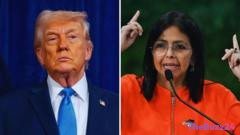
Under the framework of the agreement, the US government will collaborate with North American Blue Energy Partners (Nabep), a prominent private oil producer operating in Venezuela. A highly unusual clause in the deal grants the US government veto power over Nabep’s board of directors, stipulating that a majority of the board members must be US citizens. While US President Donald Trump hailed the agreement as the largest oil deal in history, Venezuelan interim President Delcy Rodríguez projected it would generate $100 billion in direct investment and over $200 billion in tax revenues.
Despite the optimistic projections from leadership, the deal has drawn fierce criticism from both sides of the political spectrum. Critics, including former US special representative Elliott Abrams, have condemned the terms as highly lopsided, comparing the arrangement to historical colonialism. Furthermore, energy experts warn that the timeline for profitability is highly unrealistic. Given the severely degraded state of Venezuela’s energy infrastructure, analysts estimate that restoring production to historical levels will require at least $100 billion in investment over eight years, pushing realistic returns back by a decade.
Within Venezuela, the agreement has sparked deep resentment. The political opposition accuses Washington of abandoning its commitment to restoring democratic order by partnering with Rodríguez, a key figure linked to the previous administration of Nicolás Maduro. Meanwhile, traditional Venezuelan socialists view the deal as a complete capitulation of national sovereignty, drawing stark contrasts to the late President Hugo Chávez’s famous nationalization of foreign oil assets in 2008.
Key Takeaways
- The US and Venezuela have signed a 100-year oil deal covering 17 oilfields and 65 billion barrels of crude, representing over 20% of Venezuela's reserves.
- The US government will hold veto power over the board of partner firm Nabep, requiring a majority of its board members to be US citizens.
- The deal faces heavy criticism from Venezuelan opposition leaders, socialists, and international analysts who view the terms as neo-colonial and the timeline for profitability as highly unrealistic.
Editor’s Analysis & Impact
This unprecedented agreement represents an aggressive revival of the Monroe Doctrine, aiming to secure American energy dominance in the Western Hemisphere while bypassing traditional Middle Eastern supply chains. By locking in a century-long concession, the US seeks to insulate its domestic market from geopolitical shocks, particularly amid ongoing tensions with Iran. However, the operational reality presents severe hurdles. Venezuela’s oil infrastructure has suffered from years of underinvestment and mismanagement; transforming these reserves into active, profitable production will require massive capital expenditure that private markets may be hesitant to fund under such politically volatile conditions. Furthermore, by bypassing democratic transitions to secure resource control, the US risks long-term reputational damage in Latin America, potentially fueling a future wave of resource nationalism if political winds shift in Caracas.
Frequently Asked Questions
Q: What are the key terms of the US-Venezuela oil deal?
A: The deal grants a US-led company 100-year concessions over 17 Venezuelan oilfields, containing about 65 billion barrels of crude. Additionally, the US government secures veto power over the board of directors of partner firm Nabep, which must maintain a majority of US citizens.
Q: Why is the agreement facing backlash within Venezuela?
A: The Venezuelan opposition feels betrayed that the US partnered with Delcy Rodríguez's administration instead of pushing for democratic reforms. Concurrently, Venezuelan socialists view the deal as a capitulation of national sovereignty and a return to foreign exploitation.
Q: How long will it take for the deal to become profitable?
A: While political leaders claim profits will materialize within two to three years, energy analysts estimate it will take at least eight to ten years and approximately $100 billion in infrastructure investment to restore Venezuela's oil production to viable levels.
AI Disclosure: This article is based on verified data and official reports. Our Team and AI have cross-referenced every financial detail with primary sources to ensure total accuracy.
More from this Category