The Dawn of Autonomous Aviation: Self-Flying Planes Poised to Reshape Skies
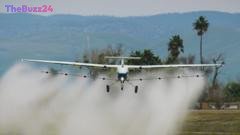
In the vast agricultural landscapes of California’s San Joaquin Valley, a new era of aviation is quietly taking flight. Pilotless crop-spraying planes, like those developed by the startup Pyka, are demonstrating capabilities that can surpass human pilots, flying lower to the ground to minimize spray drift and chemical usage. These advanced aircraft, designed without traditional cockpits, are at the forefront of a burgeoning industry focused on autonomous fixed-wing aircraft for commercial applications, ranging from agriculture to cargo delivery.
While the public’s attention has often been captured by the futuristic concept of urban air taxis (eVTOLs), a parallel and perhaps more immediate race is underway to deploy self-flying planes. Companies like Pyka envision a future where these aircraft could eventually transport passengers, with CEO Michael Norcia suggesting this could happen sooner than widespread eVTOL adoption. Pyka’s electric crop sprayers, boasting an 11.5-meter wingspan, are already operational in Brazil, performing essential agricultural tasks. These planes can fly for approximately 35 minutes, carrying substantial payloads, and are programmed with sophisticated software that maps routes and accounts for obstacles, enabling precise, automated operations.
The development of autonomous flight systems, distinct from traditional autopilot, aims for complete control of take-off, flight, and landing with minimal human intervention. Despite operating in a more structured environment than self-driving cars, autonomous aircraft have faced a slower development path, partly due to significant investment in automotive AI and the exceptionally high safety standards mandated for aviation. The potential for severe consequences in air accidents necessitates rigorous testing and validation. Military interest has also been a significant catalyst, with defense contracts accelerating trials and deployment, often with fewer regulatory hurdles.
Several companies are pioneering this technology. Pyka, with its crop sprayer already approved for limited commercial use in the US and Brazil, aims to significantly scale production. UK-based Windracers is seeking approval for an autonomous cargo service in remote areas, with its aircraft already deployed in Ukraine. Other firms, such as Reliable Robotics and Merlin Labs, are retrofitting existing aircraft with autonomous systems, taking different approaches to artificial intelligence. Reliable Robotics is avoiding AI for certification simplicity, while Merlin Labs is embracing an AI-centric model. The critical challenge of ‘detect and avoid’ systems, replicating a pilot’s situational awareness, is being addressed through a combination of advanced sensors, radar, and increasingly, AI-powered cameras and generative AI for communication with air traffic control, signaling a transformative future for aviation safety and efficiency.
Key Takeaways
- Autonomous fixed-wing aircraft are being developed for commercial use in agriculture and cargo delivery, with potential future passenger applications.
- Companies are employing diverse strategies regarding AI integration and aircraft design (new builds vs. retrofitting) to achieve autonomous flight.
- While facing stringent safety regulations and some industry skepticism, autonomous aviation promises increased efficiency, reduced operational costs, and potentially enhanced safety.
Editor’s Analysis & Impact
The push towards autonomous aviation represents a significant technological leap with profound implications for multiple industries. Beyond the immediate applications in agriculture and cargo, the development of these systems addresses critical issues like pilot shortages and the need for safer, more efficient operations. The differing approaches to AI, from avoidance to deep integration, highlight the complex challenges and opportunities in certifying and deploying these advanced technologies. As regulatory frameworks evolve and safety concerns are meticulously addressed, autonomous aircraft are poised to become a common sight, potentially lowering costs for consumers and businesses, and paving the way for a new era of air travel that could eventually extend to passenger transport.
Frequently Asked Questions
Q: What is the difference between autopilot and autonomous flight?
A: Autopilot systems assist pilots by automating certain flight functions, similar to cruise control in a car. Autonomous flight systems, on the other hand, are designed to manage the entire flight, including take-off and landing, with little to no human intervention, using complex algorithms and sensors to make decisions.
Q: Why have self-flying planes been slower to develop than self-driving cars?
A: The development of autonomous aircraft has been slower due to several factors, including the immense investment poured into self-driving car technology by major tech companies, and the significantly higher and more stringent safety standards required for aviation, where the consequences of failure can be far more severe.
Q: What are the main challenges in achieving fully autonomous flight?
A: Key challenges include replicating a pilot's ability to 'detect and avoid' other aircraft and obstacles in real-time, ensuring robust communication with air traffic control, and meeting extremely high safety and certification standards. Developing reliable AI for these tasks and gaining regulatory approval are also significant hurdles.
AI Disclosure: This article is based on verified data and official reports. Our Team and AI have cross-referenced every financial detail with primary sources to ensure total accuracy.
More from this Category