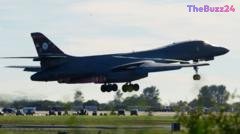
US Withdraws B-1 Bombers from RAF Fairford Amid Heightened Security Concerns
The United States military has relocated its fleet of B-1 bombers from RAF Fairford in the United Kingdom back to their domestic home stations. The move follows a series of security incidents at the Gloucestershire airbase, including a late September event where police investigated suspicious vehicles near the perimeter. While official statements from both Washington and London emphasize that the base remains secure, the withdrawal is widely viewed as a precautionary measure following intelligence reports regarding potential threats.
Counter-terror investigations are currently underway involving several individuals arrested in connection with the base, including a UK-Iranian national. Although US officials have characterized the movement of assets as routine operational redeployment, sources indicate that the decision was driven by specific threat intelligence linked to Iran-backed actors. The B-1 bombers, which are considered high-value strategic assets, had been utilizing the Cotswolds base as a forward operating location for missions in the Middle East.
The departure of the aircraft has brought a sense of relief to local residents who had expressed growing concerns over noise and safety in recent weeks. While the US maintains that it retains the capability to conduct precision strikes from domestic soil if necessary, the loss of the RAF Fairford foothold marks a significant shift in the current operational posture of US forces in Europe. Government officials in the UK have reiterated their commitment to the security of military installations, though opposition figures have called for a comprehensive review of base defense strategies.
Key Takeaways
- The US has relocated its B-1 bomber fleet from RAF Fairford back to the United States following specific threat intelligence.
- The withdrawal follows a security incident in late September involving suspicious vehicles and ongoing counter-terror investigations.
- While officials describe the move as a precautionary measure, the base remains a critical strategic asset for US operations in the Middle East.
Editor’s Analysis & Impact
The withdrawal of B-1 bombers from RAF Fairford highlights the increasing vulnerability of forward-deployed military assets in an era of asymmetric warfare and state-sponsored espionage. By removing these high-value, irreplaceable strategic platforms, the US is prioritizing asset preservation over immediate regional proximity. This move signals a shift in how Western powers manage the risk of operating from host nations that may be targeted by foreign intelligence services. Looking ahead, this incident will likely force a reassessment of security protocols at overseas bases, potentially leading to increased investments in perimeter defense, advanced surveillance, and counter-drone technologies. The broader implication is a more cautious approach to basing, where the political and security costs of hosting offensive strike capabilities are being weighed more heavily against the tactical advantages of geographic proximity.
Frequently Asked Questions
Q: Why were the B-1 bombers moved from RAF Fairford?
A: The bombers were relocated as a precautionary measure following intelligence reports of potential threats and a security incident involving suspicious vehicles near the base.
Q: Does the withdrawal mean the US can no longer conduct strikes in the region?
A: No. While the US loses a convenient forward operating location, it retains the capability to conduct precision strikes directly from the United States, as demonstrated in previous operations.
AI Disclosure: This article is based on verified data and official reports. Our Team and AI have cross-referenced every financial detail with primary sources to ensure total accuracy.
More from this Category