Venus Aerospace Secures $90M to Propel Advanced Rocket Engine Development for Defense and Space
Venus Aerospace, a pioneer in advanced propulsion technology, has successfully closed a $90 million Series B funding round, signaling a significant acceleration in its mission to develop a new generation of rocket engines. The company, founded in 2020 by CEO Sassie Duggleby and CTO Andrew Duggleby, initially aimed to create clean-flying hypersonic jets for passenger travel. However, a pivotal shift occurred after the successful demonstration of their Rotating Detonation Rocket Engine (RDRE) last year, drawing unexpected interest from defense and space sectors.
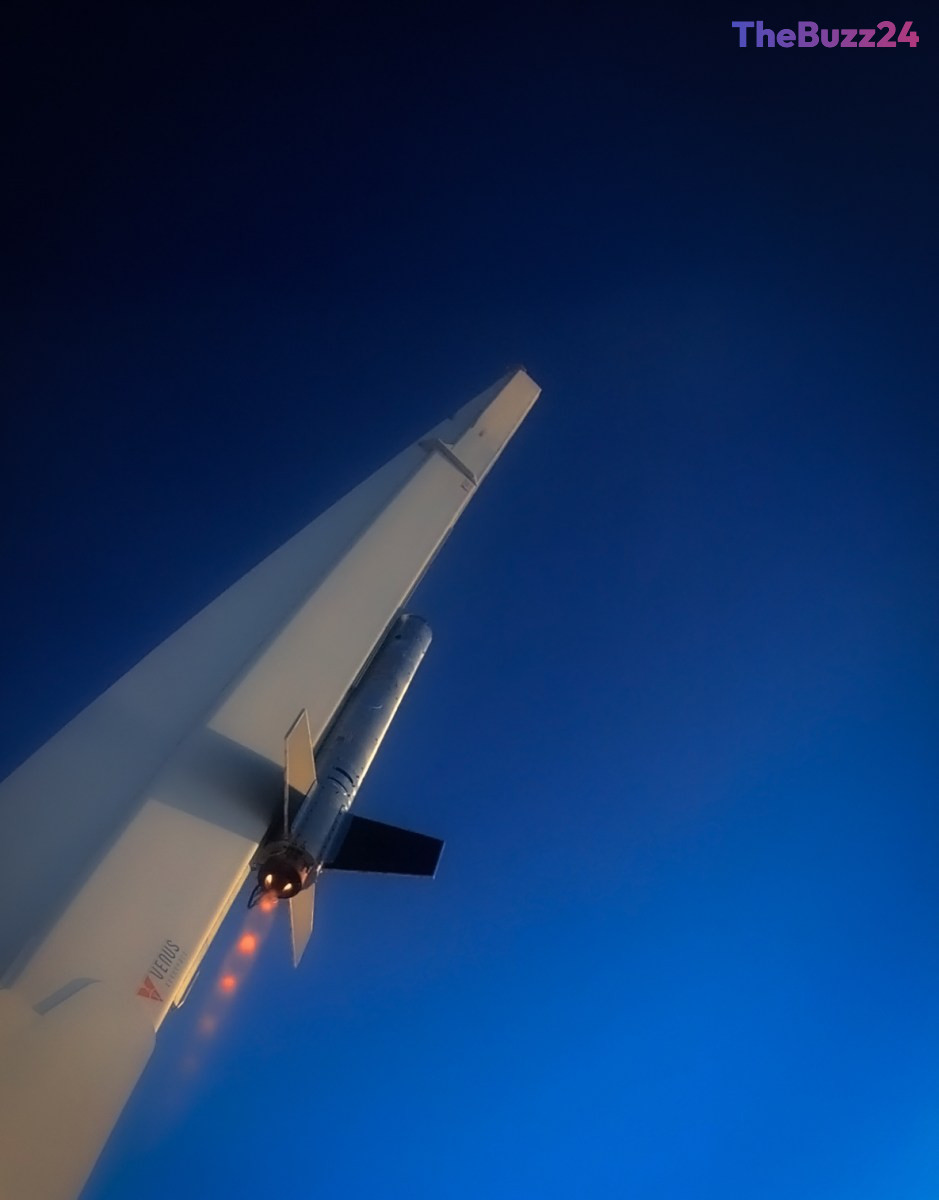
The RDRE represents a groundbreaking approach to propulsion, conceived in the mid-20th century as a more efficient alternative to conventional rocket engines. Instead of continuous burning in a chamber, the RDRE generates thrust through a supersonic wave of combustion that rotates within a circular channel, promising reduced propellant waste. While the complex physics initially posed significant challenges, recent advancements in 3D printing and simulation technologies have enabled breakthroughs. Notably, the University of Central Florida conducted the first working test in 2020, followed by NASA’s ground demonstration in 2022 and JAXA’s in-space firing in 2021. Venus Aerospace’s 2025 test marked the first time an RDRE successfully launched a rocket into flight.
This market interest prompted Venus Aerospace to pivot its focus towards developing RDREs for hypersonic weapons and high-speed space vehicles, replacing traditional solid rocket motors with their more efficient thrusters. The $90 million Series B funding is earmarked to advance testing and development work on specific vehicle designs in collaboration with potential customers. The round was led by Mercury Fund, with key participation from Lockheed Martin Ventures, MESH, PEAK6, Draper Associates, Starboard Star Venture Capital, and Green Sands Equity, underscoring strong industry confidence in the technology’s potential.
Addressing a critical engineering challenge, the company has successfully solved the issue of preventing the engine from melting during operation, a significant hurdle in RDRE development. Looking ahead, Venus Aerospace recently secured a grant from the Texas Space Commission to construct a larger test stand. This facility will be crucial for extending engine burn times from the current maximum of 32 seconds to the 6 to 15 minutes required to meet the operational demands of its defense and space customers, paving the way for the deployment of reliable, high-performance propulsion systems.
Key Takeaways
- Venus Aerospace secured $90 million in Series B funding to advance its Rotating Detonation Rocket Engine (RDRE) technology.
- The company has shifted its primary focus from hypersonic passenger travel to developing RDREs for defense applications, including hypersonic weapons and high-speed space vehicles, driven by market demand.
- The funding will enable critical testing and development, including building a larger test stand, to achieve longer engine burn times necessary for operational defense and space missions.
Editor’s Analysis & Impact
This substantial funding round for Venus Aerospace highlights the escalating strategic importance of hypersonic technology across both defense and commercial space sectors. The successful demonstration of their Rotating Detonation Rocket Engine (RDRE) and subsequent investment underscore a significant industry shift towards advanced propulsion systems offering greater efficiency and reusability. The company’s pivot towards defense applications suggests a robust market for RDRE technology, potentially disrupting traditional solid rocket motor designs. Achieving sustained, longer burn times will be crucial for Venus Aerospace to solidify its position as a key player. This development could accelerate the deployment of next-generation defense capabilities and enhance space access, potentially influencing geopolitical dynamics and commercial space ventures. The involvement of investors like Lockheed Martin Ventures signals strong industry confidence in the technology’s practical applications and future impact.
Frequently Asked Questions
Q: What is a Rotating Detonation Rocket Engine (RDRE)?
A: An RDRE is an advanced rocket propulsion system that generates thrust by creating a continuous, supersonic wave of combustion rotating through a circular channel. This design offers greater efficiency and reduced propellant waste compared to traditional rocket engines.
Q: How has Venus Aerospace's primary focus shifted?
A: Initially, Venus Aerospace aimed to develop clean-flying hypersonic jets for passenger travel. However, after successful engine demonstrations, strong interest from defense and space sectors led the company to pivot its focus towards developing RDREs for hypersonic weapons and high-speed space vehicles.
Q: Who are the key investors in Venus Aerospace's Series B funding round?
A: The $90 million Series B round was led by Mercury Fund, with significant participation from investors including Lockheed Martin Ventures, MESH, PEAK6, Draper Associates, Starboard Star Venture Capital, and Green Sands Equity.
AI Disclosure: This article is based on verified data and official reports. Our Team and AI have cross-referenced every financial detail with primary sources to ensure total accuracy.
More from this Category