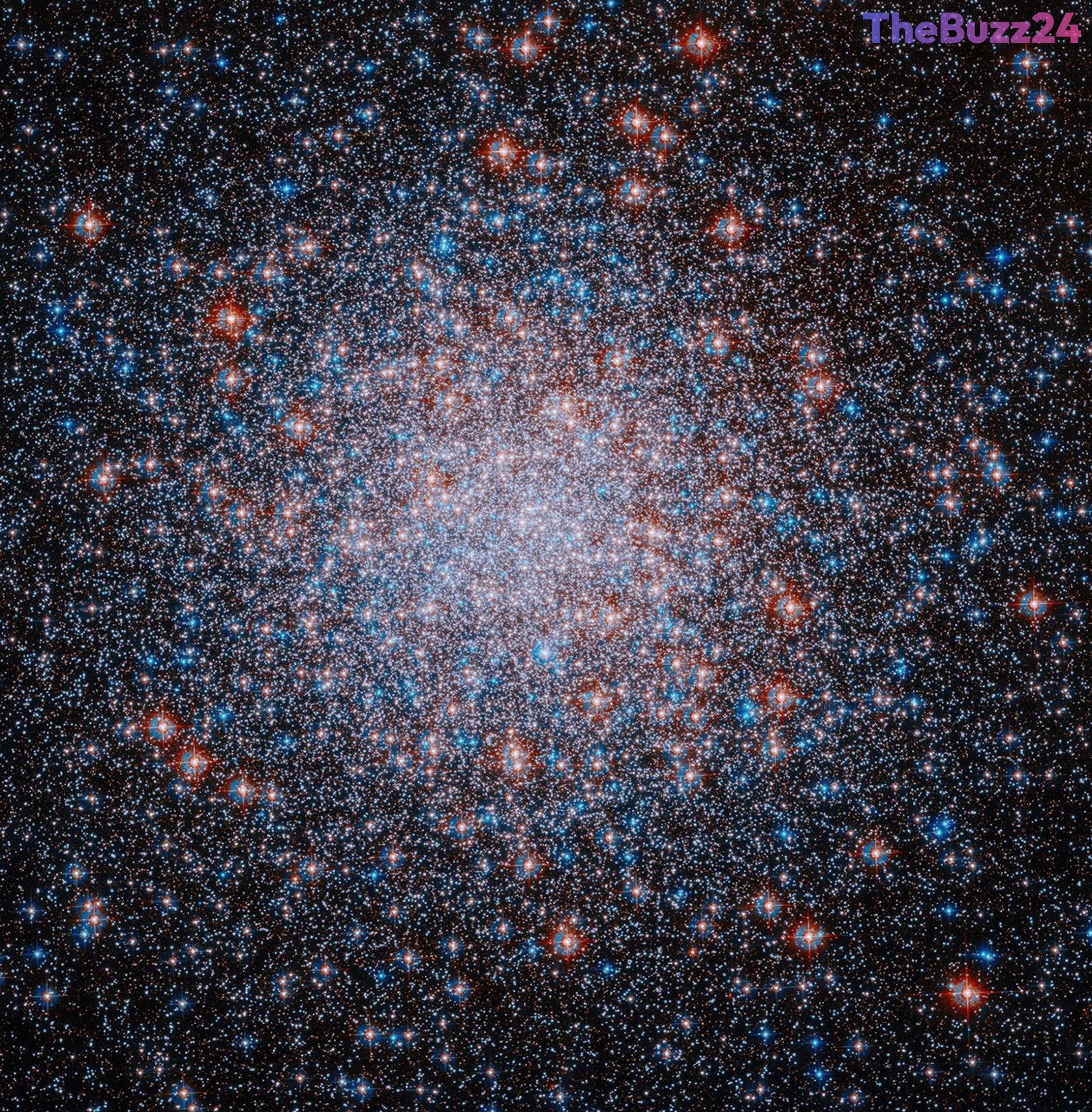
Hubble Telescope Reveals Stunning Detail of Ancient Messier 3 Star Cluster
The Hubble Space Telescope has provided a breathtaking new look at Messier 3 (M3), a massive and densely packed globular cluster residing within the Milky Way. This spherical collection of stars serves as a cosmic time capsule, offering astronomers a rare glimpse into the early history of our galaxy. With hundreds of thousands of stars bound together by gravity, M3 stands out as one of the most significant globular clusters currently known to science.
Globular clusters are characterized by their ancient stellar populations, which formed simultaneously from the same primordial gas cloud. This shared origin results in stars that possess remarkably similar ages, making them ideal subjects for studying stellar evolution. Researchers believe that the complex structure of M3 may be the result of a historic merger between smaller globular clusters that occurred during the formative years of the universe.
Currently, there are approximately 150 known globular clusters orbiting the outer regions of the Milky Way. By analyzing high-resolution imagery like this latest capture, scientists can better understand the gravitational dynamics and chemical compositions that define these ancient stellar neighborhoods. These observations continue to refine our understanding of how galaxies assemble and evolve over billions of years.
Key Takeaways
- Messier 3 is one of the largest and most densely populated globular clusters in the Milky Way.
- The cluster is composed of ancient stars that share a common origin and age, providing a window into the early universe.
- Evidence suggests that M3 may have formed through the merger of multiple smaller globular clusters.
Editor’s Analysis & Impact
The continued observation of globular clusters like Messier 3 is vital for modern astrophysics, as these structures act as ‘fossil records’ of galactic formation. By studying the density and age of these stars, researchers can extrapolate the conditions of the early universe and the processes that led to the current structure of the Milky Way. From an industry perspective, the high-resolution data provided by the Hubble Space Telescope remains an invaluable asset for academic research and public scientific engagement. As we look toward future missions, the data gathered from these clusters will likely inform our models of dark matter distribution and the gravitational interactions that govern large-scale galactic evolution, ensuring that these ancient stellar systems remain a focal point of astronomical inquiry for years to come.
Frequently Asked Questions
Q: What is a globular cluster?
A: A globular cluster is a large, spherical collection of stars that are tightly bound together by gravity, typically containing hundreds of thousands of ancient stars.
Q: Why is Messier 3 significant to astronomers?
A: Messier 3 is significant because its complex structure suggests it may have formed from the merger of smaller clusters, offering insights into how galaxies and their components evolved in the early universe.
AI Disclosure: This article is based on verified data and official reports. Our Team and AI have cross-referenced every financial detail with primary sources to ensure total accuracy.
More from this Category