Volkswagen Unveils ‘Mission Efficiency’ Prototype, Redefining EV Range and Design
Volkswagen has introduced a groundbreaking electric vehicle prototype, dubbed “Mission Efficiency,” which boasts an astonishing equivalent of 323 miles per gallon under optimal conditions, positioning it as one of the most energy-efficient vehicles globally. To demonstrate its capabilities, the prototype embarked on an extensive 794-mile (1,278-kilometer) journey from Volkswagen’s headquarters in Wolfsburg, Germany, to Vienna. The team completed the trip with only a single charge, arriving with a remarkable 104 miles (168 kilometers) of range still available, achieving an impressive consumption rate of 7.51 kilowatt-hours per 100 miles, or approximately 279 MPGe.
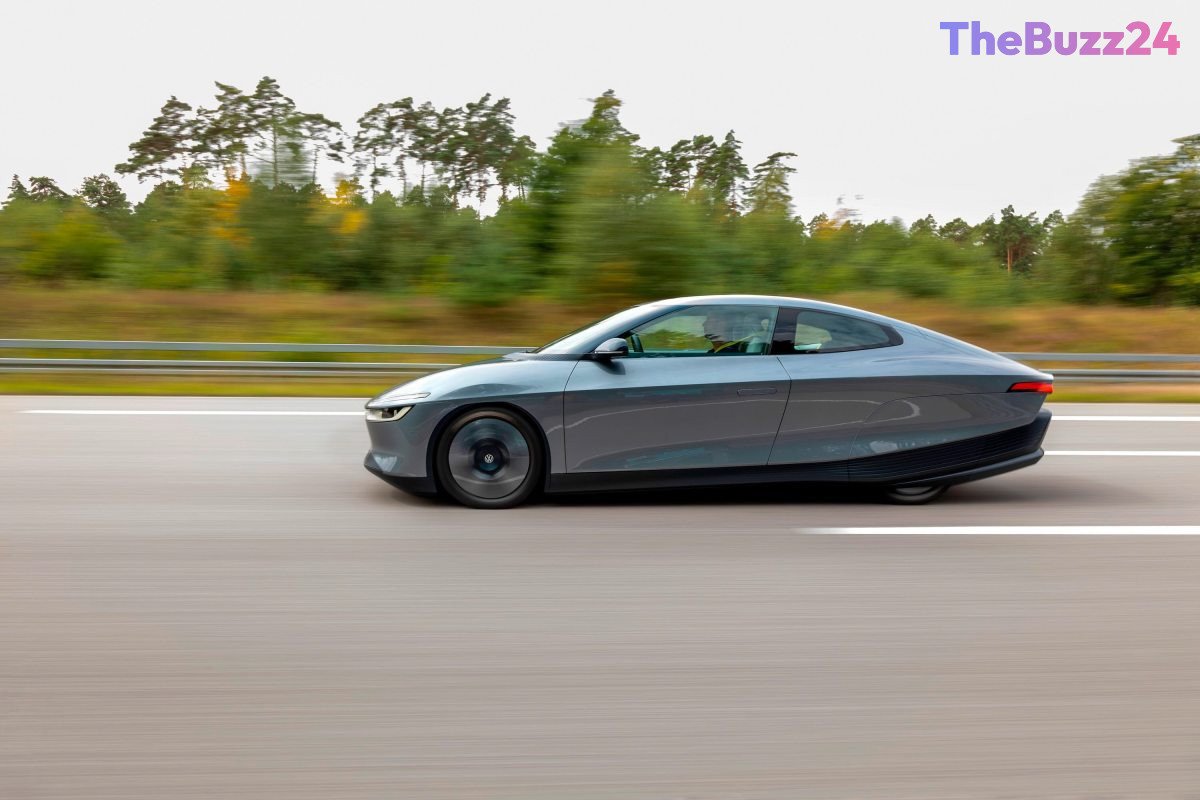
The teardrop-shaped Mission Efficiency prototype integrates the electric motor and battery components from the ID. Polo, bringing it to a “near production” status. Its design prioritizes extreme aerodynamics, featuring a distinctive Kammback roofline that tapers sharply to achieve an exceptionally low coefficient of drag of 0.158, coupled with a minimal frontal area of just 2.08 square meters. This focus on efficiency necessitated certain design compromises, such as a 2+2 seating configuration where the rear seats are optimized for individuals shorter than 5-foot 3 inches (1.6 meters), and tightened wheel arches to reduce aerodynamic drag from the tires.
Inside, the vehicle embraces a minimalist philosophy, utilizing lightweight materials for its seating. Notably, the Mission Efficiency prototype foregoes a traditional built-in infotainment system and speakers. Instead, it offers a portable Bluetooth speaker, anticipating that drivers will use their own personal devices for entertainment and navigation, a concept reminiscent of EV startup Slate Auto’s approach. Additionally, solar cells are integrated into the roof and trunk lid, providing a modest but welcome boost of up to 18 miles (30 kilometers) of range on flat, sunny routes at a constant speed.
While Volkswagen describes the Mission Efficiency as a “near production” vehicle, the company has not yet committed to full-scale manufacturing. However, this isn’t unprecedented for the automaker, which previously produced 250 units of the XL1 over a decade ago—another highly efficient, albeit expensive, halo car. The Mission Efficiency prototype serves as a powerful statement of Volkswagen’s engineering prowess and its vision for the future of ultra-efficient electric mobility.
Key Takeaways
- Volkswagen's "Mission Efficiency" prototype achieved an impressive 323 MPGe equivalent, demonstrating extreme energy efficiency during a 794-mile test drive.
- Its design prioritizes aerodynamics with a Kammback shape and minimalist interior, including a portable speaker instead of a built-in infotainment system.
- While not committed to mass production, the prototype showcases VW's potential to push EV range boundaries, drawing parallels to its limited-run XL1.
Editor’s Analysis & Impact
The unveiling of Volkswagen’s Mission Efficiency prototype marks a significant step in the ongoing race for electric vehicle innovation. This vehicle, while potentially a niche product, signals a strong industry trend towards maximizing efficiency through advanced aerodynamics and lightweighting. Its extreme range capabilities could influence future EV design, pushing competitors to explore similar engineering solutions, even if it means re-evaluating traditional notions of vehicle practicality and interior amenities. The minimalist approach to infotainment, favoring user-supplied devices, might also hint at a broader shift in automotive interior design, potentially reducing manufacturing costs and offering greater user flexibility. Ultimately, the Mission Efficiency prototype serves as a powerful proof-of-concept, demonstrating what’s achievable when efficiency is the paramount design objective, and its innovations are likely to trickle down into more mainstream EV models.
Frequently Asked Questions
Q: What is the "Mission Efficiency" prototype?
A: It's a new electric vehicle prototype from Volkswagen designed for extreme energy efficiency, capable of achieving the equivalent of 323 miles per gallon under ideal conditions.
Q: How did Volkswagen achieve such high efficiency?
A: The prototype features a highly aerodynamic Kammback design, a low drag coefficient, lightweight materials, and a minimalist interior that foregoes a traditional infotainment system, instead offering a portable Bluetooth speaker.
Q: Will the Mission Efficiency prototype be mass-produced?
A: Volkswagen has not committed to mass production, but the company has previously produced limited runs of highly efficient "halo" cars like the XL1, suggesting its innovations could influence future models.
AI Disclosure: This article is based on verified data and official reports. Our Team and AI have cross-referenced every financial detail with primary sources to ensure total accuracy.
More from this Category