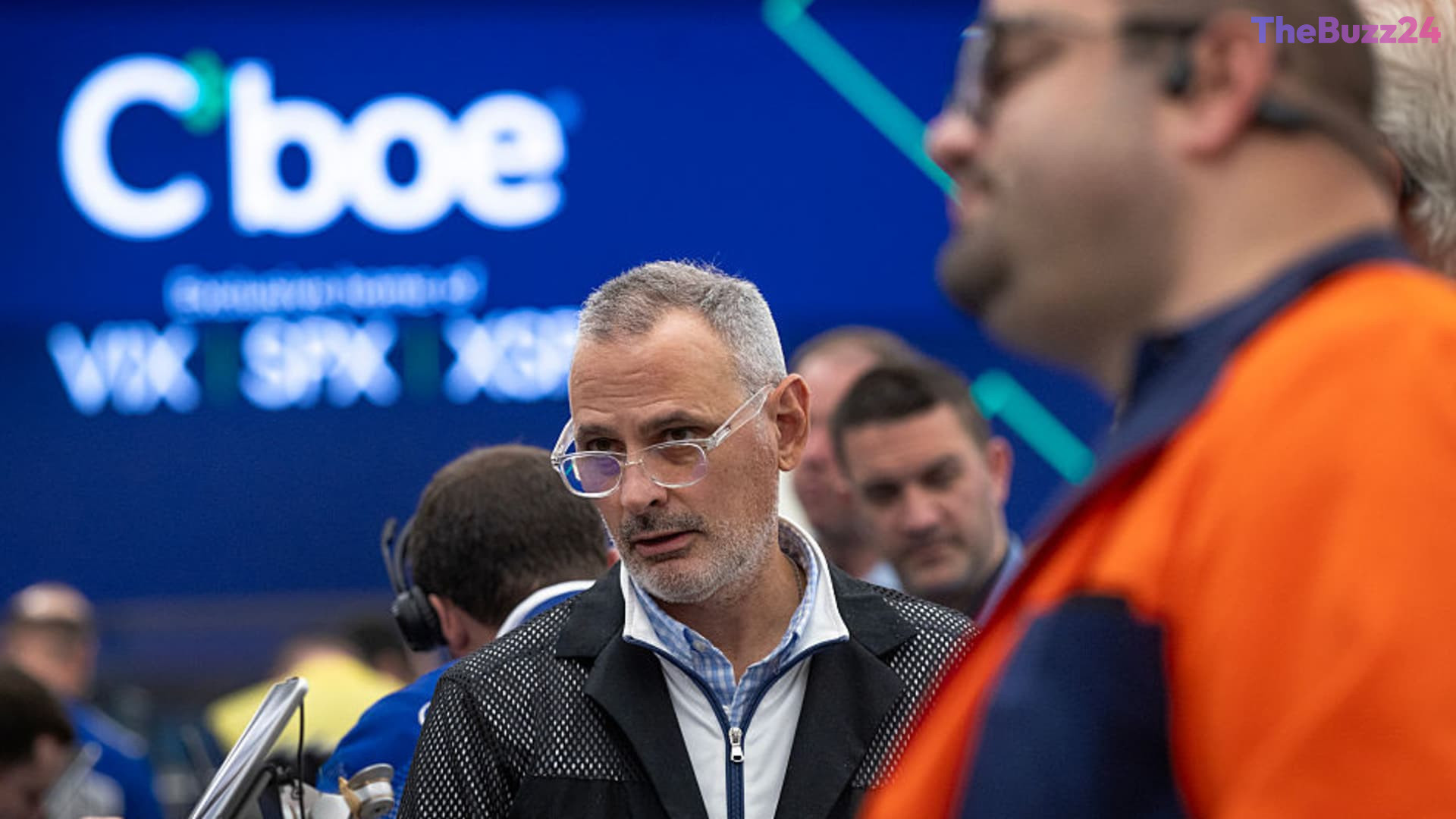
Wall Street Exchange Stocks Stumble Amid Regulatory Shift Toward Perpetual Futures
Major Wall Street exchange operators are facing a sharp market correction following a regulatory decision to approve perpetual futures for bitcoin. The Commodity Futures Trading Commission’s (CFTC) recent green light for the prediction market platform Kalshi to offer these non-expiring contracts has triggered investor anxiety regarding the future competitive landscape of the financial sector. As a result, shares of industry giants including CME Group, Cboe Global Markets, Intercontinental Exchange, and Nasdaq have experienced significant declines, with some recording their worst weekly performance since 2020.
Perpetual futures, commonly referred to as “perps,” are a staple in international retail trading but have historically been restricted in the United States. Investors fear that the expansion of these products into other asset classes could eventually displace traditional equity-based derivatives, such as those tied to the S&P 500. Analysts suggest that the market reaction may be an overreaction, noting that existing U.S. financial products have maintained their dominance despite the availability of similar offshore offerings. Furthermore, clearing houses may impose leverage limits that could curb the widespread adoption of perps among institutional players.
Despite the current volatility, industry leaders remain optimistic about the potential for these products. Kalshi CEO Tarek Mansour has indicated plans to expand beyond bitcoin, citing massive global volume and clear domestic demand. Meanwhile, other fintech platforms, including Robinhood, have expressed interest in the space, arguing that bringing these products under a regulated U.S. framework is a necessary step to provide safer access for American traders who have previously relied on unregulated offshore platforms.
Key Takeaways
- Major exchange stocks like CME and Cboe saw significant sell-offs following the CFTC's approval of bitcoin perpetual futures on Kalshi.
- Investors fear that the introduction of perpetual futures could disrupt traditional Wall Street derivatives markets if the model expands to equity products.
- Industry analysts suggest the market reaction may be an overreaction, noting that current perpetual futures volume remains a small fraction of legacy exchange activity.
Editor’s Analysis & Impact
The recent market turbulence highlights a growing tension between legacy financial institutions and the rise of decentralized or prediction-market-style trading products. While the immediate impact on exchange stocks appears driven by fear of disruption, the long-term reality is more nuanced. Perpetual futures represent a shift toward more flexible, high-leverage trading instruments that cater to retail demand. If regulators continue to approve these products for broader asset classes, traditional exchanges will be forced to innovate or risk losing market share to agile fintech competitors. However, the high barrier to entry—specifically regarding regulatory compliance, clearing house leverage requirements, and institutional risk management—suggests that legacy exchanges still hold a significant moat. The future of this sector will likely depend on whether these new products can achieve mainstream institutional adoption or remain a niche tool for retail speculators.
Frequently Asked Questions
Q: What are perpetual futures?
A: Perpetual futures are a type of derivative contract that does not have an expiration date, allowing traders to hold positions indefinitely as long as they maintain sufficient margin.
Q: Why are traditional exchange stocks falling?
A: Investors are concerned that the introduction of perpetual futures in the U.S. could lead to increased competition, potentially drawing volume away from traditional, regulated derivatives products offered by established exchanges.
AI Disclosure: This article is based on verified data and official reports. Our Team and AI have cross-referenced every financial detail with primary sources to ensure total accuracy.
More from this Category