Deep Space Network: The Invisible Lifeline Powering the Artemis II Lunar Mission
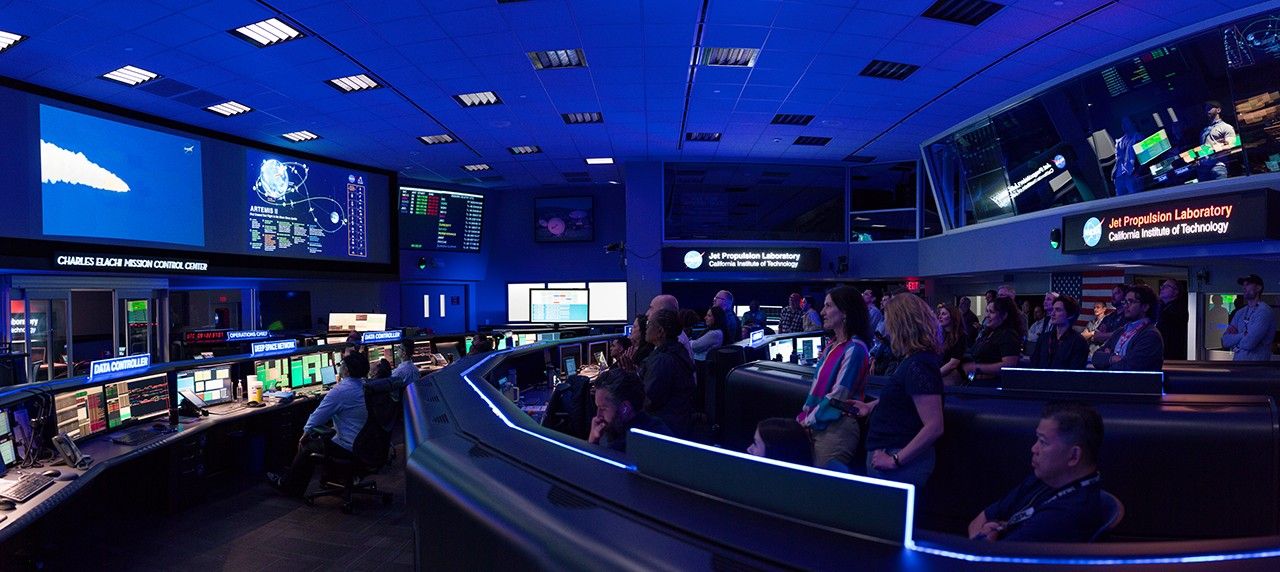
NASA’s Jet Propulsion Laboratory (JPL) has officially activated its critical communication infrastructure in preparation for the Artemis II lunar mission, currently slated for launch on April 1, 2026. As the mission progresses, the spacecraft will rely on a sophisticated relay system to maintain constant contact with Earth, ensuring the safety of the crew and the integrity of scientific data transmission.
During the initial phase of the journey, the Orion capsule utilizes the Near Space Network while in close proximity to Earth. However, as the vessel ventures deeper into the lunar trajectory, the responsibility for tracking and command operations shifts to the Deep Space Network (DSN). This global array of high-gain radio frequency antennas serves as the primary lifeline for deep-space exploration, allowing ground control to maintain a continuous link with the spacecraft regardless of the Earth’s rotation.
The DSN operates through three strategically positioned complexes located in Goldstone, California; Madrid, Spain; and Canberra, Australia. By spacing these facilities around the globe, the network ensures that no spacecraft is ever out of sight, providing 360-degree coverage for missions venturing far beyond our planet’s orbit. This infrastructure is managed by JPL, which coordinates these complex operations to support not only Artemis II but a vast fleet of other scientific missions currently traversing the solar system.
This technological framework highlights the immense logistical coordination required for modern space travel. Through the partnership between JPL and the broader NASA communications program, the DSN remains the backbone of humanity’s return to the Moon, facilitating the complex data exchanges necessary for successful crewed exploration.
Key Takeaways
- The Artemis II mission relies on the Deep Space Network (DSN) to maintain communication as it travels beyond Earth's immediate orbit.
- The DSN utilizes three global antenna complexes in California, Spain, and Australia to ensure continuous, 24/7 coverage for deep-space missions.
- Managed by JPL, the network serves as a critical infrastructure hub for both the upcoming lunar mission and numerous other ongoing space exploration projects.
Editor’s Analysis & Impact
The activation of the Deep Space Network for the Artemis II mission underscores the critical importance of ground-based infrastructure in the new era of space exploration. As private and public entities ramp up lunar and deep-space ambitions, the demand for reliable, high-bandwidth communication networks will only increase. The DSN represents a mature, proven technology, yet its role is evolving to support more frequent and data-intensive missions. The broader implication here is that the ‘space economy’ is not just about launch vehicles and hardware; it is equally dependent on the invisible, global communication grids that enable navigation and data retrieval. Future outlooks suggest that as we move toward Mars and beyond, the scalability and modernization of these ground networks will be the primary bottleneck for mission success, necessitating continued investment in global antenna arrays and signal processing capabilities.
Frequently Asked Questions
Q: What is the primary purpose of the Deep Space Network?
A: The Deep Space Network is a global array of antennas used to track, send commands to, and receive scientific data from spacecraft operating far beyond Earth's orbit.
Q: Why are there three DSN complexes located in different parts of the world?
A: The three complexes are spaced around the globe to ensure that as the Earth rotates, at least one station always has a clear line of sight to a spacecraft, providing continuous, 24-hour communication coverage.
AI Disclosure: This article is based on verified data and official reports. Our Team and AI have cross-referenced every financial detail with primary sources to ensure total accuracy.
More from this Category