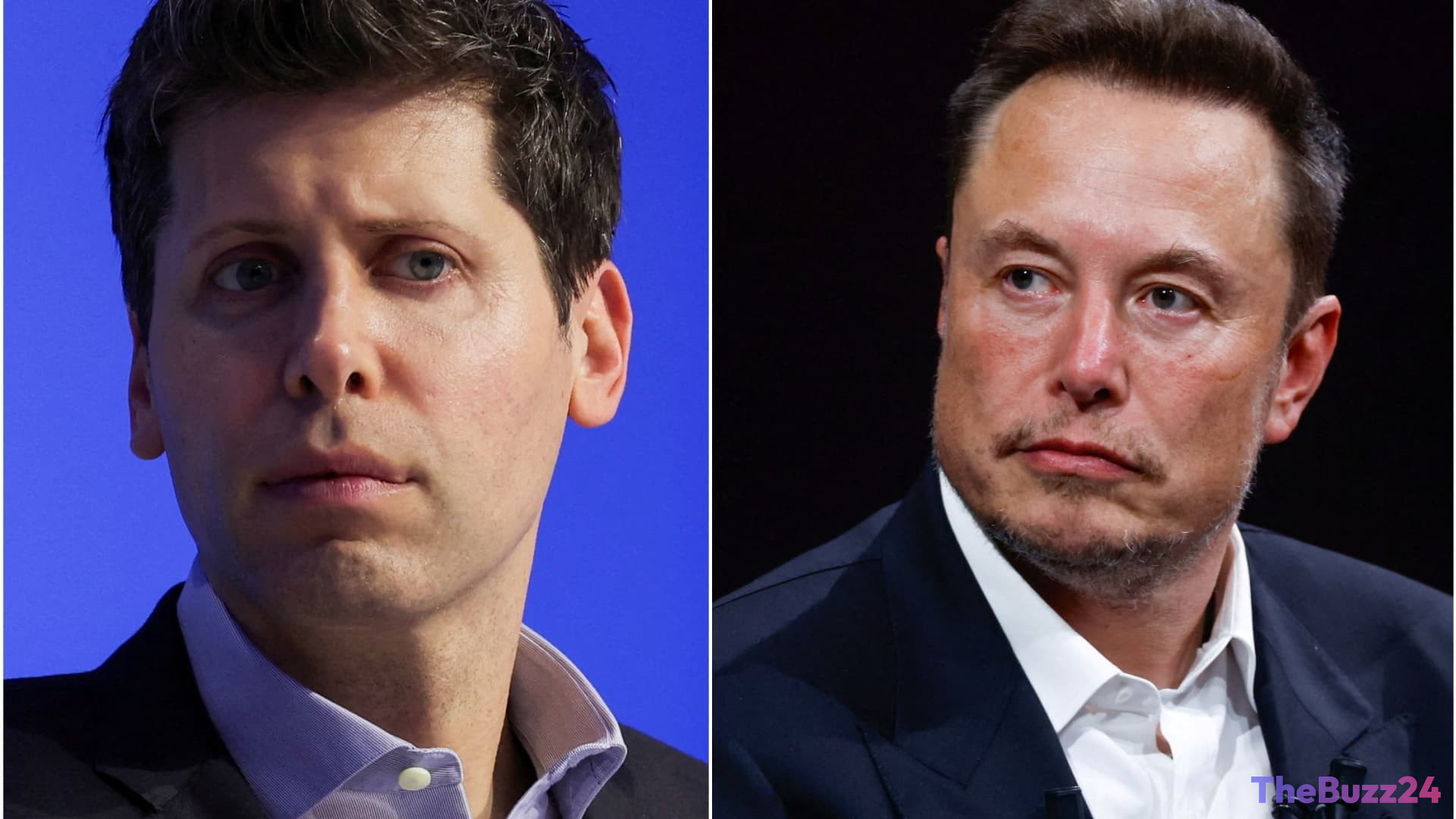
Elon Musk’s Legal Battle Against OpenAI: Prediction Markets Signal Declining Odds of Victory Following Testimony
Elon Musk’s high-stakes legal battle against OpenAI has taken a turn in the court of public opinion and prediction markets. Following his recent testimony in a federal court in Oakland, California, traders have significantly downgraded the billionaire’s chances of winning the multibillion-dollar lawsuit. Initially starting with a strong 60% probability of success at the onset of the trial, Musk’s odds plummeted to a low of 34% after his three-day testimony concluded, before stabilizing slightly around 40%.
During his time on the stand, Musk accused OpenAI Chief Executive Sam Altman and President Greg Brockman of betraying the company’s original founding principles, claiming they attempted to “steal a charity.” Musk, who co-founded the organization in 2015 and contributed approximately $38 million, asserted that he was instrumental in its creation, naming, and early funding. However, his testimony was marked by intense clashes with OpenAI’s legal counsel, whom Musk accused of asking deceptive questions. Adding to the pressure, court filings revealed that Musk had texted Brockman regarding a potential settlement just days before the trial commenced, a move that observers suggest may have weakened his perceived position.
The legal dispute has generated massive interest on prediction platforms, where contracts tracking the trial’s outcome have seen hundreds of thousands of dollars in trading volume. This lawsuit is just one of many Musk-related events drawing heavy speculative activity. Other highly traded contracts focus on the future of his other ventures, including speculation surrounding a potential initial public offering (IPO) for SpaceX and the timeline for future Starship launches.
OpenAI has consistently dismissed Musk’s lawsuit as “baseless.” The organization, which transitioned from a pure non-profit to a capped-profit structure in 2019—about a year after Musk departed from its board—retains its non-profit status while holding a controlling stake in its commercial arm. As the trial progresses, the shifting odds reflect the complex legal hurdles Musk faces in proving that the AI pioneer breached its original non-profit mission.
Key Takeaways
- Elon Musk's projected chances of winning his lawsuit against OpenAI dropped from 60% to 40% on prediction markets following his courtroom testimony.
- During his testimony, Musk accused Sam Altman and Greg Brockman of commercializing a charity, while facing intense cross-examination and scrutiny over pre-trial settlement texts.
- The legal battle has sparked massive speculative interest, ranking among the top traded contracts alongside speculation about SpaceX's potential IPO.
Editor’s Analysis & Impact
This legal showdown between Elon Musk and OpenAI highlights the deep ideological and financial rifts within the artificial intelligence sector. Musk’s lawsuit seeks to hold OpenAI to its original open-source, non-profit ethos, but the declining confidence from prediction markets suggests that proving legally binding commitments from informal early agreements is an uphill battle. For the broader tech industry, the outcome of this case will set a critical precedent regarding the governance of AI enterprises and the transition of research initiatives into commercial powerhouses. If OpenAI secures a decisive victory, it will solidify the hybrid capped-profit model as a viable path for capital-intensive tech development. Conversely, a Musk victory could disrupt OpenAI’s commercial partnerships, particularly with Microsoft, and force a re-evaluation of how intellectual property is managed in collaborative, mission-driven tech startups.
Frequently Asked Questions
Q: Why is Elon Musk suing OpenAI?
A: Elon Musk is suing OpenAI, alleging that the company abandoned its original non-profit mission to develop open-source artificial general intelligence (AGI) for the benefit of humanity, choosing instead to maximize profits through commercial partnerships.
Q: How have prediction markets reacted to Musk's testimony?
A: Prediction market traders initially gave Musk a 60% chance of winning when the trial began, but those odds fell to 34% following his testimony and cross-examination, later recovering slightly to around 40%.
Q: What is OpenAI's defense against the lawsuit?
A: OpenAI has labeled the lawsuit as baseless, maintaining that its transition to a capped-profit structure was necessary to secure the massive funding required for advanced AI research, while still preserving its core mission.
AI Disclosure: This article is based on verified data and official reports. Our Team and AI have cross-referenced every financial detail with primary sources to ensure total accuracy.
More from this Category