xAI Faces Legal Hurdles as It Commits $2.8 Billion to Power Infrastructure
Elon Musk’s artificial intelligence firm, xAI, has announced a significant $2.8 billion investment strategy aimed at bolstering its power infrastructure over the next three years. The capital allocation, which includes a $2 billion commitment toward mobile gas turbines, is designed to support the massive energy demands of the company’s data center operations. However, this ambitious expansion is currently being challenged by mounting legal and environmental concerns regarding the company’s facility near Memphis, Tennessee.
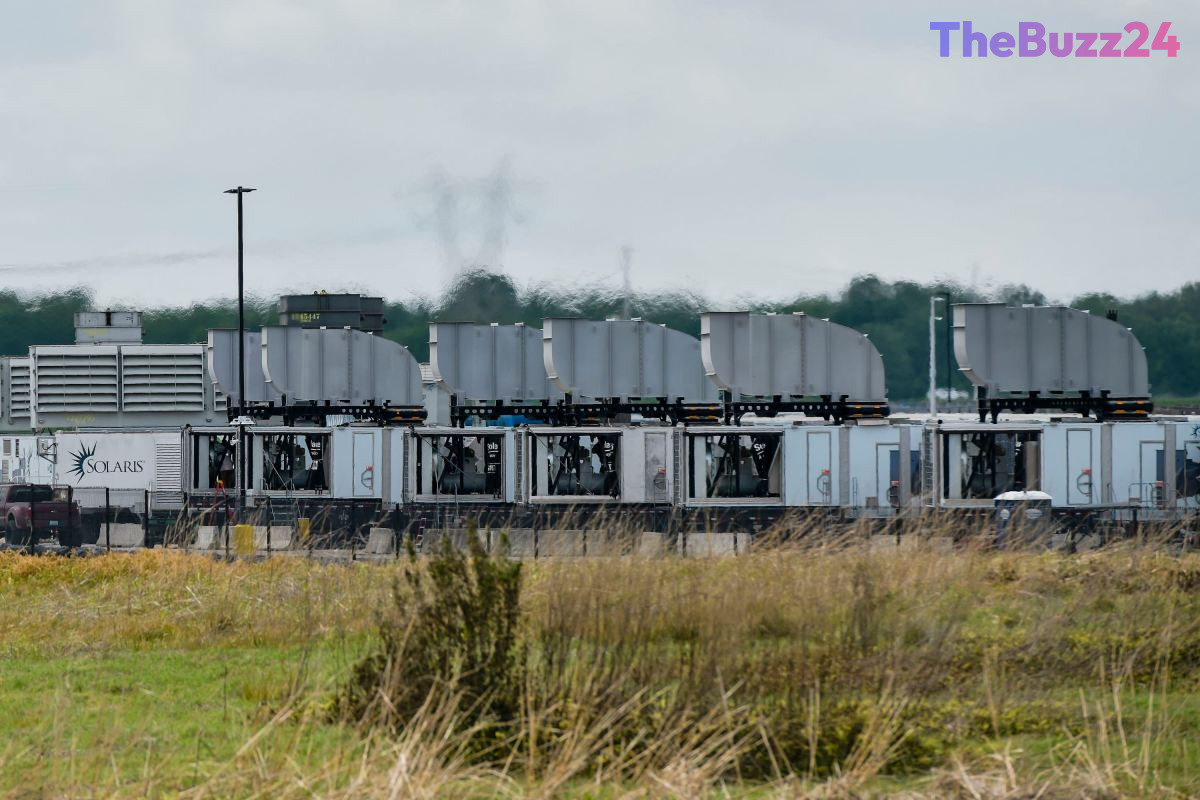
The expansion plans have drawn sharp criticism from the NAACP, which has initiated legal action against the company. The lawsuit alleges that xAI has been operating an excessive number of gas turbines that contribute to poor air quality in an already vulnerable region. While the company holds permits for 15 units, allegations suggest that as many as 46 turbines have been in use. The primary concern centers on the emission of nitrogen oxides, which are linked to respiratory health issues and increased smog levels.
A core element of the dispute involves the regulatory classification of the power units. xAI has maintained that because the turbines are trailer-mounted, they should be categorized as mobile equipment, potentially bypassing certain stationary permit requirements. This interpretation has been contested by the Environmental Protection Agency, which maintains that the scale of these turbines necessitates adherence to federal air-pollution standards regardless of their mobility.
Financial disclosures from SpaceX, which shares a close operational relationship with xAI, indicate that these power units are vital to the company’s AI development. The company has warned that any court-ordered injunctions or the loss of operational permits could significantly disrupt the growth trajectory of its AI division, highlighting the tension between the rapid scaling of artificial intelligence and environmental regulatory compliance.
Key Takeaways
- xAI is investing $2.8 billion in power infrastructure, with $2 billion specifically allocated for mobile gas turbines.
- The NAACP has filed a lawsuit alleging that xAI is operating more turbines than permitted, negatively impacting local air quality.
- The EPA is challenging xAI's classification of its turbines as 'mobile' equipment, arguing they must comply with federal air-pollution regulations.
Editor’s Analysis & Impact
The conflict between xAI and environmental regulators highlights a growing friction point in the AI industry: the massive energy requirements of large-scale data centers versus local environmental health standards. As AI companies race to build infrastructure to support increasingly complex models, they are finding that traditional regulatory frameworks—often designed for stationary industrial sites—are struggling to keep pace with rapid, mobile-based power solutions. The outcome of this legal battle will likely set a precedent for how tech firms deploy temporary power infrastructure in the future. If the court sides with the EPA, xAI and similar companies may face significantly higher operational costs and longer lead times for data center deployment, potentially slowing the pace of AI development to ensure compliance with federal environmental mandates.
Frequently Asked Questions
Q: Why is the NAACP suing xAI?
A: The NAACP is suing xAI over concerns that the company's data center in Memphis is operating unregulated gas turbines that emit nitrogen oxides, which negatively impact air quality and public health in the surrounding community.
Q: What is the dispute regarding 'mobile' versus 'stationary' turbines?
A: xAI argues that its trailer-mounted turbines are 'mobile' equipment, which they believe exempts them from certain stationary permit requirements. The EPA disputes this, asserting that the scale of the turbines requires them to follow federal air-pollution regulations regardless of their mobility.
AI Disclosure: This article is based on verified data and official reports. Our Team and AI have cross-referenced every financial detail with primary sources to ensure total accuracy.
More from this Category