Xi Jinping Declares ‘Thucydides Trap’ Avoidable in U.S. Summit
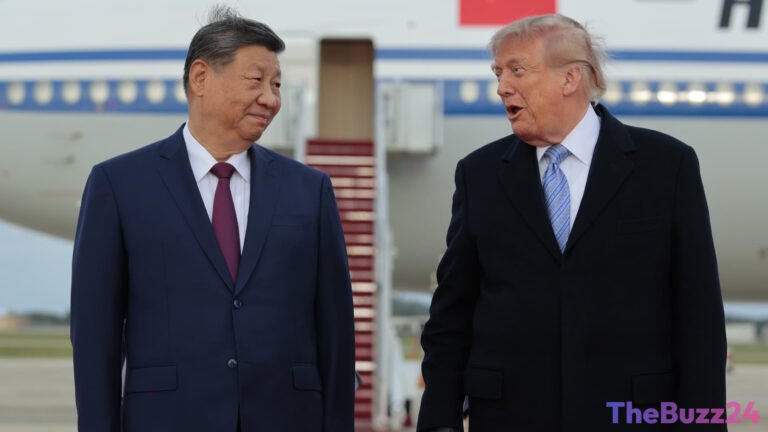
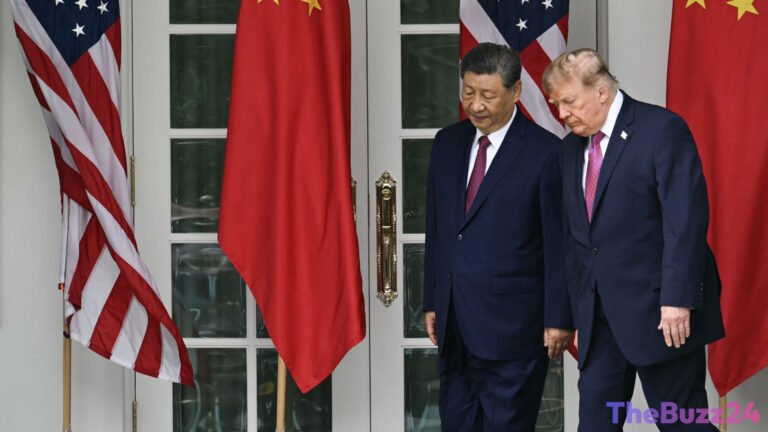
Chinese President Xi Jinping has signaled a shift in rhetoric regarding the potential for conflict between the United States and China, suggesting that the historical pattern known as the ‘Thucydides Trap’ can be overcome. During a high-profile summit with U.S. President Donald Trump, Xi stated that the two global powers could indeed navigate their complex relationship without succumbing to inevitable confrontation.
This statement marks a notable departure from previous framing, where Xi had posed the question of whether the two nations could avoid this historical pitfall. The ‘Thucydides Trap,’ a concept popularized by Harvard professor Graham Allison, describes the tendency for wars to erupt when a rising power challenges an established one. The term draws parallels to the Peloponnesian War, where the growing influence of Athens alarmed Sparta, leading to conflict.
Xi’s remarks suggest a focus on “competition without confrontation,” emphasizing the possibility of “healthy” rivalry rather than a zero-sum struggle. He proposed that the U.S. and China should view their dynamic as a race to excel, not a battle where one side must lose. Furthermore, he underscored the importance of improved crisis communication and prevention mechanisms between the two nations’ militaries.
This approach, aiming to establish a clear boundary of intense competition that stops short of military conflict, is being hailed by some analysts as a significant outcome of the summit, injecting a degree of predictability into the often-turbulent U.S.-China relationship. While discussions touched upon various bilateral issues, including Taiwan, the overarching theme from the Chinese perspective was the potential for managing great power competition constructively.
Key Takeaways
- Chinese President Xi Jinping stated that the 'Thucydides Trap' between the U.S. and China can be overcome.
- Xi advocated for 'competition without confrontation' and 'healthy' rivalry, rather than a zero-sum conflict.
- The summit aimed to establish a framework for intense competition that avoids military conflict, potentially adding stability to bilateral relations.
Editor’s Analysis & Impact
Xi Jinping’s assertion that the ‘Thucydides Trap’ is avoidable signals a strategic effort by China to reframe the narrative of U.S.-China relations. By emphasizing ‘competition without confrontation,’ Beijing appears to be seeking a more predictable and less volatile dynamic, particularly in the face of escalating economic and geopolitical tensions. This approach could influence how other nations perceive and engage with both superpowers, potentially fostering a global environment where strategic rivalry is managed through dialogue and established protocols rather than escalating into direct conflict. The long-term implications hinge on whether this rhetoric translates into concrete actions and sustained diplomatic engagement from both sides.
Frequently Asked Questions
Q: What is the 'Thucydides Trap'?
A: The 'Thucydides Trap' is a concept popularized by Harvard professor Graham Allison, describing the historical tendency for war to occur when a rising power threatens to displace a ruling power. It is named after the ancient Greek historian Thucydides, who chronicled the Peloponnesian War.
Q: What does 'competition without confrontation' mean in this context?
A: It refers to the idea that the U.S. and China can engage in intense rivalry across various domains, such as economics and technology, without resorting to military conflict or direct, hostile confrontation. It suggests a focus on outperforming each other rather than actively seeking to undermine or attack one another.
Q: Why is this statement significant?
A: The statement is significant because it represents a potential shift in how China views and communicates its relationship with the United States. By suggesting the 'Thucydides Trap' is avoidable, China is signaling a desire for a more managed and less confrontational approach to great power competition, which could have implications for global stability.
AI Disclosure: This article is based on verified data and official reports. Our Team and AI have cross-referenced every financial detail with primary sources to ensure total accuracy.
More from this Category