Yemeni Government Forces Launch Major Offensive to Reclaim Red Sea Port and Strategic Strait
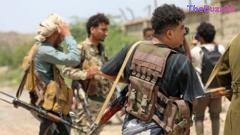
Yemeni pro-government forces, supported by a Saudi-led coalition, have launched a significant military offensive aimed at reclaiming territory held by the Houthi movement. The government announced the capture of the critical Red Sea port city of Mokha, a move they claim has effectively secured the Bab al-Mandab Strait. This operation, officially dubbed ‘Operation Yemen Dawn,’ marks a decisive shift in the long-standing civil war as the internationally recognized government seeks to regain control of areas lost to Houthi fighters.
Military officials reported that the National Shield, Giants Brigades, and Tihama Resistance forces spearheaded the capture of Mokha, bolstered by continuous air support from the Saudi-led coalition. The coalition stated that it has successfully neutralized hundreds of high-value targets to facilitate the ground advance. While the government claims to be making progress on multiple fronts, including the outskirts of the capital city of Sanaa, the Houthi movement has denied these territorial losses and continues to retaliate with drone and ballistic missile strikes targeting Saudi infrastructure, including Saudi Aramco facilities.
The escalation follows the collapse of an informal four-year ceasefire, which began to deteriorate earlier this summer. The conflict has intensified as both sides trade accusations of humanitarian violations and strategic blockades. The Houthi leadership has warned that the region has become a volatile theater of operations, while the Yemeni government maintains that all diplomatic avenues for de-escalation have been exhausted. As the fighting intensifies, the humanitarian toll continues to mount, with thousands of casualties reported and nearly 200,000 civilians displaced by the renewed hostilities.
Key Takeaways
- Yemeni pro-government forces have launched 'Operation Yemen Dawn' to reclaim territory from Houthi control, starting with the strategic port of Mokha.
- The conflict has escalated into a broader regional confrontation, with Houthi forces launching retaliatory drone and missile strikes against Saudi Aramco oil facilities.
- The renewed fighting has resulted in significant humanitarian consequences, including nearly 1,000 deaths and the displacement of approximately 197,000 people since early August.
Editor’s Analysis & Impact
The resurgence of full-scale conflict in Yemen represents a critical threat to global energy security and maritime stability. By contesting the Bab al-Mandab Strait—a vital chokepoint for international shipping and oil transit—the warring parties have effectively turned the Red Sea into a geopolitical flashpoint. The targeting of Saudi Aramco infrastructure underscores the Houthis’ capacity to disrupt global energy markets, which could lead to increased volatility in oil prices if the conflict persists. Furthermore, the failure of diplomatic efforts suggests a prolonged period of instability. For the international community, the primary concern remains the potential for the conflict to spill over into broader regional warfare, necessitating a careful balance between humanitarian intervention and the protection of essential global trade routes.
Frequently Asked Questions
Q: What is the strategic significance of the port of Mokha?
A: Mokha is located near the Bab al-Mandab Strait, one of the world's most important maritime chokepoints for oil tankers and international trade. Controlling this port allows forces to influence traffic through the Red Sea.
Q: Why has the conflict in Yemen intensified recently?
A: The conflict escalated after a four-year informal ceasefire unraveled in July, following mutual accusations of blockades and retaliatory strikes on infrastructure, leading the Yemeni government to launch an all-out offensive to reclaim lost territory.
AI Disclosure: This article is based on verified data and official reports. Our Team and AI have cross-referenced every financial detail with primary sources to ensure total accuracy.
More from this Category