Zcash Privacy Surge: Why Investors Are Flocking to the Shielded Ledger
Zcash (ZEC) has emerged as a standout performer in the digital asset market, recording a staggering 900% increase in value since October. This rally defies broader market trends, signaling a fundamental shift in investor sentiment toward privacy-centric blockchain solutions. As public ledgers face increasing scrutiny regarding transaction transparency, Zcash’s unique ability to offer encrypted, verifiable transactions is capturing significant attention from both retail and institutional participants.
At the core of Zcash’s appeal is its sophisticated use of zero-knowledge proofs, specifically zk-SNARKs. Developed from academic research and launched in 2016, the protocol allows users to conduct transactions where the sender, recipient, and amount remain private while the network confirms the validity of the transfer. This opt-in privacy model provides a critical alternative to the transparent nature of traditional blockchains, allowing users to choose between transparent addresses and shielded addresses based on their specific security needs.
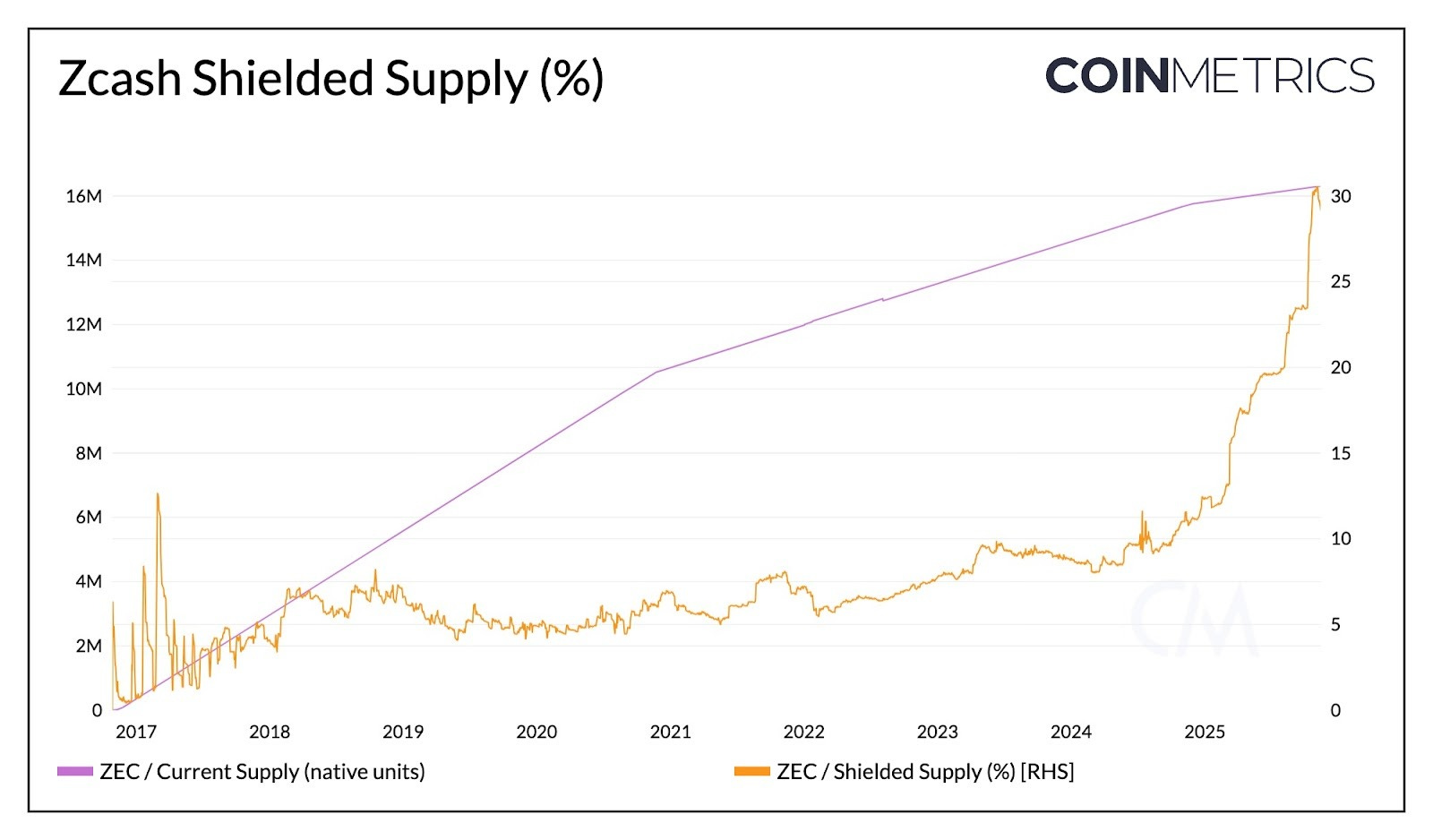
Data indicates that the adoption of these privacy features is accelerating, with approximately 30% of the total ZEC supply now held within shielded addresses. This growth is bolstered by recent technological advancements, such as the Orchard shielded pool and the 2024 launch of the Zashi wallet, which simplifies the user experience for private transactions. Additionally, cross-chain integrations like NEAR Intents have made it easier for users to move assets into the shielded ecosystem, further cementing Zcash’s utility in a decentralized financial landscape.
Beyond its technical architecture, Zcash maintains a disciplined monetary policy modeled after Bitcoin, including a 21-million-coin supply cap and a periodic halving schedule. The most recent halving in November 2024, coupled with the NU6 network upgrade, has refined the network’s economic structure to better support miners and community development. As the digital economy continues to evolve, the sustained increase in shielded supply suggests that Zcash is successfully positioning itself as a primary solution for those prioritizing financial confidentiality.
Key Takeaways
- Zcash has seen a 900% market value increase since October, driven by a growing demand for on-chain privacy.
- Approximately 30% of the total ZEC supply is now held in shielded addresses, reflecting increased adoption of privacy features.
- Technological upgrades like the Orchard pool and the Zashi wallet have significantly reduced the complexity of using private transactions.
Editor’s Analysis & Impact
The resurgence of Zcash highlights a critical tension in the blockchain industry: the trade-off between transparency and privacy. As regulatory bodies globally increase their oversight of public ledgers, the demand for ‘privacy-preserving’ technology is likely to grow. Zcash’s ability to balance compliance with user anonymity through its opt-in model makes it a unique case study in the evolution of digital assets. The recent rally is not merely speculative; it is supported by tangible metrics, such as the rising volume of shielded assets and improved infrastructure. Looking ahead, Zcash’s long-term viability will depend on its ability to maintain this balance while navigating potential regulatory headwinds. If it continues to simplify the user experience, it could become the standard for private, decentralized transactions in an increasingly monitored digital economy.
Frequently Asked Questions
Q: What makes Zcash different from Bitcoin?
A: While Zcash shares a similar monetary policy and codebase with Bitcoin, it offers an opt-in privacy feature using zero-knowledge proofs (zk-SNARKs) that allows users to hide transaction details while keeping the network verifiable.
Q: What is a shielded address in Zcash?
A: A shielded address (z-address) uses encryption to hide the sender, recipient, and transaction amount, providing users with full financial privacy compared to transparent addresses (t-addresses).
AI Disclosure: This article is based on verified data and official reports. Our Team and AI have cross-referenced every financial detail with primary sources to ensure total accuracy.
More from this Category