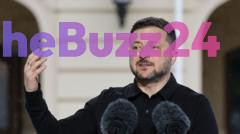
Zelensky Meets European Leaders in London Amid Escalating Nuclear Safety Concerns
Ukrainian President Volodymyr Zelensky arrived in London on Sunday for high-level discussions at Downing Street with key European allies. Hosted by British Prime Minister Sir Keir Starmer, the meeting includes French President Emmanuel Macron and German Chancellor Friedrich Merz. The summit focuses on strengthening European defense cooperation, enhancing air defense capabilities, and aligning diplomatic strategies as the conflict in Ukraine enters its fifth year.
The diplomatic gathering comes at a critical juncture, as the Ukrainian leader emphasizes that Europe must maintain a strong, unified voice in any future peace negotiations. Zelensky’s visit follows a series of intense military escalations, most notably a drone strike on a spent nuclear fuel storage facility near the Chornobyl site. While Ukrainian officials confirmed that radiation levels remain stable and the resulting fire was extinguished, the incident has drawn sharp condemnation from Kyiv, which labeled the strike a deliberate and dangerous provocation against critical nuclear infrastructure.
Simultaneously, the conflict continues to claim civilian lives, with recent Russian strikes reported in the Zaporizhzhia region. Tensions have also flared deep within Russian territory, as Ukraine launched unprecedented drone attacks on St. Petersburg during a major economic forum. Despite these developments, Russian President Vladimir Putin has dismissed calls for direct peace talks with Zelensky, maintaining that he sees no utility in a meeting and remains committed to achieving his stated military objectives before considering a truce.
Key Takeaways
- President Zelensky is meeting with the E3 group leaders in London to coordinate European defense and diplomatic strategies.
- A recent drone strike near the Chornobyl nuclear site has heightened concerns regarding the safety of critical infrastructure.
- Russian President Vladimir Putin has rejected direct peace negotiations, signaling a continued stalemate in the five-year conflict.
Editor’s Analysis & Impact
The meeting in London underscores a pivotal shift in the geopolitical landscape of the Ukraine-Russia war. As the focus of the United States potentially pivots toward other global theaters, European powers are increasingly forced to consolidate their own security architecture. The deliberate targeting of nuclear-adjacent infrastructure marks a dangerous escalation in tactical warfare, testing the limits of international nuclear safety norms. Looking ahead, the refusal of the Kremlin to engage in direct dialogue suggests that the conflict will likely remain a war of attrition for the foreseeable future. The ability of Ukraine to strike deep into Russian territory, combined with the hardening of positions in Moscow, indicates that diplomatic breakthroughs remain unlikely without a significant change in the battlefield status quo or a major shift in the internal economic pressures facing both nations.
Frequently Asked Questions
Q: What is the primary goal of President Zelensky's visit to London?
A: The visit aims to strengthen European cooperation on air defense and ensure that Europe remains a central, influential party in any future diplomatic negotiations to end the war.
Q: What happened at the Chornobyl site recently?
A: A Russian drone strike partially damaged a building used for storing spent nuclear fuel. Authorities reported no injuries and stable radiation levels, though the event was condemned as a reckless threat to nuclear safety.
AI Disclosure: This article is based on verified data and official reports. Our Team and AI have cross-referenced every financial detail with primary sources to ensure total accuracy.
More from this Category