Zipline Recruits Top Tech Executives from Tesla, Uber, and Waymo to Fuel Massive U.S. Drone Delivery Expansion
Autonomous drone delivery leader Zipline is aggressively scaling its operations across the United States, bolstering its executive suite with veteran talent from major tech and automotive giants. The South San Francisco-based startup has appointed Sendil Palani, former vice president of finance at Tesla, as its new chief financial officer. Joining him are Kevin Vosen, former chief legal officer at Alphabet’s autonomous vehicle division Waymo, who takes over as chief legal officer, and Allen Penn, a former Uber Eats vice president, who will lead commercialization and market expansion. This strategic leadership influx is designed to transition drone delivery from a niche service into a mainstream logistics solution.
Zipline’s growth trajectory has reached an unprecedented pace, with the company now executing one commercial delivery approximately every 20 seconds. Having completed over 2.5 million deliveries to date—with nearly one million of those occurring in the last year alone—the company is preparing for a massive domestic surge. CEO and co-founder Keller Rinaudo Cliffton projected that Zipline’s U.S. business will expand 15-fold this year, with plans to enter dozens of new metropolitan areas and major international markets by 2027. The company’s manufacturing facility in South San Francisco is already equipped to produce up to 24,000 autonomous electric drones annually to meet this soaring demand.
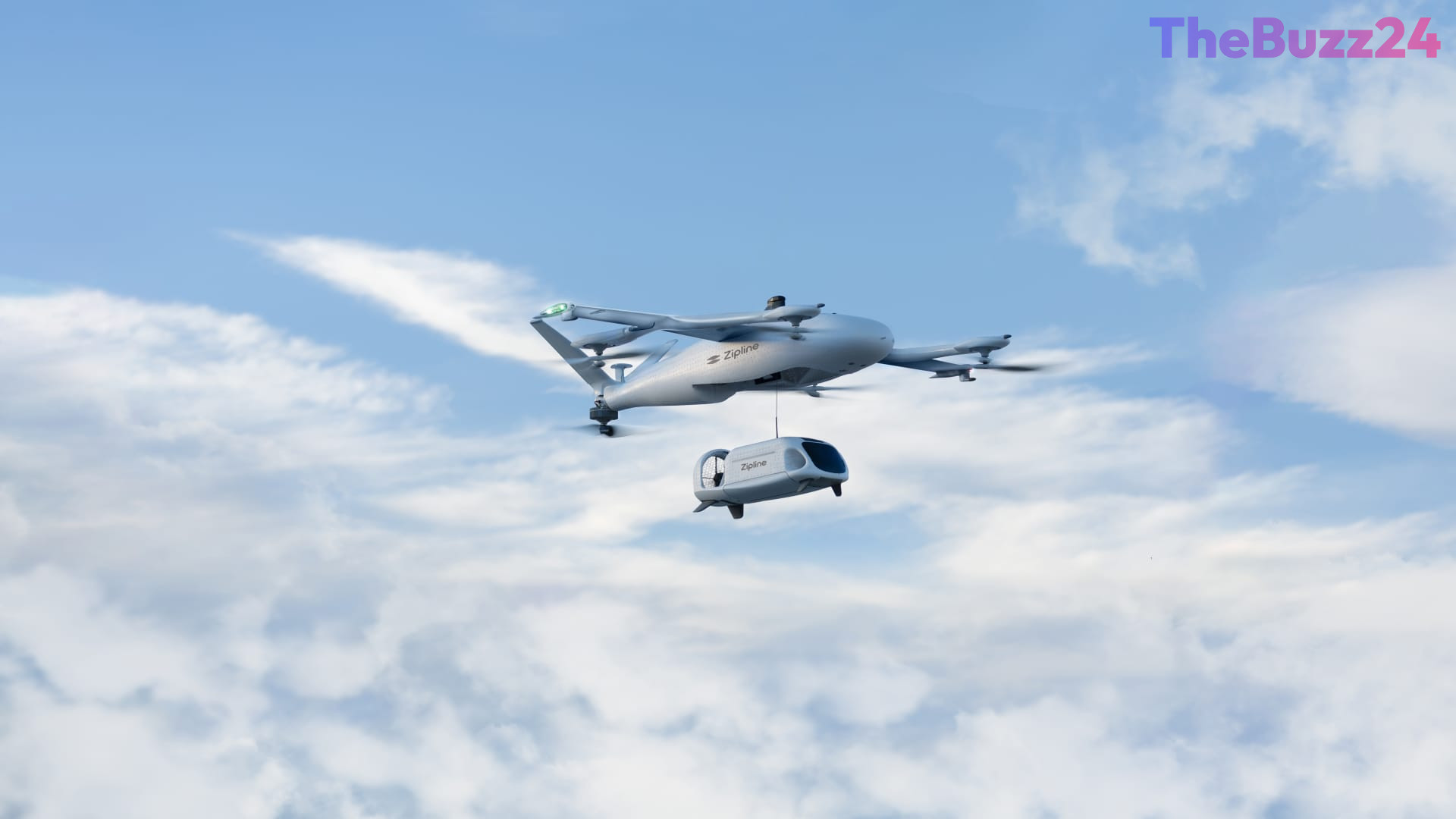
While Zipline built its reputation by delivering critical medical supplies, vaccines, and blood to remote clinics in Rwanda and Ghana, its operational footprint has shifted dramatically, with roughly 70% of its daily delivery volume now occurring in the U.S. The company’s fully electric drones, capable of carrying payloads up to eight pounds, serve a diverse roster of clients ranging from retail giants like Walmart to food chains like Chipotle and Little Caesars. Additionally, Zipline is deepening its healthcare integration through a new partnership with the Cleveland Clinic, launching a free prescription home-delivery service in Ohio this month.
The transition to drone logistics represents a significant shift away from traditional, carbon-intensive ground transportation. Proponents point out that using a multi-thousand-pound, gas-powered vehicle to deliver small packages is highly inefficient compared to lightweight, autonomous electric aircraft. As Zipline faces competition from rivals like Alphabet’s Wing, Flytrex, and Matternet, industry analysts project exponential growth for the sector. The U.S. drone delivery market is anticipated to expand by 65% annually over the next decade, potentially growing from 13 million deliveries today to over 800 million by 2034.
Key Takeaways
- Zipline has hired former executives from Tesla, Waymo, and Uber Eats to guide its aggressive commercial and financial expansion.
- The company expects its U.S. operations to grow 15-fold this year, supported by a manufacturing facility capable of producing 24,000 drones annually.
- While initially focused on medical deliveries in Africa, 70% of Zipline's daily volume is now in the U.S., serving major brands like Walmart, Chipotle, and the Cleveland Clinic.
Editor’s Analysis & Impact
The recruitment of high-caliber executives from Tesla, Waymo, and Uber Eats signals that the drone delivery sector is transitioning from experimental technology to a mature, highly scalable industry. Zipline is positioning itself to solve the “last-mile” delivery problem, which has historically been the most expensive and carbon-intensive segment of the logistics chain. By replacing heavy, fossil-fuel-powered delivery vehicles with lightweight, autonomous electric drones, Zipline addresses both economic inefficiencies and environmental concerns. The projected 65% annual growth rate of the U.S. drone market over the next decade suggests a massive shift in consumer habits and retail logistics. As regulatory frameworks evolve to accommodate routine beyond-visual-line-of-sight (BVLOS) flights, Zipline’s established manufacturing capacity and high-profile partnerships with healthcare and retail giants give it a formidable first-mover advantage in a rapidly crowding market.
Frequently Asked Questions
Q: What kind of items can Zipline drones deliver?
A: Zipline drones can carry payloads weighing up to 8 pounds. They deliver a wide range of items, including life-saving medical supplies, prescriptions, vaccines, and consumer goods like fast food and retail purchases.
Q: How fast are Zipline's drone deliveries?
A: Zipline's electric drones are designed for rapid transit. In established markets like Dallas, Texas, the fastest order-to-delivery times have clocked in at approximately five minutes.
Q: Who are some of Zipline's major partners in the U.S.?
A: Zipline partners with major retail and food brands such as Walmart, Chipotle, and Little Caesars, as well as healthcare providers like the Cleveland Clinic.
AI Disclosure: This article is based on verified data and official reports. Our Team and AI have cross-referenced every financial detail with primary sources to ensure total accuracy.
More from this Category