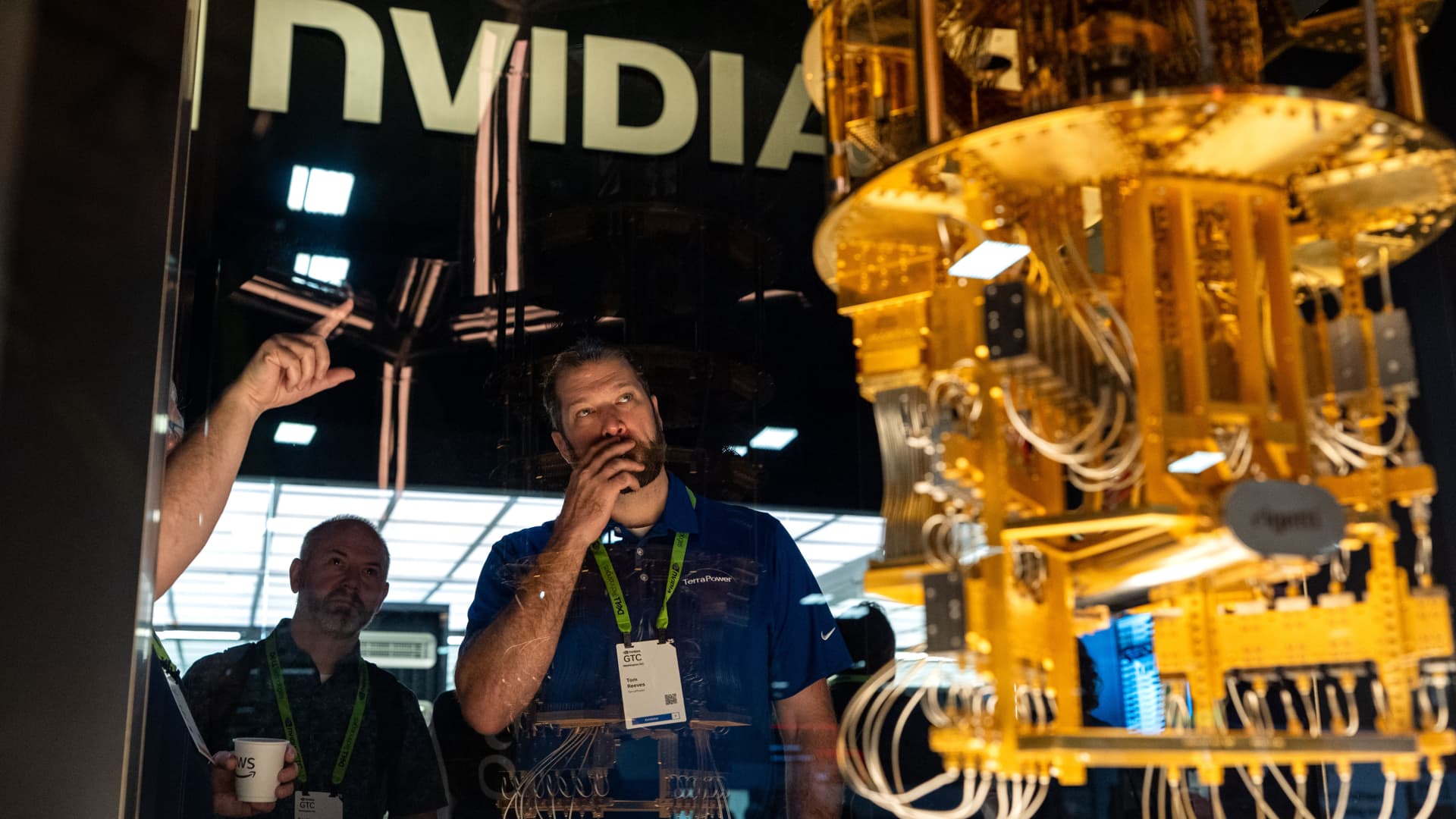
Quantum Computing Market Rallies as Nvidia AI Integration Sparks Innovation
The quantum computing sector is experiencing a robust market surge this week, fueled by investor optimism following the release of new open-source AI models from Nvidia. These advanced tools are designed to tackle long-standing challenges in the field, particularly regarding system calibration and error correction. As a result, market leaders such as IonQ and D-Wave Quantum have seen their stock valuations jump by more than 50% in recent days, while Rigetti Computing and Quantum Computing have also recorded gains exceeding 30%.
At the heart of this development is Nvidia’s new ‘Ising’ model family, which functions as a control plane for quantum hardware. By bridging the gap between artificial intelligence and quantum processing, these models aim to stabilize delicate qubits, moving the industry closer to scalable, reliable hybrid computation. The announcement was strategically timed to coincide with World Quantum Day, highlighting the growing public and institutional interest in the potential of quantum digital systems.
Beyond the immediate market reaction, the industry continues to attract significant capital from government agencies and major technology firms. Companies like Microsoft, Alphabet, Amazon, and IBM are heavily invested in the race to achieve fault-tolerant quantum computing within the next decade. This momentum is further bolstered by technical breakthroughs, such as IonQ’s recent success in linking remote quantum computers and securing a new contract with the Defense Advanced Research Projects Agency. While the sector remains speculative and prone to volatility, proponents argue that these advancements are essential for future breakthroughs in fields like drug discovery and complex computational problem-solving.
Key Takeaways
- Nvidia's new 'Ising' AI models are driving a major rally in quantum computing stocks by improving qubit stability and error correction.
- Market leaders like IonQ and D-Wave Quantum have seen share price increases of over 30% to 50% following the announcement.
- Major tech hyperscalers and government agencies are accelerating investments, aiming for fault-tolerant quantum systems by the end of the decade.
Editor’s Analysis & Impact
The recent surge in quantum computing stocks underscores a pivotal shift in how the industry approaches hardware scalability. By leveraging AI as a control layer, companies are effectively outsourcing the ‘heavy lifting’ of system calibration to machine learning models, which significantly lowers the barrier to entry for fault-tolerant computing. While the market is currently experiencing high volatility typical of speculative tech, the involvement of hyperscalers like Microsoft and Amazon suggests that quantum computing is transitioning from a theoretical research phase to a practical engineering phase. Investors should remain cautious, as the path to commercial viability is long and technically demanding. However, the integration of AI-driven control planes represents a critical inflection point that could compress the timeline for achieving quantum advantage in industries like pharmaceuticals and materials science.
Frequently Asked Questions
Q: What is the role of Nvidia's 'Ising' models in quantum computing?
A: The Ising models serve as a control plane that bridges artificial intelligence and quantum hardware, helping to stabilize qubits and improve error correction.
Q: Why are quantum computing stocks currently so volatile?
A: The sector is still in its early, speculative stages of development. While technical milestones are being reached, the industry has yet to achieve widespread commercial scalability, leading to significant price swings based on news and technological breakthroughs.
AI Disclosure: This article is based on verified data and official reports. Our Team and AI have cross-referenced every financial detail with primary sources to ensure total accuracy.
More from this Category