Druzhba Pipeline Restoration Clears Path for €90 Billion Ukraine Aid Package
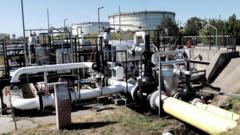
The transit of Russian crude oil through the Druzhba pipeline has officially resumed, resolving a major diplomatic standoff that had previously paralyzed a €90 billion financial support package for Ukraine. The restoration of flow to Hungary and Slovakia was the final hurdle required to address concerns raised by Budapest, which had leveraged its veto power over the funding to ensure the security of its energy supply chain.
Following the completion of necessary infrastructure repairs, European Union ambassadors have granted preliminary approval for the loan. This massive financial injection is intended to serve as a critical lifeline for the Ukrainian economy while simultaneously reinforcing the nation’s defense infrastructure. Although the final disbursement process is expected to span several weeks, the agreement signals a renewed commitment from the European bloc to sustain its support for Kyiv.
Beyond the immediate energy implications, the resolution of this dispute highlights a notable shift in the political climate within Hungary. Recent changes in leadership have fostered a more cooperative approach toward Brussels, easing tensions that had previously stalled collective decision-making. Ukrainian officials have welcomed the breakthrough, noting that the funds are essential for maintaining national resilience and operational capacity during the ongoing conflict.
Key Takeaways
- The restart of the Druzhba pipeline has removed the primary obstacle preventing the release of a €90 billion EU aid package for Ukraine.
- The European Union has issued preliminary approval for the funds, which are earmarked for both economic stabilization and military defense.
- The resolution of the pipeline dispute indicates a potential warming of diplomatic relations between Hungary and the European Union.
Editor’s Analysis & Impact
The reactivation of the Druzhba pipeline is a significant geopolitical development that illustrates the intersection of energy dependency and international aid policy. By resolving this bottleneck, the European Union has demonstrated a capacity to overcome internal fragmentation, reinforcing its unified stance on supporting Ukraine. However, the situation underscores the inherent vulnerability of European energy security, as critical infrastructure remains a focal point for diplomatic leverage. The successful release of the €90 billion package will be a crucial test of the EU’s administrative agility and its ability to maintain consensus among member states with divergent national interests. While the recent political shifts in Hungary suggest a potential for reduced friction in the future, the broader energy landscape remains volatile, and the reliance on existing pipeline networks continues to pose a strategic risk as long as the conflict persists.
Frequently Asked Questions
Q: What was the primary reason for the delay of the €90 billion aid package?
A: The aid package was stalled because Hungary exercised its veto power, demanding the restoration of Russian oil transit through the Druzhba pipeline as a condition for its approval.
Q: How will the €90 billion in aid be utilized by Ukraine?
A: The funds are intended to provide essential economic stabilization for the country and to bolster Ukraine's military defense capabilities.
AI Disclosure: This article is based on verified data and official reports. Our Team and AI have cross-referenced every financial detail with primary sources to ensure total accuracy.
More from this Category