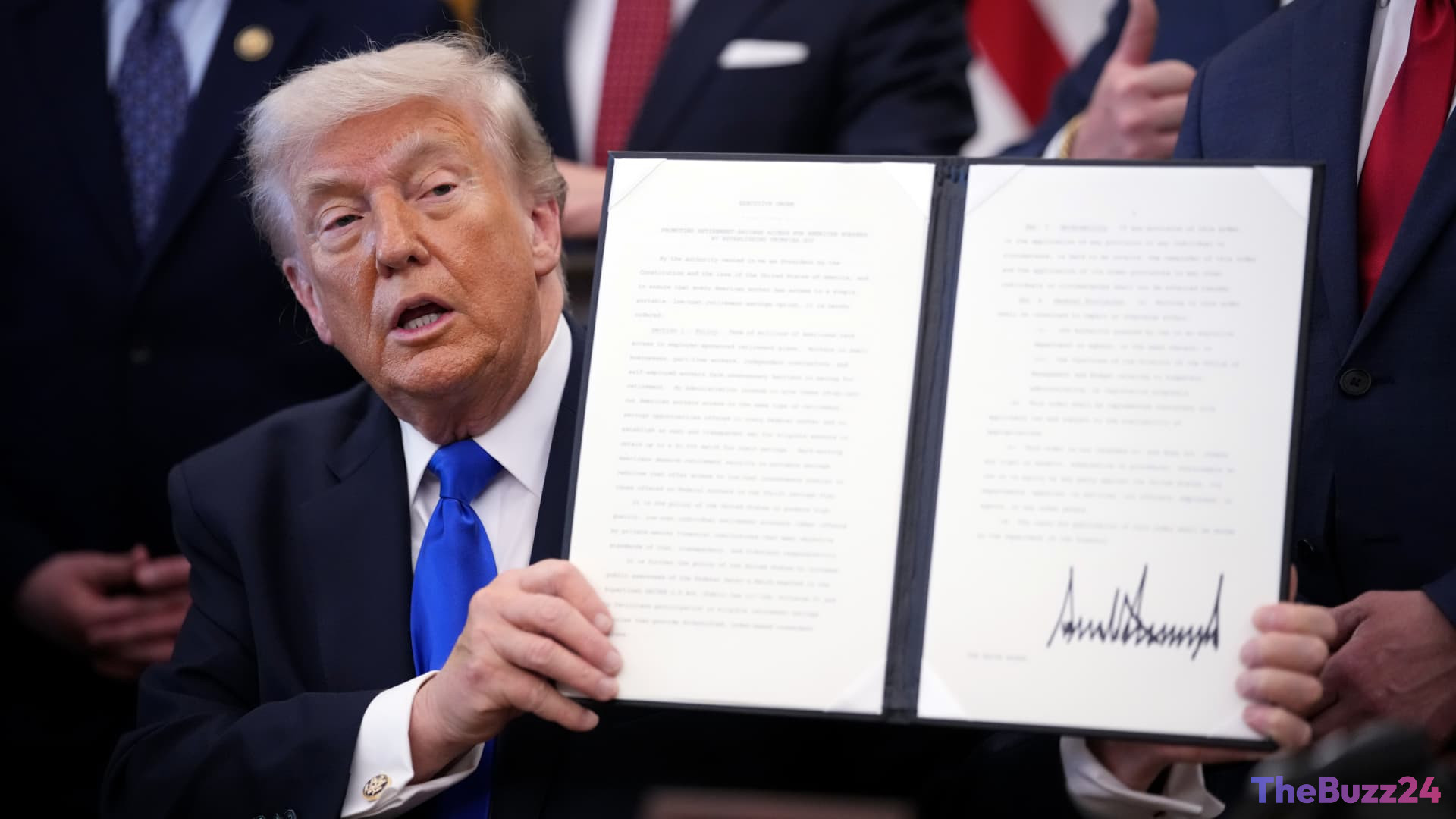
President Trump Unveils Initiative to Broaden Retirement Savings Access
President Donald Trump has signed an executive order aimed at significantly expanding access to retirement savings for millions of American workers who currently lack employer-sponsored plans. The initiative includes the launch of a new website, TrumpIRA.gov, designed to serve as a central hub where individuals can research, compare, and enroll in private-sector Individual Retirement Accounts (IRAs). This move seeks to bridge a critical gap in retirement planning, particularly for those without traditional workplace 401(k)s or similar benefits.
A key component of this new program is its integration with the federal Saver’s Match, a provision from the 2022 Secure 2.0 legislation. This match offers eligible low- to moderate-income taxpayers a government contribution of up to $1,000 annually directly into their qualified retirement accounts. Specifically, single taxpayers with a modified adjusted gross income up to $20,500, or joint filers up to $41,000, can qualify for a 50% match on contributions up to $2,000. Reduced matching contributions are available for higher income brackets, up to $35,500 for single filers and $71,000 for joint filers. Research from the Pew Charitable Trusts indicates that roughly 56 million Americans currently do not have access to an employer-sponsored retirement plan, highlighting the scale of the challenge this order aims to address.
While the executive order establishes the framework, the administration is actively seeking congressional approval to further expand the program’s reach and ensure its long-term stability. Experts like Teresa Ghilarducci and Shai Akabas emphasize that legislative action is crucial to make the effort “stickier” and broaden its coverage beyond the current income thresholds. This push aligns with existing bipartisan efforts, including proposals like the Retirement Savings for Americans Act and the Automatic IRA Act, which aim to create portable, tax-advantaged retirement savings accounts or mandate automatic enrollment in IRAs for employees. Furthermore, 17 states have already implemented similar auto-IRA programs, demonstrating a growing consensus on the need for accessible retirement solutions.
The initiative represents a significant step towards bolstering retirement security for a substantial portion of the American workforce. By providing easier access to information and a direct pathway to federal matching funds, the program aims to encourage greater participation in retirement savings. Policymakers will now focus on the legislative path forward, considering the costs to both the federal government and employers, as well as the practical details of implementing these expanded plans.
Key Takeaways
- President Trump signed an executive order to create TrumpIRA.gov, expanding retirement savings access for workers without employer-sponsored plans.
- The initiative integrates with the federal Saver's Match, potentially offering up to $1,000 annually for eligible low- to moderate-income individuals.
- The administration is seeking legislative support to broaden the program's reach and ensure its long-term stability, building on existing state and federal proposals.
Editor’s Analysis & Impact
This executive order marks a significant governmental effort to address the widespread issue of retirement insecurity among workers lacking employer-sponsored plans. By simplifying access to IRAs and leveraging the Saver’s Match, it could substantially boost retirement savings for millions, particularly low- to moderate-income individuals. The market impact could see increased demand for private-sector IRA products and potentially spur innovation in accessible financial planning tools. Looking ahead, the call for legislative action is crucial; congressional backing would provide permanence and expand the program’s scope, potentially standardizing retirement savings options across the nation. This initiative highlights a growing bipartisan recognition of the need for robust retirement solutions beyond traditional employer benefits, potentially reshaping the landscape of personal finance and government’s role within it.
Frequently Asked Questions
Q: What is TrumpIRA.gov?
A: TrumpIRA.gov is a new website launched by executive order to help workers without employer-sponsored retirement plans research, compare, and enroll in private-sector IRA accounts.
Q: How does the Saver's Match work with this initiative?
A: The initiative integrates with the federal Saver's Match, allowing eligible low- to moderate-income taxpayers to receive a government matching contribution of up to $1,000 per year directly into their qualified retirement accounts.
Q: Who is the primary target for this initiative?
A: The initiative primarily targets the approximately 56 million Americans who currently lack access to an employer-sponsored retirement plan at work, aiming to provide them with accessible savings options.
AI Disclosure: This article is based on verified data and official reports. Our Team and AI have cross-referenced every financial detail with primary sources to ensure total accuracy.
More from this Category