Empowering the Next Generation: Youth Lead the Way at 3rd Annual Student Science Symposium in Maine
On March 30, 2026, Portland, Maine, became a vibrant hub of youthful scientific discovery as the third annual Findings from the Field Student Research Symposium got underway. Co-hosted by the Gulf of Maine Research Institute (GMRI) and the NASA Science Activation program’s Learning Ecosystems Northeast (LENE) project, the event brought together 106 students from grades four through eight, alongside educators and professional scientists. The symposium successfully dismantled traditional, rigid barriers in science communication, transforming young students into the primary experts of the day.
To foster a deep sense of belonging and agency, this year’s symposium introduced innovative interactive formats. Moving away from passive observation, students participated in hands-on data interpretation inspired by the “Data Vandals” art collective, treating scientific data as an active, evolving dialogue. Additionally, the physical setup of discussion groups was intentionally flipped: student scientists sat at the main tables while adult experts and educators sat behind them, physically and symbolically centering the youth and their research findings.
The theme of collaboration was highlighted by Dr. Dave Reidmiller, Chief Impact Officer at GMRI, who emphasized in his keynote address that “science is a team sport.” This collaborative spirit was evident as students from different schools realized they were working as colleagues on shared environmental challenges, such as tracking invasive pests. The event also integrated undergraduate mentors to bridge the gap between young learners and career scientists, making future paths in STEM feel highly attainable.
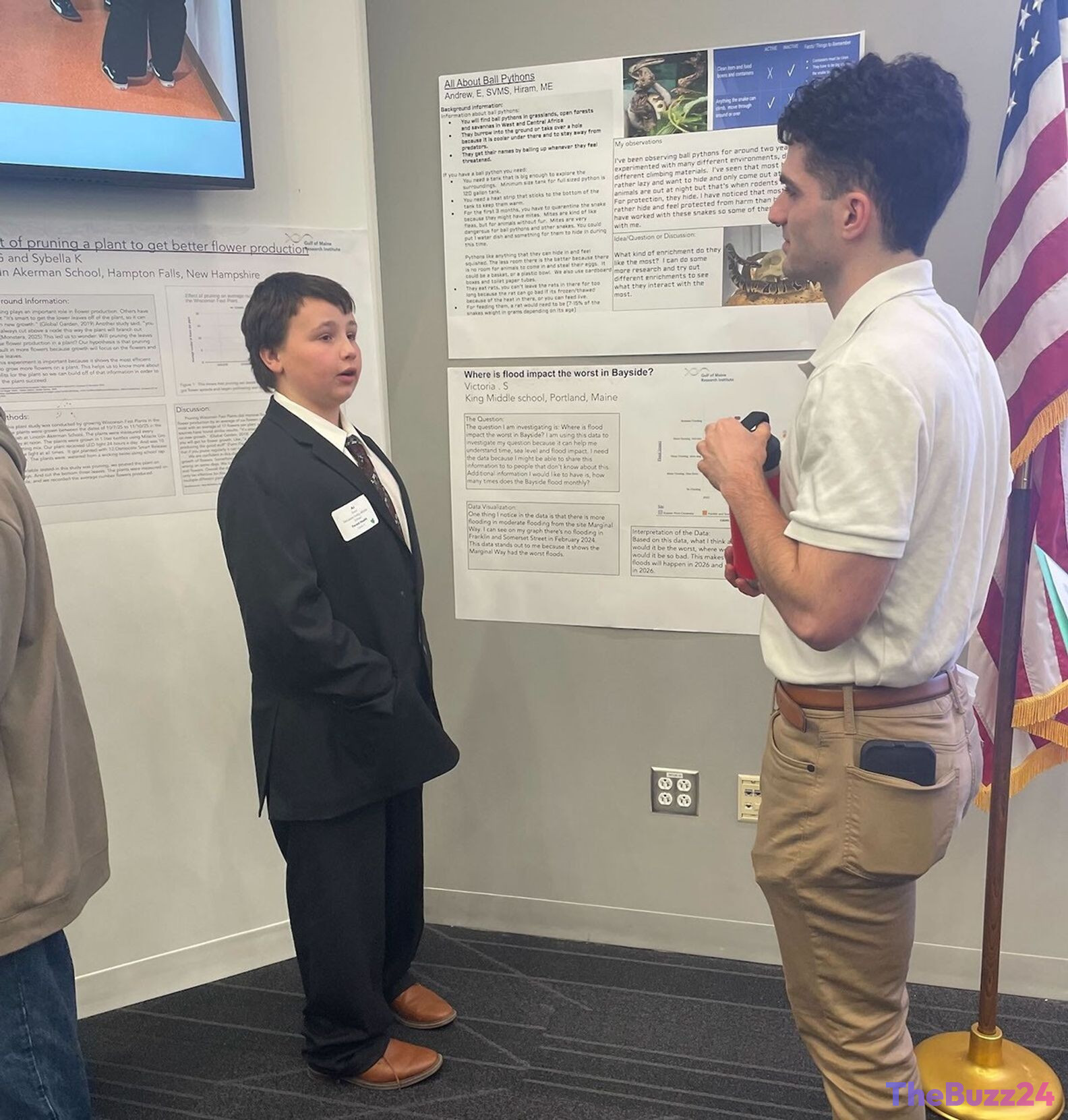
The symposium concluded with a dynamic poster session where students presented their findings to peers and professional scientists, including representatives from NASA and the Maine Forest Service. Due to rapid growth, the event outgrew its original GMRI venue and was hosted at the offices of corporate partner Unum. With overwhelming positive feedback from participants, organizers are already planning an even larger iteration for 2027, cementing the event’s role in cultivating future scientific leaders.
Key Takeaways
- The 3rd Annual Findings from the Field Symposium gathered over 100 middle-school students in Portland, Maine, to present original scientific research.
- Innovative structural changes, such as student-centered seating and interactive data activities, empowered youth to act as primary experts rather than passive observers.
- Supported by GMRI and NASA's LENE project, the rapidly growing event expanded to a larger venue provided by corporate partner Unum to accommodate rising interest.
Editor’s Analysis & Impact
The Findings from the Field Symposium represents a crucial shift in how STEM education is delivered and perceived. By dismantling the traditional “white coat” hierarchy, the initiative addresses a long-standing challenge in science education: making STEM accessible and relatable to young minds. Placing middle-school students at the center of scientific discourse fosters early confidence and a sense of professional identity, which are critical factors in sustaining long-term interest in STEM careers. Furthermore, the collaboration between NASA, local research institutes like GMRI, and corporate partners like Unum highlights a scalable model for community-driven science education. As the event continues to expand, it sets a precedent for how regional ecosystems can successfully cultivate the next generation of climate and environmental scientists, ultimately strengthening the future scientific workforce.
Frequently Asked Questions
Q: What is the primary goal of the Findings from the Field Symposium?
A: The symposium aims to break down traditional barriers in science communication by giving middle-school students a platform to present their research, collaborate with peers, and engage directly with professional scientists as colleagues.
Q: Who organized and supported the 2026 event?
A: The event was co-hosted by the Gulf of Maine Research Institute (GMRI) and the NASA Science Activation program’s Learning Ecosystems Northeast (LENE) project, with venue support from corporate partner Unum.
Q: How did the symposium encourage student leadership?
A: The event utilized unique strategies, such as placing students at the main discussion tables while adult experts sat behind them, and incorporating interactive data-marking activities that treated scientific data as an open conversation.
AI Disclosure: This article is based on verified data and official reports. Our Team and AI have cross-referenced every financial detail with primary sources to ensure total accuracy.
More from this Category