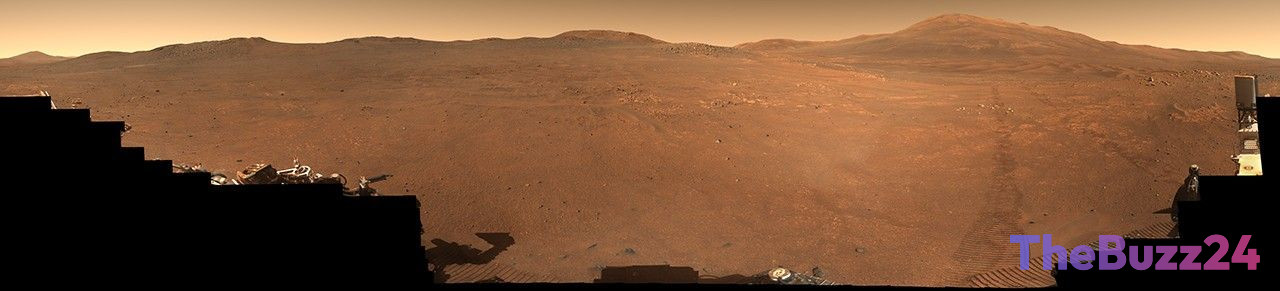
Mars Exploration Reaches New Heights with Stunning ‘Crocodile Bridge’ Panorama
The Perseverance rover has achieved a significant milestone in its mission to explore the Martian landscape by documenting the ‘Crocodile Bridge.’ This unique geological feature, located along the rugged rim of the Jezero Crater, was captured through a massive 360-degree panorama. Using the advanced Mastcam-Z camera system, the rover stitched together 980 high-resolution images to provide a vivid, natural-color view of the terrain.
This discovery is vital for understanding the planet’s history. Because Mars does not experience the same tectonic recycling as Earth, the rocks found at the Jezero Crater rim serve as pristine archives of the solar system’s early stages. These formations allow scientists to peer back billions of years to study the atmospheric and environmental shifts that shaped the Red Planet.
Having completed its primary objectives at the Crocodile Bridge site, Perseverance is now transitioning to its next destination: Lac de Charmes. This upcoming phase of the mission will involve detailed surveys of the new region, as researchers search for further evidence of ancient water and the potential for past life on Mars.
Key Takeaways
- Perseverance successfully captured a 980-image panorama of the 'Crocodile Bridge' formation.
- The Jezero Crater rim offers a rare, undisturbed look at ancient Martian geological history.
- The rover is moving toward 'Lac de Charmes' to continue investigating potential signs of past habitability.
Editor’s Analysis & Impact
The successful mapping of the ‘Crocodile Bridge’ underscores the immense value of the Perseverance mission in providing high-fidelity geological data. By targeting the Jezero Crater, the mission is effectively tracing the transformation of Mars from a potentially life-sustaining world to its current arid state. The strategic move toward ‘Lac de Charmes’ is particularly significant, as this area may contain sedimentary deposits that hold the chemical keys to Mars’ watery past. As the rover continues its trek, the data collected will be indispensable for future sample-return missions. Ultimately, these findings provide a critical framework for understanding planetary evolution and how terrestrial worlds change over billions of years, offering a comparative lens for Earth’s own geological journey.
Frequently Asked Questions
Q: Why are the rocks in Jezero Crater so important?
A: Unlike Earth, Mars lacks active plate tectonics, meaning its ancient rocks remain undisturbed, acting as a geological time capsule of the early solar system.
Q: What is the next goal for the Perseverance rover?
A: The rover is heading to a region called 'Lac de Charmes' to conduct surveys that may reveal more about the planet's history of habitability.
AI Disclosure: This article is based on verified data and official reports. Our Team and AI have cross-referenced every financial detail with primary sources to ensure total accuracy.
More from this Category