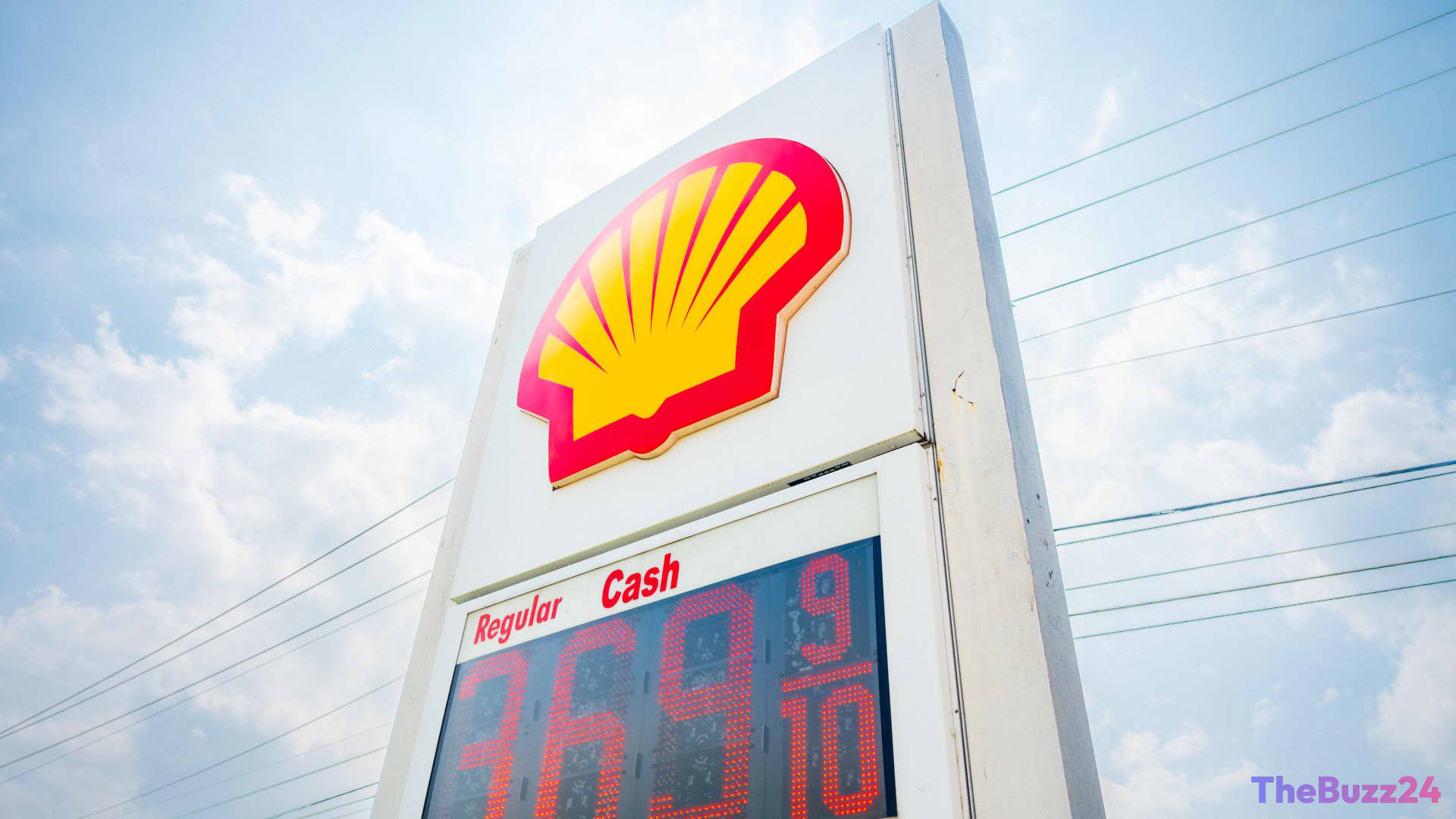
Shell Posts Robust Q1 Earnings Amidst Volatile Global Energy Markets
Global energy giant Shell reported stronger-than-anticipated adjusted earnings of $6.92 billion for the first quarter, significantly surpassing both market consensus and its own forecasts. This robust performance comes as global energy prices have seen a substantial increase, driven by ongoing disruptions in key strategic waterways and broader geopolitical tensions. Shell CEO Wael Sawan emphasized the company’s “relentless focus on operational performance” in a quarter characterized by “unprecedented disruption in global energy markets.” The first-quarter results mark a notable improvement from the $5.58 billion reported in the same period last year and $3.26 billion in the final quarter of 2025.
Despite the strong earnings, Shell announced a slight reduction in its quarterly share buyback program, scaling it back from $3.5 billion to $3 billion. Concurrently, the company declared a 5% increase in its dividend, raising it to $0.3906 per share. The firm’s net debt, however, saw an uptick, reaching $52.6 billion at the end of the first quarter, up from $45.7 billion at the close of the previous year. Analysts attribute this increase primarily to a working capital effect, a common occurrence when rising oil prices impact the value of inventories.
In a strategic move to bolster its long-term resource base, Shell recently finalized an agreement to acquire Canadian energy firm ARC Resources. Valued at $16.4 billion, including net debt and leases, this deal targets ARC Resources’ operations in the Montney shale basin across British Columbia and Alberta. CEO Sawan highlighted ARC Resources as a “high-quality, low-cost and top quartile low carbon intensity producer” that will strengthen Shell’s future production capabilities. While Shell’s shares experienced a modest 2% dip on the day of the earnings report, the London-listed stock has still seen gains of approximately 15% year-to-date, though it has lagged behind some of its major competitors like BP, TotalEnergies, Exxon Mobil, and Chevron.
Key Takeaways
- Shell's Q1 adjusted earnings significantly exceeded analyst expectations, reaching $6.92 billion, driven by elevated global energy prices and operational focus.
- The company reduced its quarterly share buyback to $3 billion but increased its dividend by 5%, while net debt rose to $52.6 billion due to working capital effects from higher oil prices.
- Shell is strategically expanding its resource base through a $16.4 billion acquisition of Canadian energy firm ARC Resources, aiming to secure high-quality, low-cost production for decades.
Editor’s Analysis & Impact
Shell’s robust Q1 performance underscores the current strength of the traditional energy sector, benefiting significantly from geopolitical instability and subsequent surges in global energy prices. This reinforces the continued profitability of fossil fuels, even as the industry faces pressure for energy transition. The strategic acquisition of ARC Resources, despite the immediate increase in net debt, signals Shell’s long-term commitment to securing its resource base and optimizing production efficiency. However, the slight underperformance of Shell’s stock compared to peers suggests investors are carefully weighing short-term gains against the broader challenges of decarbonization and market volatility. The results highlight the complex balancing act energy majors face between capitalizing on current market conditions and positioning for a sustainable future.
Frequently Asked Questions
Q: What were Shell's key financial results for Q1?
A: Shell reported adjusted earnings of $6.92 billion for the first quarter, significantly exceeding analyst expectations. This compares to $5.58 billion in Q1 of the previous year and $3.26 billion in Q4 2025.
Q: Why did Shell's net debt increase in Q1?
A: Shell's net debt rose to $52.6 billion from $45.7 billion at the end of the previous year. This increase is primarily attributed to a working capital effect, which occurs when rising oil prices impact the value of inventories.
Q: What is the significance of the ARC Resources acquisition?
A: The $16.4 billion acquisition of Canadian energy firm ARC Resources is a strategic move by Shell to bolster its long-term resource base. ARC Resources is described as a high-quality, low-cost producer in the Montney shale basin, which will strengthen Shell's future production capabilities.
AI Disclosure: This article is based on verified data and official reports. Our Team and AI have cross-referenced every financial detail with primary sources to ensure total accuracy.
More from this Category