Visualizing Malware: The Towering Scale of Digital Threats
Cybersecurity researchers and threat intelligence firms rely on vast repositories of malware data to develop detection models and understand evolving attack vectors. Two prominent entities, the malware research group vx-underground and the online analysis service VirusTotal, maintain immense archives of malicious software. vx-underground, known for housing a significant collection of malware source code, reports an archive size of approximately 30 terabytes. In stark contrast, VirusTotal, which scans files against numerous antivirus engines, holds an astonishing 31 petabytes of user-contributed malware samples—a petabyte being roughly a thousand times larger than a terabyte.
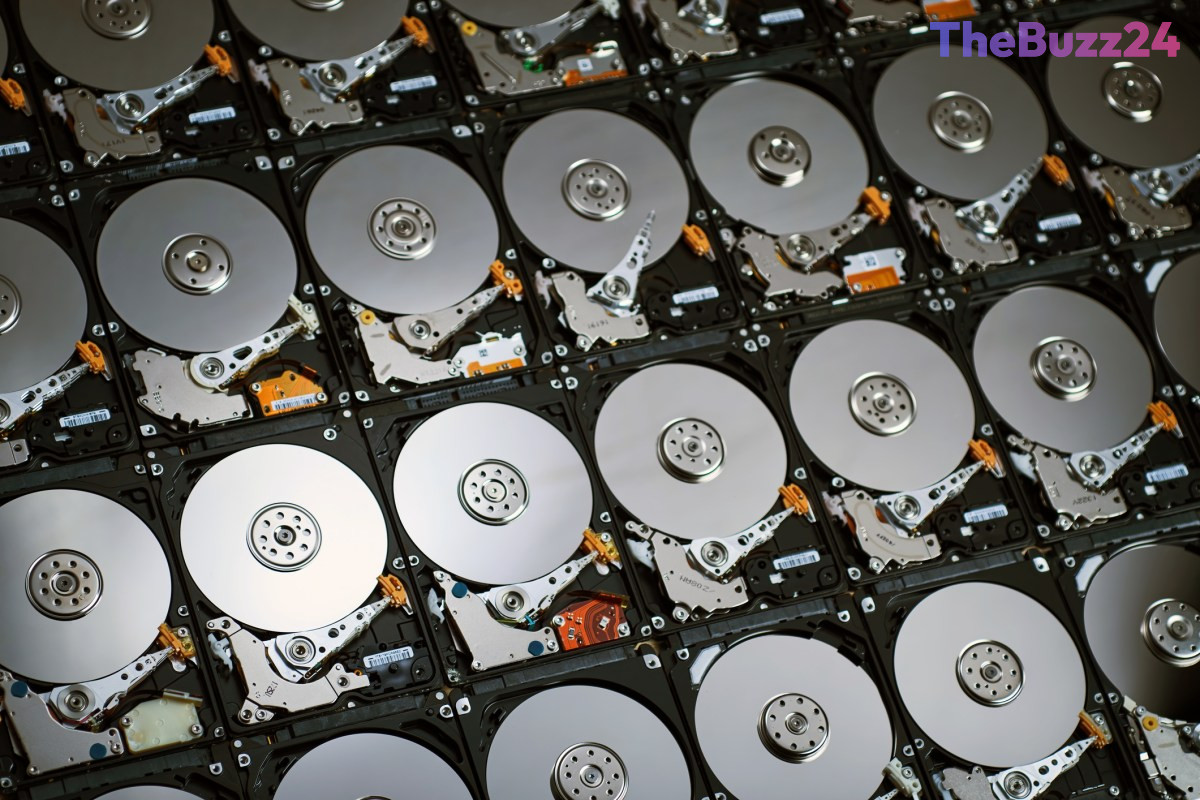
To grasp the sheer volume of these digital threats, one can imagine these data banks materialized as stacks of physical hard drives. For this visualization, we consider standard 3.5-inch internal hard drives, each with a 1 terabyte capacity and a uniform height of one inch when stacked. This standardized measurement allows for a direct comparison of their physical scale.
Applying this metric, vx-underground’s 30 terabytes of malware data would necessitate 30 individual 1-terabyte hard drives. Stacked one on top of the other, this collection would reach a height of 30 inches, or approximately 2.5 feet. While substantial, this figure pales in comparison to the scale of VirusTotal’s repository.
VirusTotal’s colossal 31 petabytes of data would require an astounding 31,744 such hard drives. When stacked, these drives would form an imposing tower stretching approximately 2,645 feet into the sky. To put this into perspective, this data stack would nearly match the height of the world’s tallest building, the Burj Khalifa in Dubai, which stands at 2,722 feet. Furthermore, it would be equivalent to stacking roughly two and a half Eiffel Towers, each 1,083 feet tall, highlighting the immense and continuously growing challenge posed by global malware proliferation.
AI Disclosure: This article is based on verified data and official reports. Our AI have cross-referenced every financial detail with primary sources to ensure total accuracy.
More from this Category