Global Markets Brace for Trump-Xi Summit: Trade, Tech, and Tariffs in Focus
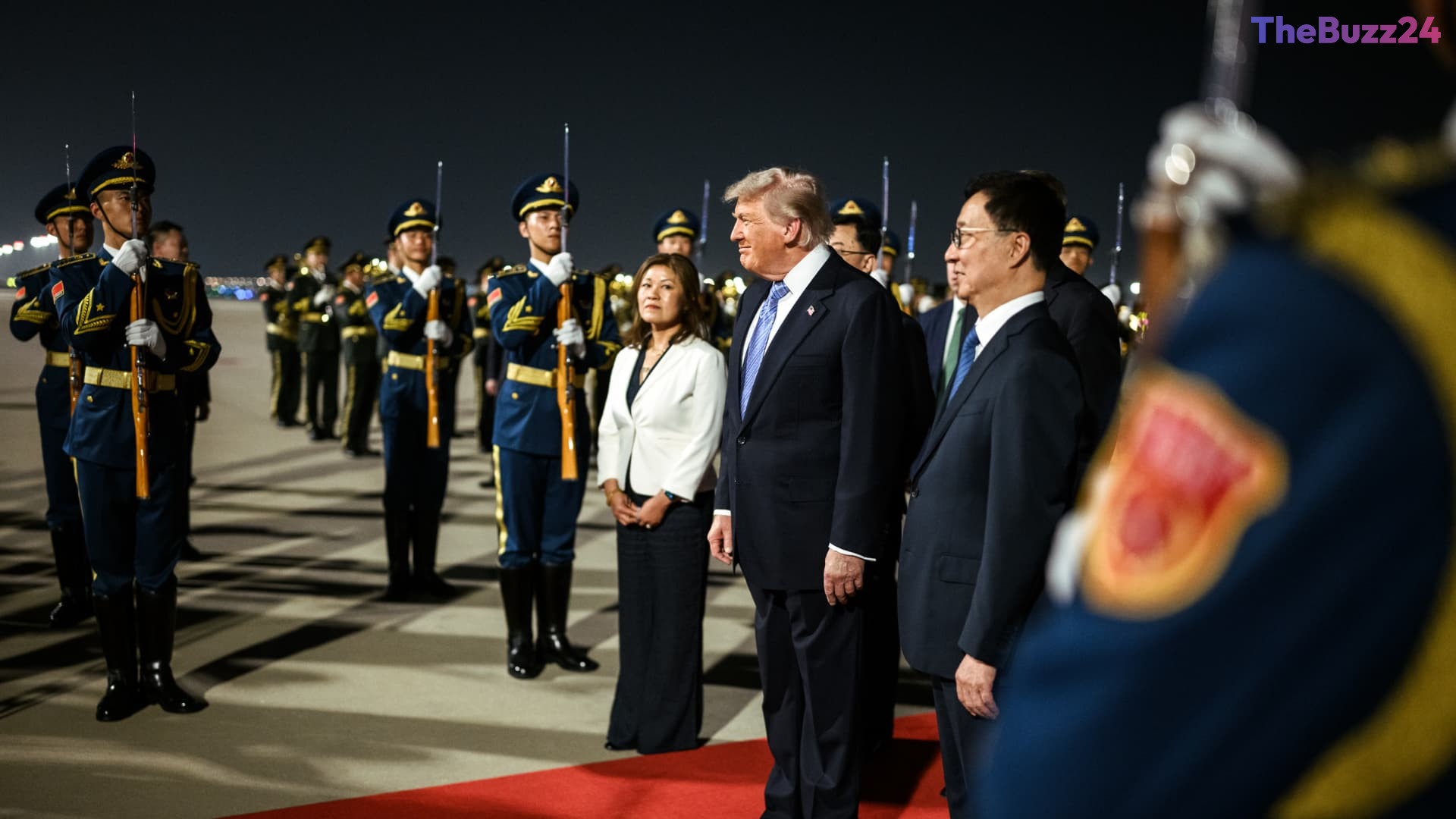
Global financial markets exhibited a mixed performance on Thursday as investors keenly observed the crucial summit between U.S. President Donald Trump and Chinese President Xi Jinping in Beijing. This high-profile meeting is widely considered a critical juncture for international trade relations, with market participants eagerly awaiting insights into the future trajectory of the economic partnership between the two global powerhouses.
Early trading sessions in the Asia-Pacific region reflected this cautious optimism. Japan’s Nikkei 225 saw a modest increase of 0.27%, while the broader Topix index experienced a slight downturn of 0.23%. South Korea’s Kospi and Kosdaq indices, however, posted more significant gains of 0.38% and 1.31% respectively. In Australia, the S&P/ASX 200 registered a minor dip, and futures for Hong Kong’s Hang Seng index indicated a positive start to trading.
The technology sector, in particular, is under intense scrutiny during these discussions. The presence of prominent industry figures such as Tesla CEO Elon Musk and Nvidia CEO Jensen Huang within the U.S. delegation underscores the importance of technology-related trade issues. Discussions are anticipated to center on specific points of contention, including restrictions on semiconductor exports, existing tariff structures, and the governance of rare earth minerals, rather than a fundamental reshaping of the broader diplomatic landscape.
Speculation is rife that China might extend certain concessions, potentially involving increased procurement of American agricultural products, energy resources, and aircraft, as a measure to de-escalate the risk of further tariff hikes. Despite ongoing inflationary concerns, U.S. markets have maintained a reserved posture, even as the S&P 500 recently achieved record highs, largely propelled by the technology sector. Meanwhile, market analysts continue to view Chinese equities favorably, citing the nation’s robust export capabilities and current currency valuations as attractive factors for mainland A-shares.
Key Takeaways
- Global markets are closely monitoring the U.S.-China summit in Beijing for signals on trade relations.
- Key discussion points are expected to include technology exports, tariffs, and rare earth minerals.
- Potential Chinese concessions on agricultural goods and energy imports are being considered by markets.
Editor’s Analysis & Impact
The Trump-Xi summit represents a critical inflection point for global economic stability. The outcome of these high-level talks will significantly influence trade flows, investment strategies, and corporate planning, particularly within the technology and agriculture sectors. A de-escalation of trade tensions could boost market confidence and encourage cross-border investment, while continued friction might lead to further supply chain realignments and economic fragmentation. The market’s cautious yet hopeful reaction suggests a desire for predictability and a stable framework for international commerce, with a keen eye on how specific concessions might reshape bilateral trade balances.
Frequently Asked Questions
Q: What are the main objectives of the Trump-Xi meeting?
A: The primary objectives of the meeting are to address key trade disputes between the U.S. and China, including tariffs, export controls on technology like semiconductors, and the regulation of critical resources such as rare earth minerals. The goal is to find common ground and potentially de-escalate trade tensions.
Q: How might the summit impact global financial markets?
A: The summit's outcome could significantly influence market sentiment. Positive developments, such as concessions and a reduction in trade friction, could lead to market rallies and increased investor confidence. Conversely, a failure to reach agreements or an escalation of disputes might trigger market volatility and cautious trading.
Q: Why are tech leaders like Elon Musk and Jensen Huang present?
A: Their presence highlights the critical role of the technology sector in the U.S.-China trade relationship. Discussions are expected to cover sensitive areas like semiconductor technology, intellectual property, and market access for tech companies, making their insights and perspectives valuable to the U.S. delegation.
AI Disclosure: This article is based on verified data and official reports. Our Team and AI have cross-referenced every financial detail with primary sources to ensure total accuracy.
More from this Category