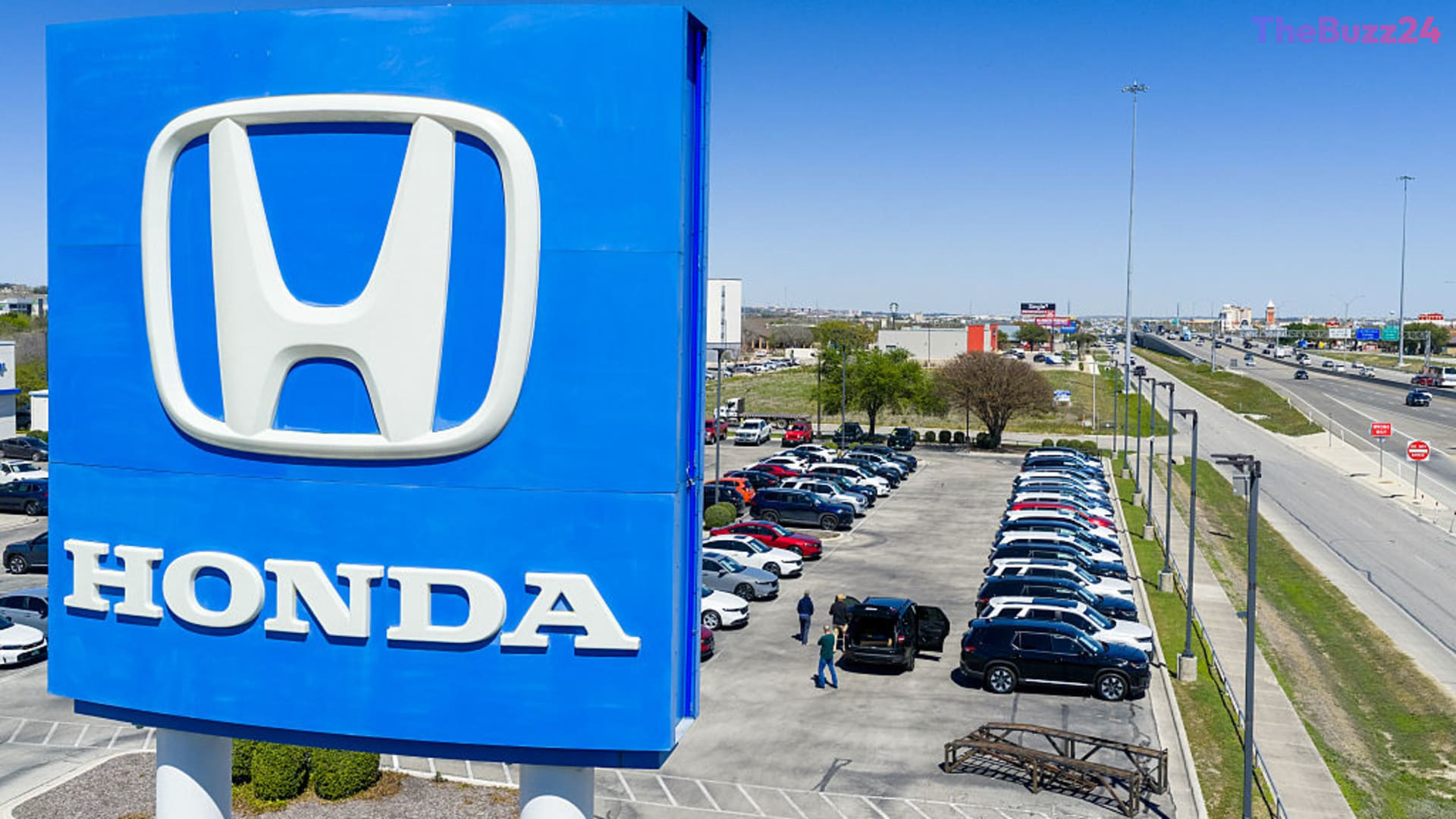
Honda Shares Rally Despite Historic Operating Loss as Strategic Pivot Takes Shape
Honda Motor saw its stock price climb more than 7% on Friday, a surprising market reaction following the announcement of the company’s first annual operating loss in nearly 70 years. For the fiscal year ending in March, the automaker reported an operating loss of 414.3 billion yen, or roughly $2.61 billion, marking a sharp reversal from the 1.2 trillion yen profit achieved in the prior year.
The financial downturn was largely driven by heavy investments in electric vehicle (EV) infrastructure, increased competition from Chinese manufacturers, and the financial burden of U.S. tariffs. To mitigate these pressures, Honda has announced a major restructuring of its EV division, which includes the cancellation of several planned models for the North American market. This strategic shift is expected to cost the company over $9 billion as it attempts to streamline operations and refocus its resources.
Despite the immediate financial strain, investors responded positively to the company’s optimistic profit guidance for the coming year, which exceeded analyst expectations by 38%. While the company faces ongoing challenges—including vehicle recalls and engine-related lawsuits—major financial institutions remain bullish on the stock. Honda is now pivoting toward high-growth regions like India and China, aiming to leverage its dominant motorcycle market share to capture demand in the low-cost vehicle sector, signaling a departure from its previous global standard model approach.
Key Takeaways
- Honda reported its first annual operating loss in nearly 70 years, totaling 414.3 billion yen.
- The company is undergoing a $9 billion restructuring of its EV division, including the cancellation of specific North American models.
- Investors are optimistic about Honda's future, driven by strong profit guidance and a new strategic focus on the Indian and Chinese markets.
Editor’s Analysis & Impact
Honda’s recent market performance highlights a classic ‘bad news is priced in’ scenario. By taking significant write-downs and restructuring its EV strategy now, the company is attempting to clear the decks for a more sustainable future. The pivot toward India and China is particularly astute; these markets offer higher volume potential for the company’s core strengths in smaller, efficient vehicles and motorcycles. However, the road ahead remains fraught with risk. The automotive industry is currently undergoing a painful transition, and Honda must prove it can balance the high costs of electrification with the need to maintain profitability in traditional segments. If the company can successfully execute its regional focus while managing ongoing quality control issues, it may emerge as a more agile competitor in the global landscape.
Frequently Asked Questions
Q: Why did Honda report such a large loss this year?
A: The loss was primarily due to heavy provisions for electric vehicle investments, intense competition from Chinese rivals, and the impact of U.S. tariffs.
Q: What is Honda's new strategy for growth?
A: Honda is shifting away from a 'global standard' model to focus on high-growth markets like India and China, utilizing its strong motorcycle brand presence to capture the low-cost vehicle segment.
AI Disclosure: This article is based on verified data and official reports. Our Team and AI have cross-referenced every financial detail with primary sources to ensure total accuracy.
More from this Category