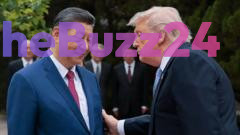
Trump’s Beijing Summit Signals Strategic Pivot in US-China Relations
In a significant departure from his historically confrontational stance, Donald Trump recently concluded a high-profile diplomatic visit to Beijing. Once defined by aggressive trade wars, heavy tariffs, and accusations of industrial espionage, the relationship between the two global powers appeared to take a more conciliatory tone during this summit. Trump was received with a formal red-carpet ceremony at the Great Hall of the People, where he publicly referred to Chinese President Xi Jinping as a friend and expressed optimism regarding the future of bilateral ties.
While the summit lacked major geopolitical breakthroughs, it yielded tangible commercial results. Several major American corporations secured significant wins, including Nvidia receiving authorization to supply semiconductors to ten Chinese entities, Boeing finalizing an order for 200 aircraft, and Citi obtaining approval to expand its securities operations within the Chinese market. These developments suggest a prioritization of economic engagement, even as broader systemic tensions persist.
Despite the warm rhetoric, the underlying friction between Washington and Beijing remains palpable. The summit occurred against a backdrop of recent US sanctions against Chinese firms linked to military support for Iran, as well as ongoing debates regarding a $14 billion arms sale to Taiwan. While the Chinese government emphasized the sensitivity of the Taiwan issue during the talks, the White House remained notably silent on the matter in its official readout. Trump indicated that a final decision on the arms package would be reached in the near future, leaving a critical point of contention unresolved.
Ultimately, the visit highlights a potential shift in strategy, acknowledging that previous hardline tactics may have reached their limit in addressing complex issues like intellectual property and market access. Whether this diplomatic thaw leads to long-term stability or remains a temporary reprieve depends heavily on how the administration navigates the looming decision on Taiwan and the upcoming diplomatic engagements scheduled for later this year.
Key Takeaways
- Donald Trump’s visit to Beijing marked a shift toward diplomatic engagement, contrasting with his previous administration's aggressive trade war policies.
- The summit resulted in commercial gains for major US firms, including Nvidia, Boeing, and Citi, despite the lack of major geopolitical policy changes.
- The status of Taiwan and a pending $14 billion arms sale remain the most significant unresolved points of friction between the two nations.
Editor’s Analysis & Impact
The shift in Trump’s diplomatic approach suggests a pragmatic realization that unilateral tariffs and isolationist policies have failed to dismantle China’s economic influence or resolve structural trade imbalances. By pivoting toward commercial deal-making, the administration appears to be testing whether economic incentives can serve as a bridge to address deeper systemic issues. However, the industry impact remains uncertain; while corporations like Nvidia and Boeing benefit from immediate market access, the broader tech sector remains wary of the ongoing regulatory and national security risks. The future trajectory of this relationship hinges on the administration’s handling of the Taiwan arms package, which serves as a litmus test for US-China relations. If the administration prioritizes economic stability over geopolitical posturing, we may see a period of managed competition, though the fundamental ideological divide ensures that volatility will remain a constant feature of the global market.
Frequently Asked Questions
Q: What were the primary commercial outcomes of the Beijing summit?
A: The summit resulted in Nvidia receiving clearance to sell semiconductors to ten Chinese companies, Boeing securing an order for 200 aircraft, and Citi gaining approval to operate a securities business in China.
Q: How did the two sides address the issue of Taiwan during the meetings?
A: The Chinese government warned that the Taiwan issue could lead to conflicts, while Trump stated he had made no commitment either way, noting that a decision on a pending $14 billion arms sale would be made in the near future.
AI Disclosure: This article is based on verified data and official reports. Our Team and AI have cross-referenced every financial detail with primary sources to ensure total accuracy.
More from this Category