SpaceX Launches 34th Resupply Mission to International Space Station
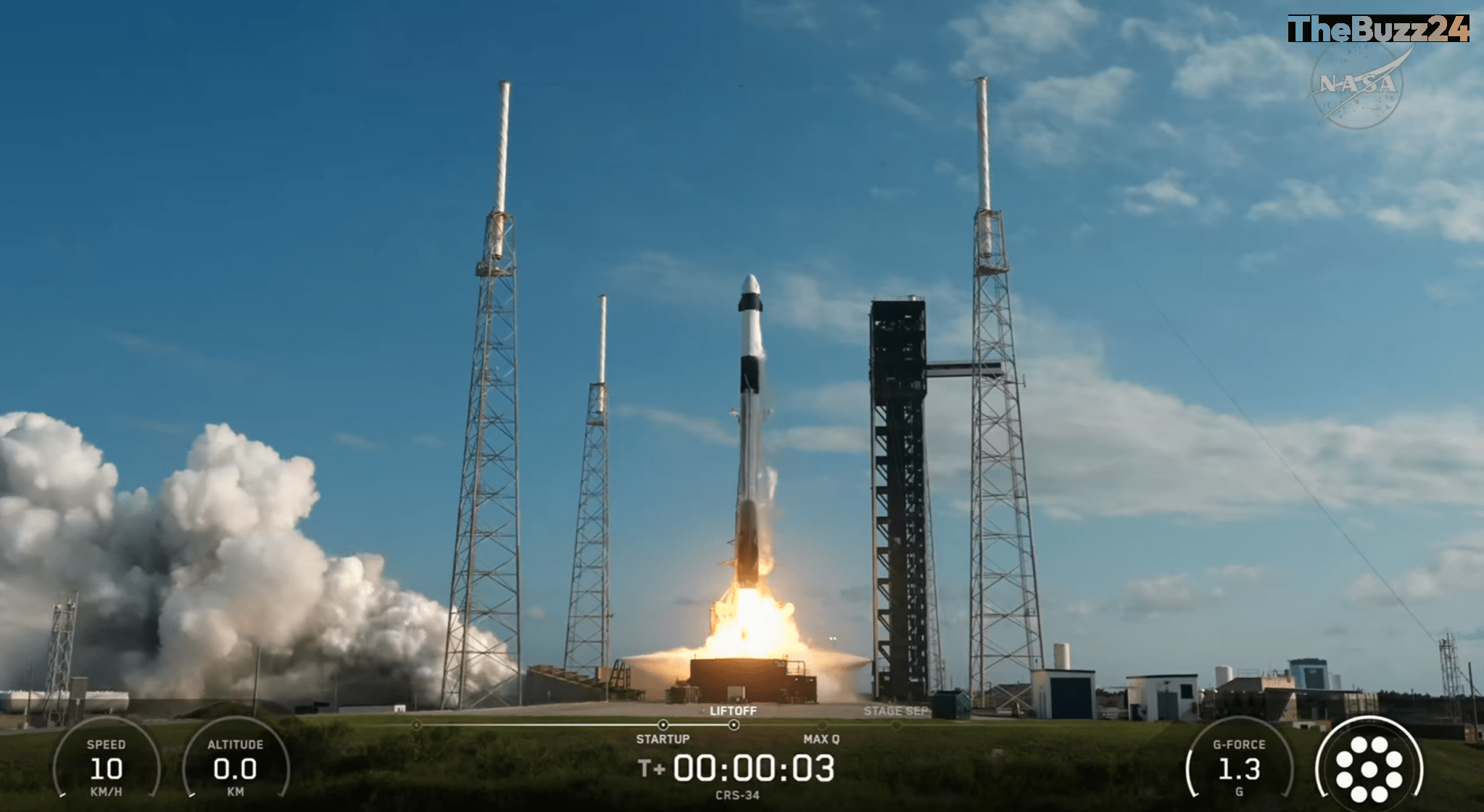
SpaceX successfully launched its 34th commercial resupply mission to the International Space Station (ISS) on Friday, May 15, 2026. A Falcon 9 rocket lifted off from Space Launch Complex 40 at Cape Canaveral Space Force Station, carrying the Dragon cargo spacecraft into orbit. The vessel is transporting approximately 6,500 pounds of essential supplies and sophisticated research equipment to support the Expedition 74 crew currently stationed in orbit.
The mission features a diverse array of scientific investigations aimed at advancing human knowledge in biology and physics. Key experiments include testing Earth-based microgravity simulators, evaluating a wood-derived bone scaffold for potential osteoporosis treatments, and studying the physiological changes in red blood cells and the spleen during spaceflight. These studies are vital for understanding the long-term effects of space travel on the human body, which is essential for future deep-space exploration.
Beyond biological research, the Dragon spacecraft is delivering hardware designed to monitor charged particles that affect satellite operations and power grids on Earth. Other instruments will focus on planet formation and precise measurements of solar reflection from the Earth and the Moon. The Dragon is scheduled to dock autonomously with the Harmony module on Sunday, May 17, and will remain attached to the station until mid-June, when it will return to Earth with completed research samples for analysis.
Key Takeaways
- SpaceX successfully launched its 34th resupply mission, delivering 6,500 pounds of cargo to the ISS.
- Scientific payloads include innovative bone scaffold research and studies on human physiological adaptation to microgravity.
- The mission also deploys new instrumentation to monitor space weather and its impact on Earth's infrastructure.
Editor’s Analysis & Impact
The 34th SpaceX resupply mission underscores the critical role of private-public partnerships in maintaining the International Space Station as a premier orbital laboratory. By facilitating complex experiments—ranging from medical advancements like bone regeneration to space weather monitoring—these missions are not merely logistical exercises but are foundational to the future of deep-space exploration. The focus on long-duration human health and satellite protection reflects a broader industry shift toward preparing for the Artemis lunar missions and eventual Mars exploration. As commercial entities continue to streamline the cost and frequency of cargo delivery, the barrier to entry for orbital research is lowering, which will likely accelerate innovation in materials science, pharmaceuticals, and environmental monitoring over the next decade.
Frequently Asked Questions
Q: What is the primary purpose of the 34th SpaceX resupply mission?
A: The mission is designed to deliver 6,500 pounds of supplies and scientific research equipment to the ISS to support the Expedition 74 crew and ongoing experiments.
Q: When will the Dragon spacecraft return to Earth?
A: The Dragon spacecraft is scheduled to remain docked at the ISS until mid-June, at which point it will return to Earth with research samples, concluding with a splashdown off the coast of California.
AI Disclosure: This article is based on verified data and official reports. Our Team and AI have cross-referenced every financial detail with primary sources to ensure total accuracy.
More from this Category