Taiwan’s President Lai Ching-te Asserts Sovereignty and Rejects Beijing’s Pressure Following Trump-Xi Summit
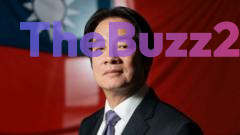
In the wake of a high-profile summit between former U.S. President Donald Trump and Chinese leader Xi Jinping, Taiwanese President Lai Ching-te has firmly reasserted the island’s commitment to its self-governing status. Addressing the public directly, Lai emphasized that while Taiwan has no intention of provoking military conflict, it remains steadfast in defending its democratic sovereignty. The statement serves as a direct response to discussions surrounding Taiwan’s geopolitical future during the recent U.S.-China talks.
President Lai reiterated that the future of Taiwan must be determined solely by its own citizens. He maintained that Taipei’s official policy is to preserve the current status quo rather than pursue a formal declaration of independence, arguing that the island already functions as a sovereign nation. While expressing a willingness to engage in constructive, equal-footing dialogue with Beijing, Lai flatly rejected any unification proposals dictated under China’s terms.
The geopolitical backdrop is further complicated by Washington’s ongoing defense commitments to Taipei. Prior to his meeting with Xi, Trump expressed caution regarding any potential Taiwanese declaration of independence but signaled continued military backing. This includes a massive $11 billion arms package approved in December, with discussions underway for an additional $14 billion defense deal. Under the Taiwan Relations Act, the United States remains Taiwan’s primary security partner, a relationship that Beijing continues to strongly oppose.
Expressing gratitude for Washington’s ongoing security cooperation, Lai highlighted the critical role of U.S. arms sales in maintaining peace across the Taiwan Strait. Meanwhile, Beijing has continued its aggressive rhetoric, labeling Lai a “troublemaker” and refusing to rule out the use of military force to achieve reunification. The escalating tension underscores the delicate balance Taiwan must navigate to protect its democratic institutions amid rising regional pressures.
Key Takeaways
- President Lai Ching-te reaffirmed Taiwan's sovereignty, stating the island will defend its independence without provoking conflict.
- The U.S. continues to strengthen Taiwan's defense capabilities, highlighted by an $11 billion arms deal and potential future sales.
- Beijing maintains its stance on reunification, refusing to rule out military force and labeling the Taiwanese president a 'troublemaker'.
Editor’s Analysis & Impact
The delicate geopolitical dance between Washington, Taipei, and Beijing has entered a critical phase following the Trump-Xi summit. President Lai’s calculated response highlights Taiwan’s strategy of maintaining the status quo while bolstering its defense capabilities through substantial U.S. arms acquisitions. By framing Taiwan’s sovereignty as an existing reality rather than a future declaration, Lai seeks to minimize provocations while signaling resilience to Beijing. For global markets, particularly the semiconductor and technology sectors heavily reliant on Taiwanese manufacturing, any escalation in cross-strait tensions represents a significant supply chain risk. The continued flow of U.S. military hardware serves as a deterrent, but also ensures that Taiwan will remain a primary flashpoint in U.S.-China relations for the foreseeable future.
Frequently Asked Questions
Q: What is Taiwan's official stance on its independence?
A: Taiwan's leadership maintains that the island is already an independent, sovereign nation, and therefore does not need to make a formal declaration of independence. The official policy is to preserve the cross-strait status quo.
Q: How is the United States involved in Taiwan's defense?
A: Under the Taiwan Relations Act, the United States is legally obligated to provide Taiwan with the means to defend itself. This includes multi-billion dollar arms sales, such as a recent $11 billion defense package.
Q: How has China reacted to Taiwan's defense agreements with the U.S.?
A: Beijing strongly objects to any foreign military sales to Taiwan, viewing them as an infringement on its sovereignty. China considers Taiwan a breakaway province and has warned it may use force to achieve reunification.
AI Disclosure: This article is based on verified data and official reports. Our Team and AI have cross-referenced every financial detail with primary sources to ensure total accuracy.
More from this Category