Citizen Scientists Enlisted by NASA to Map Chaotic Space Weather and Protect Global Infrastructure
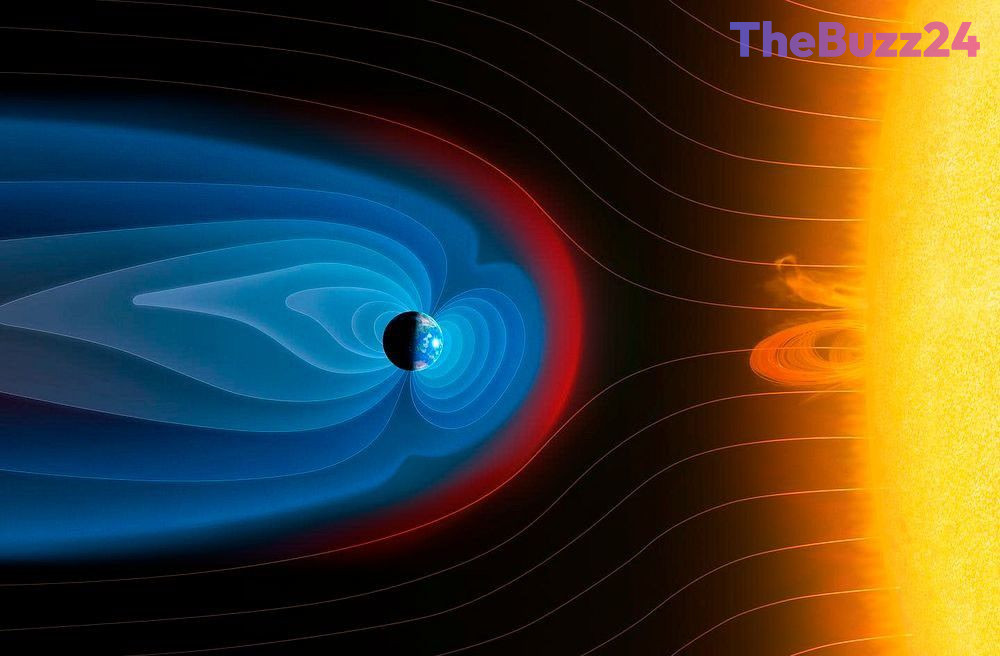
A new citizen science project called “Shock Detectives” is calling on the public to help researchers decode the complex interactions between solar winds and Earth’s magnetic shield. Located roughly 56,000 miles above our planet, the “bow shock” is a massive boundary wave formed when high-energy particles streaming from the Sun collide with the Earth’s magnetosphere. Volunteers participating in the initiative will analyze data to help scientists differentiate between stable and turbulent plasma states, which directly influence how much solar energy penetrates our atmosphere.
Understanding these plasma dynamics is crucial because turbulent space weather can severely disrupt critical modern infrastructure, including satellite communications, GPS navigation systems, and electrical power grids. Over the past decade, the Magnetospheric Multiscale (MMS) mission has gathered an overwhelming volume of data that exceeds the capacity of automated systems and professional researchers alone. By categorizing these vast data segments, citizen scientists will help map magnetic fluctuations and track how energy transfers toward Earth.
The Shock Detectives project operates alongside the Space Umbrella initiative, focusing specifically on the high-energy transition zones where plasma behavior changes most rapidly. While Space Umbrella looks at the broader boundaries of Earth’s magnetic shield, Shock Detectives zeroes in on the thin, highly active layers of the bow shock. Ultimately, the insights gained from this collaborative effort will not only help safeguard Earth’s technological systems but also establish a foundational model for understanding how stellar winds interact with exoplanets across the galaxy.
Key Takeaways
- NASA's 'Shock Detectives' project invites volunteers to analyze space weather data to protect Earth's infrastructure from solar storms.
- The initiative utilizes over a decade of data from the Magnetospheric Multiscale (MMS) mission to study the 'bow shock' boundary located 56,000 miles away.
- Insights gained will help map plasma transitions and could provide a blueprint for understanding stellar wind impacts on planets throughout the galaxy.
Editor’s Analysis & Impact
The launch of the Shock Detectives initiative highlights a growing trend in modern astrophysics: leveraging crowdsourced data analysis to overcome the bottlenecks of big data. As space missions like the Magnetospheric Multiscale (MMS) generate petabytes of information, traditional research teams simply lack the manpower to process it all. By engaging citizen scientists, NASA not only accelerates scientific discovery but also fosters public interest in STEM fields. From an industry perspective, improving our understanding of the bow shock and plasma turbulence is vital for the satellite, aviation, and telecommunications sectors. As society becomes increasingly reliant on orbital infrastructure and global positioning systems, developing more accurate space weather forecasting models is no longer just an academic pursuit—it is a critical economic and national security imperative.
Frequently Asked Questions
Q: What is the 'bow shock' in space weather?
A: The bow shock is a massive boundary wave located about 56,000 miles from Earth. It is created when high-speed charged particles from the Sun (solar wind) collide with Earth's protective magnetic field, or magnetosphere.
Q: Why do scientists need the public's help for this project?
A: The Magnetospheric Multiscale (MMS) mission has collected over ten years of complex data. The sheer volume of this information is too vast for traditional manual analysis by scientists alone, making volunteer classification essential to mapping these cosmic patterns.
Q: How can chaotic plasma affect daily life on Earth?
A: Highly turbulent or chaotic plasma can trigger severe space weather events. These events have the potential to disrupt satellite communications, disable GPS navigation, and cause widespread failures in electrical power grids on Earth.
AI Disclosure: This article is based on verified data and official reports. Our Team and AI have cross-referenced every financial detail with primary sources to ensure total accuracy.
More from this Category