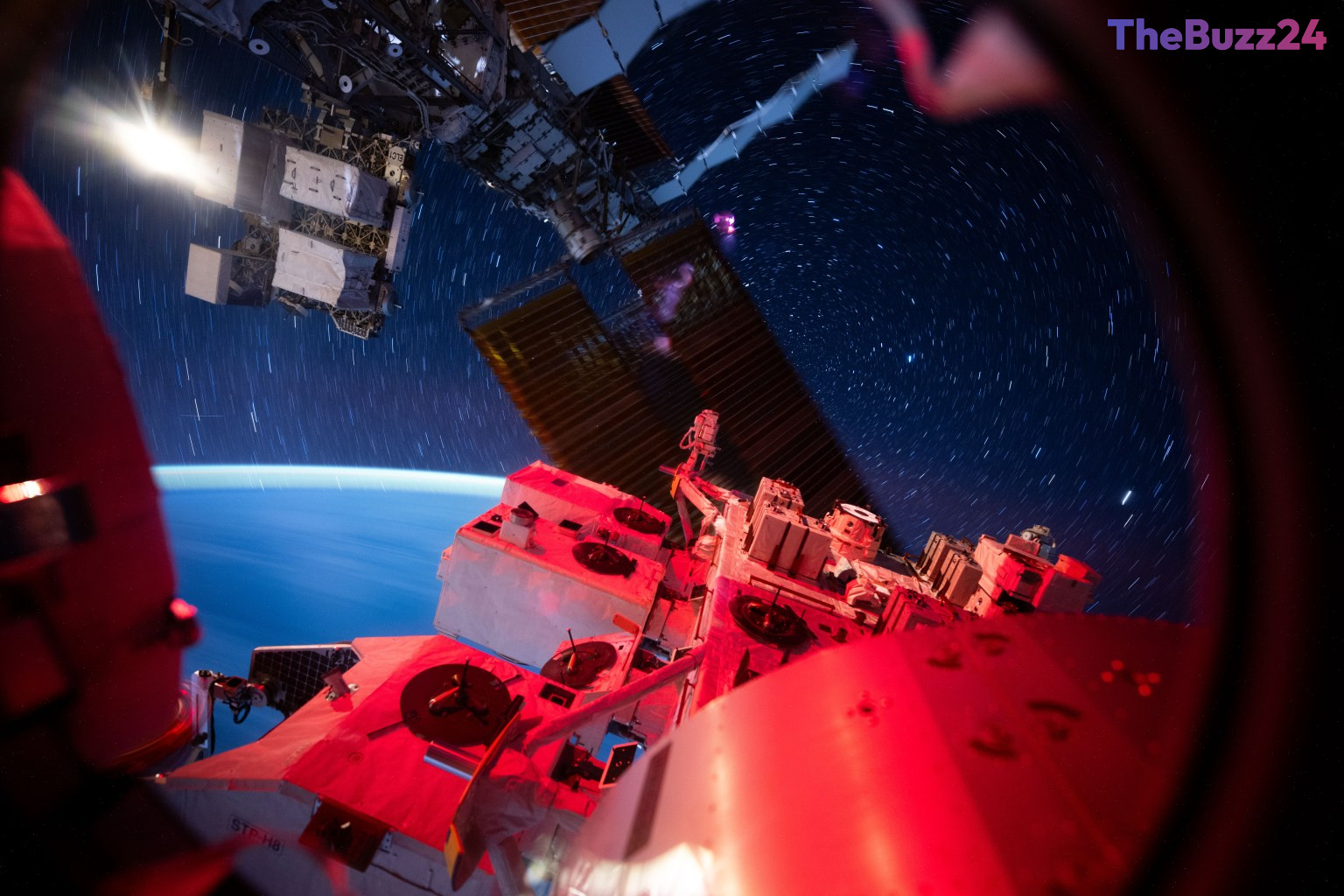
Space Station Unlocks Future of Deep Space Travel and Earthly Medicine with Landmark Research
The International Space Station (ISS) has concluded a year of intensive research, serving as a pivotal laboratory for over 750 distinct investigations. These studies, spanning from biological regeneration to advanced energy storage, are not only laying the groundwork for future human missions to the Moon and Mars but are also yielding significant technological benefits for life on Earth.
Medical innovation has been a central focus, with successful trials of miniature robotic surgical systems. Despite the inherent communication delays in orbital operations, these robotic tools demonstrated remarkable precision, suggesting the feasibility of remote surgery in lunar bases or during deep-space transit. Further advancements in tissue engineering were achieved through magnetic 3D bioprinting. By leveraging magnetic levitation in microgravity, researchers successfully produced synthetic bone grafts with superior structural organization, a breakthrough that could enable on-demand medical treatments for skeletal injuries in space and potentially revolutionize terrestrial orthopedics.
Significant progress was also made in material science and energy reliability. Investigations into radiation shielding revealed that materials infused with fungal melanin offer exceptional resistance to the harsh vacuum and radiation of space. This discovery presents a lightweight and sustainable solution for future spacecraft design. In the realm of power systems, all solid-state lithium-ion batteries proved highly resilient, exhibiting minimal capacity loss after more than 400 days of exposure to the extreme temperatures and vacuum of space. This positions them as a safer and more stable alternative to conventional power sources for extreme environments, both in space and on Earth.
Finally, ongoing research into human physiology and atmospheric phenomena continues to deepen our understanding of the cosmos. Studies on pilot performance indicated that long-duration microgravity exposure can temporarily impair complex manual tasks, such as aircraft landings, underscoring the importance of post-flight countermeasures for astronauts. Concurrently, the study of electrical phenomena in the upper atmosphere, including sprites and blue jets, is helping scientists refine models of energy transfers, which will ultimately improve weather forecasting and enhance satellite communication stability.
Key Takeaways
- ISS research has yielded significant advancements in space medicine, including robotic surgery and 3D bioprinting for bone grafts, crucial for long-duration missions.
- Breakthroughs in material science (fungal melanin for radiation shielding) and energy (resilient solid-state batteries) are enhancing spacecraft design and power systems for extreme environments.
- Studies on human physiology in microgravity and atmospheric phenomena are improving astronaut safety, refining weather forecasting, and benefiting satellite communication.
Editor’s Analysis & Impact
The latest research from the International Space Station marks a pivotal moment for both space exploration and terrestrial innovation. The advancements in remote surgical robotics and magnetic 3D bioprinting could fundamentally alter how medical emergencies are handled in deep space, while also offering transformative solutions for healthcare on Earth, particularly in remote or underserved areas. Similarly, the development of radiation-resistant materials and highly durable batteries will be critical enablers for future missions to the Moon and Mars, reducing risks and extending operational capabilities. These breakthroughs underscore the immense value of sustained orbital research, driving cross-industry innovation and positioning humanity closer to becoming a multi-planetary species, with significant economic and societal benefits flowing back to Earth.
Frequently Asked Questions
Q: What are the most significant medical advancements from this ISS research?
A: The most significant medical advancements include the successful testing of miniature robotic surgical systems for remote operations and the development of magnetic 3D bioprinting to create synthetic bone grafts with superior structural organization in microgravity.
Q: How will this research benefit future missions to the Moon and Mars?
A: This research provides critical technologies for astronaut health (remote surgery, bone repair), enhanced spacecraft protection (radiation shielding with fungal melanin), and reliable power sources (resilient solid-state batteries), all essential for long-duration human missions beyond Earth orbit.
Q: Are there any immediate benefits for life on Earth from these space studies?
A: Yes, advancements in remote surgery and tissue engineering could revolutionize medical practices on Earth. Additionally, durable battery technology has applications in various extreme terrestrial environments, and improved understanding of atmospheric phenomena can lead to better weather forecasting and more stable satellite communication.
AI Disclosure: This article is based on verified data and official reports. Our Team and AI have cross-referenced every financial detail with primary sources to ensure total accuracy.
More from this Category