Escalating Tensions: US and Iran Exchange Air Strikes Near Strait of Hormuz
Military tensions in the Persian Gulf reached a new peak over the weekend as the United States and Iran engaged in a series of retaliatory air strikes. The US Central Command confirmed that it executed defensive operations targeting Iranian radar installations, drone command centers, and air defense systems located on Qeshm Island and in Goruk. These actions were described by US officials as a direct response to the downing of an American MQ-1 drone operating in international airspace, which the US military characterized as a significant threat to regional maritime security.
In retaliation, the Islamic Revolutionary Guard Corps (IRGC) claimed to have launched strikes against an air base utilized by US forces. While the specific location of the Iranian strike remains undisclosed, the IRGC issued a stern warning that any further aggression from the US would be met with a significantly more severe response. The instability has extended beyond the immediate US-Iran conflict, with Kuwaiti military officials reporting the activation of air defense systems to intercept hostile missile and drone activity within their borders.
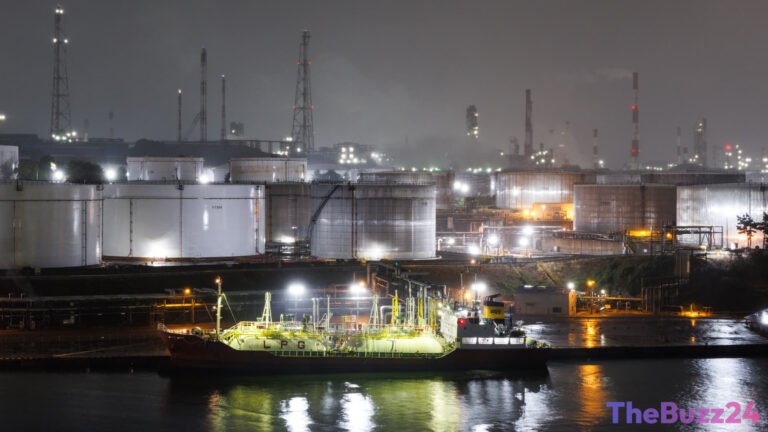
Despite ongoing diplomatic efforts to secure a long-term peace agreement, the situation remains volatile. President Donald Trump has recently requested revisions to a proposed peace framework that aimed to establish a 60-day cessation of hostilities and reopen the critical Strait of Hormuz. However, these negotiations have yet to yield a formal breakthrough. As approximately 20% of the world’s oil and liquefied natural gas supply transits through this channel, the continued military friction is creating significant uncertainty in global energy markets and exerting upward pressure on fuel prices.
Key Takeaways
- The US and Iran exchanged targeted air strikes over the weekend, focusing on drone infrastructure and air defense systems.
- Kuwait has reported the activation of its air defense systems to intercept incoming threats amid the regional escalation.
- The ongoing conflict threatens global energy security, as the Strait of Hormuz is a vital corridor for nearly one-fifth of the world's oil and LNG shipments.
Editor’s Analysis & Impact
The current military standoff between the US and Iran represents a high-stakes geopolitical crisis with immediate consequences for the global economy. By targeting critical infrastructure near the Strait of Hormuz, both nations are effectively engaging in a de facto trade embargo that threatens the stability of global energy supplies. The failure to reach a formal peace agreement, compounded by the recent request for revisions to the proposed deal, suggests that diplomatic channels are currently struggling to keep pace with military escalations. Investors and policymakers should anticipate continued volatility in oil prices as long as the shipping lanes remain contested. The broader implication is a potential shift toward a prolonged period of regional instability, which may force international stakeholders to seek alternative energy routes or increase their strategic reserves to mitigate the risk of a total supply chain disruption.
Frequently Asked Questions
Q: Why are the US and Iran exchanging air strikes?
A: The strikes are largely retaliatory. The US claims its actions are defensive measures against threats to maritime security and the downing of an American drone, while Iran claims its strikes are a response to US military aggression.
Q: How does this conflict affect global energy markets?
A: The Strait of Hormuz is a major chokepoint for global energy, with roughly 20% of the world's oil and LNG passing through it. Military activity in this region creates uncertainty, which typically leads to increased fuel prices and supply chain concerns.
AI Disclosure: This article is based on verified data and official reports. Our Team and AI have cross-referenced every financial detail with primary sources to ensure total accuracy.
More from this Category