Expedition 74 Crew Safely Returns to Earth After Extensive Eight-Month Space Station Mission
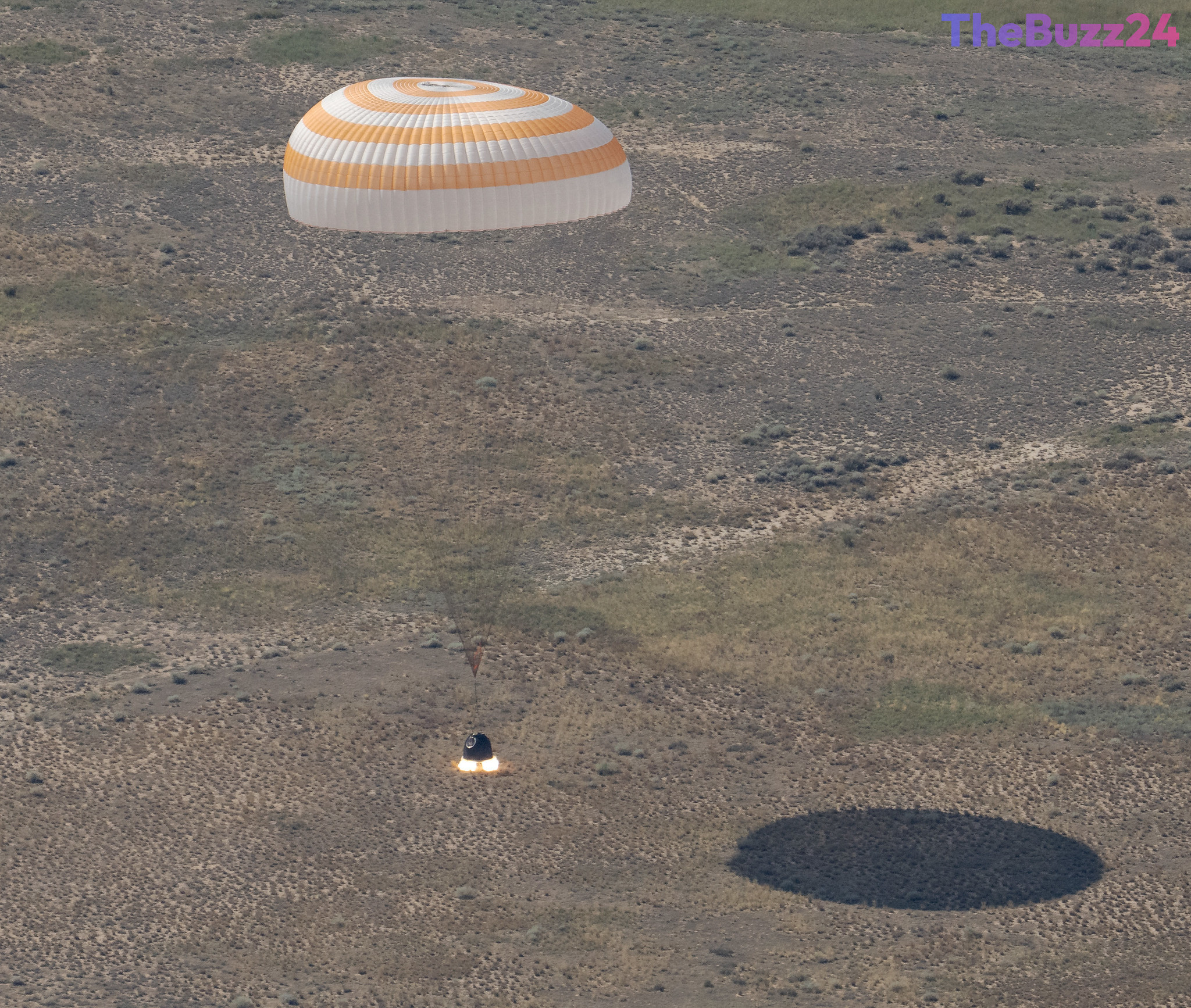
A trio of space explorers, featuring NASA astronaut Chris Williams alongside Roscosmos cosmonauts Sergey Kud-Sverchkov and Sergei Mikaev, successfully touched down on Earth following a productive eight-month scientific expedition aboard the International Space Station. The Soyuz MS-28 spacecraft executed a smooth, parachute-assisted touchdown in the remote steppes near Zhezkazgan, Kazakhstan.
Spanning 241 days in orbit, the mission logged 3,856 complete revolutions around the globe and accumulated over 102 million miles traveled. The journey marked a debut spaceflight for both Williams and Mikaev, while serving as the second orbital tenure for Kud-Sverchkov. Throughout their prolonged stay, the crew contributed extensively to diverse technological demonstrations and biomedical inquiries.
During the deployment, Williams contributed directly to cutting-edge investigations targeting novel therapeutic treatments for cancer, alongside refining microgravity manufacturing processes for advanced computing components. Additionally, he executed a pair of spacewalks designed to modernize station power infrastructure and service the Canadarm2 robotic manipulator. Following initial medical evaluations in Kazakhstan, the astronauts began their respective journeys back to their home space agencies.
The continuous human presence aboard the orbiting laboratory surpasses a quarter-century of uninterrupted operation. These enduring missions serve as vital testing grounds for deep-space exploration, supporting ongoing preparations for future crewed excursions to the lunar surface under the Artemis framework and eventual voyages to Mars.
Key Takeaways
- NASA astronaut Chris Williams and Roscosmos cosmonauts safely returned to Earth after 241 days in space.
- The crew traveled over 102 million miles and completed 3,856 orbits during their mission.
- Williams advanced research in cancer treatments, space manufacturing, and completed two spacewalks.
Editor’s Analysis & Impact
The successful conclusion of the Soyuz MS-28 mission underscores the ongoing reliability and international cooperation required for sustained low-Earth orbit operations. As commercial space ventures expand and lunar ambitions through the Artemis program take shape, data gathered from long-duration missions like Expedition 74 remain invaluable. The physiological and technical insights gained from these 241-day stays directly inform mitigation strategies for deep-space radiation, isolation, and microgravity degradation, which are critical hurdles for future crewed journeys to Mars.
Frequently Asked Questions
Q: How long was the Expedition 74 crew in space?
A: The crew spent 241 days aboard the International Space Station, orbiting the Earth 3,856 times.
Q: Which spacecraft brought the astronauts back to Earth?
A: The astronauts returned aboard the Soyuz MS-28 spacecraft, landing safely in Kazakhstan.
Q: What were some of the primary tasks performed by NASA astronaut Chris Williams?
A: Williams supported research into cancer treatments, worked on in-space manufacturing for electronics, and completed two spacewalks for station maintenance and power upgrades.
AI Disclosure: This article is based on verified data and official reports. Our Team and AI have cross-referenced every financial detail with primary sources to ensure total accuracy.
More from this Category